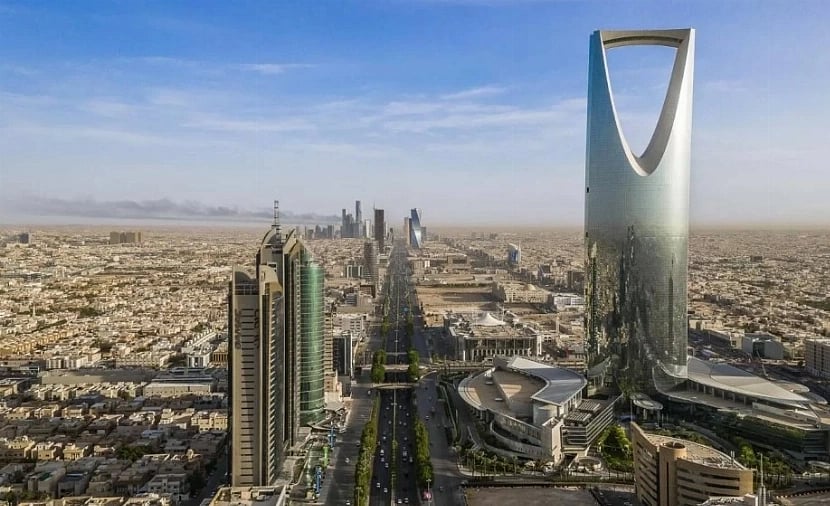
Saudi Arabia has launched a flexible working hours initiative across six major business districts in Riyadh, aiming to ease traffic congestion, improve daily mobility and enhance quality of life in the capital.
The Royal Commission for Riyadh City (RCRC), in cooperation with the Ministry of Human Resources and Social Development, announced the start of the initiative, which introduces a four-hour flexible attendance window for employees at more than 50 government entities located within the designated work zones.
Get updated faster and for FREE: Download the Gulf News app now - simply click here.
The six designated zones covered by the initiative are King Abdullah Financial District (KAFD), Digital City, the Diplomatic Quarter, Laysen Valley, Granada Business and Roshn Front.
Authorities said the scheme applies to administrative roles with fixed working hours and excludes sectors whose operational nature requires continuous staffing and service provision, including healthcare and public education.
The measure forms part of broader efforts to improve traffic flow in Riyadh, a rapidly growing metropolis that has witnessed a sharp increase in population and commuting demand in recent years.
Under the initiative, government entities operating under the Civil Service Law will allow employees to begin work at any time between 5:30am and 9:30am, while government bodies governed by the Labour Law will adopt attendance windows between 7am and 11am.
The commission said the initiative is designed to distribute travel demand more evenly throughout the morning, reducing pressure on road networks during peak hours and improving the efficiency of daily commuting across the city.
Authorities said the scheme would also provide greater flexibility for employees while supporting efforts to enhance residents’ overall quality of life.
Government entities located within the six designated districts have been instructed to comply with the initiative while ensuring business continuity and maintaining service levels.
The commission said the programme does not apply to certain sectors, including healthcare and public education, where operational requirements necessitate fixed working schedules.
The initiative is part of Riyadh’s wider urban development and transport strategy as the Saudi capital continues to expand under the Kingdom’s Vision 2030 transformation programme.
Network Links
GN StoreDownload our app
© Al Nisr Publishing LLC 2026. All rights reserved.