Volcano near Manila erupts: Alert level remains
Phivolcs footage shows powerful ash-and-steam column as monitoring continues
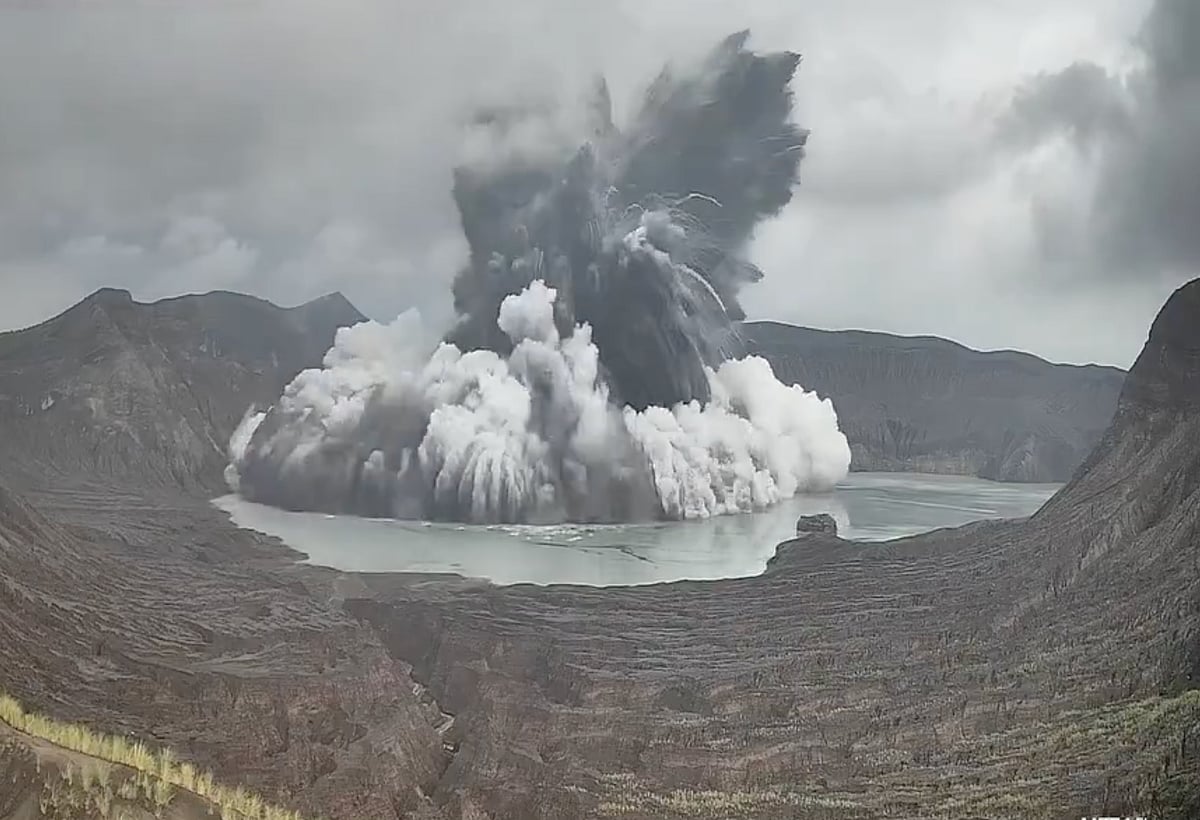
Manila: The Philippine Institute of Volcanology and Seismology (Phivolcs) recorded a phreatomagmatic eruption at the main crater of Taal Volcano in Batangas province Tuesday afternoon, sending jets of gray ash and steam-rich plumes rising 1,200 meters (about 3,937 feet) above the crater.
Taal Volcano is located about 50 miles (80 kilometers) south of Manila, is one of the Philippines' most active volcanoes.
Get updated faster and for FREE: Download the Gulf News app now - simply click here
Residents near the volcano are advised to remain vigilant, monitor official Phivolcs updates, and follow local government guidance on preparedness.
The event began at 2:34 pm local time on Tuesday, and lasted approximately four and a half minutes, according to Phivolcs.
Crater lake erupts
Time-lapse and thermal camera footage released by the agency showed a vigorous burst of material erupting from the crater lake area, producing a towering, billowing cloud of ash and steam that expanded rapidly before drifting and dissipating.
No significant seismic activity or ground deformation increases were immediately reported following the eruption.
Phivolcs maintained Alert Level 1 (low-level unrest) over the volcano. Under this alert, sudden steam-driven or phreatic explosions, volcanic earthquakes, minor ashfall, and gas emissions can still occur without further warning.
Taal Volcano is one of the Philippines' most active and closely monitored volcanoes due to its proximity to densely populated areas.
It sits within a large caldera filled by Taal Lake, with the main crater hosting a smaller lake.
Phreatomagmatic eruptions
Phreatomagmatic eruptions occur when magma or hot volcanic material interacts with water, producing explosive steam-driven events.
This incident is part of a pattern of minor eruptive activity at Taal in recent weeks and months, including several short-lived phreatomagmatic bursts in early June 2026 that produced smaller plumes.
Authorities have reminded the public that Taal Volcano Island remains a Permanent Danger Zone (PDZ), prohibiting permanent habitation and advising against extended stays on the island or the crater area.
As of the time of the report, there were no reports of injuries, significant ashfall in surrounding communities, or disruptions to air travel.
Phivolcs continues to monitor the volcano closely for any signs of escalation.
Network Links
GN StoreDownload our app
© Al Nisr Publishing LLC 2026. All rights reserved.