US launches 11th night of Iran strikes as IRGC claims attacks on Bahrain, Kuwait
CENTCOM says forces remain committed to protecting Strait of Hormuz shipping
Highlights
We are closing this coverage now. For the latest updates, click here.
Confirmed: US military strikes numerous Iran targets on 11th night
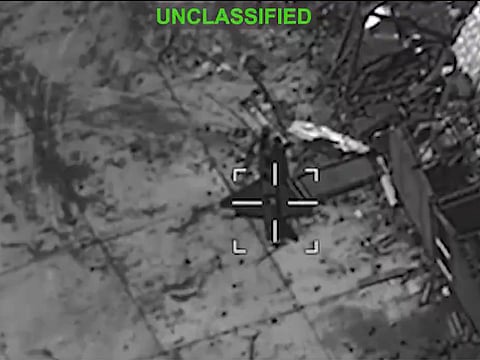
US military launched airstrikes against numerous targets in Iran for the 11th consecutive night overnight on Tuesday and into Wednesday, per CentCom.
Widespread attacks were reported on Bushehr, Parchin, Behbahan, Mahshahr, Bandar Abbas, Chabahar, Urmia, West of Tabriz, Baneh, Sirik, Urmia and Tehran.
Moreover, US has reportedly struck the Bidboland Gas Refinery in Mahshahr, Khuzestan Province, Iran.
The Bidboland Gas Refinery is Iran's largest gas processing facility and the largest gas hub in west Asia.
One of the strikes announced overnight by CentCom reportedly targeted the military section of Bushehr Airport.
Air defences roar over Tehran as Iran reports new aerial threats
Iranian air defence systems were activated across parts of Tehran early on Wednesday, according to Iranian state media, amid renewed fears of aerial attacks as tensions between Iran and the US continue to escalate.
State news agency IRNA and other Iranian media outlets reported that air defence batteries engaged over sections of the capital.
Authorities did not immediately specify the nature of the threat or whether any incoming drones, missiles or aircraft had been intercepted.
No immediate reports of casualties or damage were released.
The activation came hours after US President Donald Trump said the United States could strike Iran's heavily fortified Pickaxe Mountain tunnel complex "pretty soon," fueling expectations of further military action against Iranian strategic sites.
Iran has repeatedly placed its air defence network on heightened alert during the current conflict, particularly around Tehran and key military and nuclear facilities. Previous activations have been linked to suspected drone incursions, reconnaissance aircraft, or missile threats.
US B-1 strategic bombers airborne out of UK after Trump's Pickaxe Mountain strikes threat
"Multiple" US Air Force B-1 Lancer heavy strategic bombers have reportedly departed the UK shortly after US President Donald Trump directly threatened strikes on Iran's Pickaxe Mountain nuclear facility.
The UK's new Prime Minister Burnham has also approved the use of UK bases for US strikes on Iran, per Bloomberg.
Meanwhile, Boeing KC-135 "Stratotanker" military aerial refueling tanker aircraft have also reportedly launched from Europe, consistent with refueling bombers headed toward the Middle East.
The purpose is currently unconfirmed.
The Wall Street Journal reported that Iran moved thousands of centrifuges into the tunnels under Pickaxe Mountain in central Iran, roughly 220 km south of Tehran and about km south of the main Natanz nuclear enrichment complex. Known locally as Kuh-e Kolang Gaz La, the peak sits in the Zagros mountain range and rises about 1,600 meters above sea level.
Trump late on Tuesday vowed the area will get hit "probably pretty soon" and "very heavily", as per CBS News.
US tightens naval blockade on Iran: 8 ships redirected, 1 disabled
US forces have redirected eight commercial vessels and disabled one ship in the latest enforcement actions under Washington's naval blockade of Iran, as the maritime campaign expands alongside a widening conflict between the two countries.
The latest operation comes as the United States intensifies efforts to prevent vessels from entering or departing Iranian ports, while maintaining that international shipping through the Strait of Hormuz remains open for ships not trading with Iran.
According to US military updates, the eight commercial vessels complied with orders to alter course after being hailed by coalition naval forces.
One additional vessel was disabled after it allegedly failed to comply with repeated warnings, marking one of the most forceful enforcement actions since the blockade began in April.
The naval blockade was imposed after ceasefire negotiations between Washington and Tehran collapsed.
Trump authories resumption of direct US flights to Lebanon
President Donald Trump said Tuesday he would allow the resumption of direct flights by US airlines to Lebanon, which have been suspended for decades.
"After meeting with the President of Lebanon, Joseph Aoun, who has done a remarkable job working to transform his Country, I am hereby directing my Administration to allow all US airline carriers to fly directly to Lebanon so that Americans can easily visit this beautiful land," Trump said on his Truth Social platform.
UK approves use of British bases for US strikes
New Prime Minister Andy Burnham has approved the use of British military bases by the US for what the UK calls defensive strikes against Iran, in a continuation of his predecessor Keir Starmer’s policy even as President Donald Trump ramps up his war.
Lebanon president expresses 'deep appreciation' for US support after Trump talks
Lebanese President Joseph Aoun on Tuesday expressed gratitude for the United States' support of his country following his meeting in Washington with counterpart Donald Trump at the White House.
In a statement, the presidency said Aoun wrote in the White House guest book that he felt "deep appreciation for President Trump's friendship and for the support the United States of America provides to Lebanon, its sovereignty, its legitimate institutions, and the Lebanese Armed Forces".
Bahrain has sounded its air raid alarm once again
The Ministry of the Interior has urged citizens to remain calm and “head to the nearest safe location”. The Bahrain Defence Force said earlier that its defence systems had “intercepted and destroyed a number of treacherous Iranian aerial attacks”.
Trump says US will strike Pickaxe Mountain 'very soon'
Discussing plans to stop Iran from obtaining a nuclear weapon, Trump said the United States will soon target the area near Pickaxe Mountain - a fortified underground site near one of Iran's primary nuclear enrichment facilities.
"We'll be hitting that area pretty soon, and very heavily," Trump told reporters on Tuesday.
The president made the comment after being asked whether he believes Iran has moved nuclear centrifuges to the site. He said it "doesn't mean anything" unless Iran has uranium to enrich.
"We follow the material," he said. "That's where the action is."
Kuwait lodges formal protest with Iran over tanker attack
Kuwait's Ministry of Foreign Affairs today summoned Iranian Ambassador Mohammad Totonchi to deliver a formal protest note over Iran's targeting of the Kuwaiti tanker Kaifan in the Strait of Hormuz on Monday evening, which resulted in injuries to several crew members.
The move came as power generation and water desalination facilities across the country were subjected to Iranian attacks for the fourth consecutive day.
Kuwait's Deputy Foreign Minister Ambassador Hamad Al-Mashaan said the blatant attack came amid what he described as Iran's continuing aggression against Kuwait since 28th February, 2026. He said the incident constituted a flagrant violation of Kuwait's sovereignty, threatened freedom of international navigation and breached UN Security Council Resolution 2817 of 2026.
Al-Mashaan renewed Kuwait's call for the immediate cessation of the attacks, stressing that the country reserves the right to take the necessary measures and holding Tehran fully responsible for its continued aggression.
Meanwhile, Kuwait's Ministry of Electricity, Water and Renewable Energy said the attacks sparked fires at several power station facilities. It confirmed that emergency teams, in cooperation with the Kuwait Fire Force and security authorities, had successfully contained and extinguished the fires.
The ministry added that it had begun assessing the damage and implementing repair plans, while taking several power generation units out of service as a precautionary operational measure to ensure the safety of equipment and maintain the stability of the country's electricity and water systems.
Trump promises US help for Lebanon during Aoun meeting
President Donald Trump pledged to help Lebanon "a lot" during a White House meeting on Tuesday with the country's leader, Joseph Aoun, who came to push for long-term calm after months of war between Israel and the Iran-backed Hezbollah militant group.
"It's been a very badly treated place and country and we're going to have it properly treated and treated with the respect it deserves," Trump told Aoun during a meeting which wrapped up the Lebanese leader's four-day visit to Washington. "We're gonna help it a lot," he said, without giving concrete details.
Trump said of Israel's army fully withdrawing from Lebanon, "They're in the process of doing that. They're in the process of redeploying" but didn't elaborate.
Aoun told Trump, "Your vision is peace," calling it Trump's "legacy."
The U.S. president responded by joking, "I do agree with that" and said Aoun was handsome and "knows how to get to me," adding, ""Now he can have anything."
Trump says US 'not finished at all' with Iran
President Donald Trump said Tuesday that the United States will continue attacks on Iran, while forecasting it would take the country more than 20 years to rebuild from current damage.
"If we left right now, it would take Iran 20, 25 years to rebuild. Okay, and we're not finished at all...we're not leaving right now," he told reporters during a White House meeting with Lebanese President Joseph Aoun.
Trump says US 'not finished at all' with Iran
President Donald Trump said Tuesday the United States was far from finished with Iran and warned the next US military target could be an underground nuclear complex known as Pickaxe Mountain.
Pickaxe Mountain is a deeply buried nuclear site near Natanz where Western intelligence suspects Iran is building an undeclared enrichment facility.
"We'll be hitting that area pretty soon, and very heavily," Trump said, adding that he would not normally announce targets but "there's not a thing they can do about it."
Trump estimated it would take Iran more than 20 years to rebuild from current damage, addressing reporters during a White House meeting with Lebanese President Joseph Aoun.
"If we left right now, it would take Iran 20, 25 years to rebuild. Okay, and we're not finished at all...we're not leaving right now."
Iran stepped up its strikes in the Middle East on Tuesday, two weeks after its war with the United States resumed, with Jordan, Kuwait and Bahrain coming under attack.
Lebanon's president urges Trump to 'keep supporting' its army
Lebanese President Joseph Aoun urged his US counterpart Donald Trump to maintain American support for his country's military, warning that southern Lebanon could see a return of the chaos of the 1970s without Washington's backing.
"We don't want to see that back again. All we're asking is, keep supporting the LAF," Aoun told reporters of the Lebanese Armed Forces during a White House meeting with Trump on Tuesday.
"All we're asking is, keep supporting the LAF... I fully trust the LAF. I fully trust the leadership of the LAF."
Trump says will 'take care of' Houthis if they blockade Saudi ports
US President Donald Trump said Tuesday he would "take care of" the Houthi rebels if the Iran-backed militant group follows through on its threatened blockade of Saudi ports.
"If something like that happens, we take care of it," Trump told reporters during a White House meeting with Lebanese President Joseph Aoun. "You know, we've done that with the Houthis before, and we haven't heard from them in a while since we did what we did originally."
Gargash: Sectarian militias are facing one of the most difficult periods in their history
Dr Anwar Gargash, diplomatic adviser to the UAE President, said sectarian militias are facing one of the most difficult periods in their history following recent military setbacks and the destruction caused by their own decisions.
However, he argued that their greatest challenge lies not in battlefield losses but in growing public support for the nation state and increasing rejection of armed groups operating outside the rule of law.
In a post on X on Tuesday, Gargash said public sentiment across the region was shifting in favour of state institutions, adding that more people were opposing the continued existence of weapons outside the authority of legitimate governments.
He said the trend reflected stronger backing for national sovereignty and the primacy of the law over non-state armed actors.
USS Mason (DDG 87) conducts a replenishment-at-sea
Pakistan PM calls for restraint from all warring sides during talks with Iranian minister
Pakistan's Prime Minister Shehbaz Sharif called for restraint from all warring sides during a meeting with Iran's interior minister on Tuesday.
Sharif "urged all sides to exercise restraint and refrain from actions that could further destabilize the region", a statement from the premier's office said, adding that he told Iran's Eskandar Momeni that Pakistan would continue to act as a mediator.
Kuwaiti tanker attacked in Strait of Hormuz
Kuwait summoned Iran's ambassador on Tuesday to protest an Iranian attack on the Kuwaiti tanker Kaifan while it was transiting the Strait of Hormuz, saying several crew members were injured in the incident. The Foreign Ministry handed Ambassador Mohammad Totonchi a formal note of protest, condemning the attack as a serious violation of Kuwait's sovereignty and a threat to the security and freedom of international navigation.
Deputy Foreign Minister Hamad Suleiman Al Mishaan said the attack is part of Iran's continuing aggression against the country since February 28, 2026, including inflammatory statements issued by Iranian officials. He urged Tehran to immediately halt its unlawful attacks, stressing that Kuwait reserved the right to take all necessary measures and held Iran fully responsible for the assault and its continued actions against the country.
Revolutionary Guard vows ‘not a drop of oil’ to pass through Hormuz
Iran’s Islamic Revolutionary Guard Corps said on Tuesday that the Strait of Hormuz remained closed to commercial traffic, warning that “not a single drop of oil or gas, nor any shipment of chemical fertilisers” would leave the region while the United States continued hostile actions.
Bahrain's air defence systems intercept Iranian attacks
Bahrain's air defence systems intercepted a number of Iranian attacks targeting civilians in the Kingdom today, the Bahrain Defence Force announced.
In a statement carried by the Bahrain News Agency (BNA), the General Command of the Bahrain Defence Force said its air defence systems intercepted and destroyed a number of Iranian missiles and drones.
The statement stressed that the deliberate use of missiles and drones to target civilians and private property constitutes a flagrant violation of international humanitarian law.
Lebanon's Aoun to meet Trump in Washington
Lebanese President Joseph Aoun was to meet with his US counterpart Donald Trump in Washington on Tuesday, as Beirut's military moved into an area of the south under a deal with Israel to disarm Hezbollah.
But in a sign of the fragility of the deal between the two countries, the Lebanese army reported that Israeli troops fired near its soldiers deploying in a so-called "pilot zone" Israel is to withdraw from.
The so-called "pilot zones" where the Lebanese army is deploying under the deal with Israel are primarily located just outside territory Israeli forces invaded after Hezbollah dragged Lebanon into the Middle East war in March.
The Lebanese army said on Tuesday it had begun deploying to one of three pilot zones, the village of Zawtar al-Gharbiya. Israel's military said it would be "adjusting its force posture" in one pilot area.
Just hours later, however, the army said Israeli forces "opened fire in the vicinity of these units" deploying in Zawtar al-Gharbiya, adding that "the attack will hinder the implementation of deployment in the pilot zones".
The Israeli military did not immediately respond to a request for comment.
Chinese oil tanker U-turns in Red Sea Following Houthi Threat
A very large crude carrier reversed course in the southern Red Sea after Houthi rebels in Yemen warned they would target vessels travelling to or from Saudi ports.
The VLCC Xin Long Yang departed Yanbu on Monday with approximately 2 million barrels of Saudi crude bound for China. The vessel stopped before reaching the Yemeni border on Tuesday morning and was last observed heading north.
Kuwait says intercepting Iran attacks
Kuwait said on Tuesday it was intercepting Iranian attacks, as sirens sounded in Bahrain, with AFP correspondents in the capitals of both countries hearing explosions.
"Kuwaiti air defence is currently intercepting hostile missile and drone attacks as part of the heinous Iranian aggression," the Kuwaiti defence ministry said on X. The Bahraini interior ministry said in a separate statement that sirens had sounded and called on residents to "head to the nearest safe place".
Get updated faster and for FREE: Download the Gulf News app now - simply click here.
Iranian President's communication with Supreme Leader had 'increased'
Iranian President Masoud Pezeshkian said on Tuesday that communication with Supreme Leader Mojtaba Khamenei had "increased", adding that the country's decisions continued to be guided by his directives, according to Iranian state media.
Speaking at a public event, Pezeshkian said: "Now, with increased communication and greater access to our beloved leader, all actions are organised according to his guidelines." Khamenei has so far communicated only through written statements carried by state media.
Khamenei has not appeared in public since assuming the role of supreme leader following the death of his father in US-Israeli strikes on Tehran on February 28.
US military identifies soldier killed disarming a drone in Iraq
The US military on Tuesday identified a soldier who was killed while disarming an Iranian drone in Iraq as a 30-year-old from North Carolina.
The military said it was investigating the death of Sgt. Michael Emmanuel Swinton of Fayetteville during a controlled detonation on Sunday at an air base in Irbil in northern Iraq.
Swinton will get a Bronze Star, Purple Heart and Combat Action Badge, and be promoted to staff sergeant, the military said in a statement.
Kuwaitis ration electricity as Iran hits power grid
Residents of Kuwait, one of the world's hottest countries, are cutting their use of air conditioning at the height of summer, as Iranian strikes on power plants turn rationing into a national priority.
Kuwaiti authorities have called on the public to consume less energy so that they can maintain round-the-clock electricity as the grid comes under Iranian attack.
Nasser Al-Dhafiri, a civil servant in his forties, described "immense psychological pressure" on ordinary people as the attacks sparked fears of electricity outages.
Dhafiri said the daily strikes were "compounded by ongoing attacks on infrastructure, particularly power plants... creating anxiety and confusion in our daily life".
"Everyone now feels that maintaining essential services is a shared responsibility."
A map of the 10th day of US strikes on Iran
Kuwait says Iran hit several power, water plants
Kuwait said Tuesday that Iran had again attacked power and desalination plants critical to the tiny desert nation.
The statement from Kuwait's Electricity, Water and Renewable Energy Ministry said that Tehran had struck the plants for a fourth day in a row on Monday night.
It said the attacks sparked fires and caused damage. It said it was working to repair the sites.
Some 90% of Kuwait's drinking water comes from desalination.
UAE condemns Iran's attacks on Bahrain, Kuwait and Jordan
The UAE has strongly condemned what it described as renewed Iranian missile and drone attacks targeting Bahrain, Kuwait and Jordan.
In a statement, the Ministry of Foreign Affairs said the attacks were a flagrant violation of the sovereignty of the three countries and posed a threat to their security and stability.
The ministry reaffirmed the UAE's full solidarity with Bahrain, Kuwait and Jordan, and expressed support for all measures taken to protect their security and stability.
Jordan army says intercepted two Iranian attacks
The Jordanian military announced on Tuesday it had intercepted two Iranian attacks, the latest by the Islamic republic on countries in the region following the resumption of the Middle East war.
The military's "air defence systems intercepted and shot down three Iranian missiles targeting the kingdom at midday today", the army said in a statement, adding that there had been no casualties or damage caused.
Earlier, the army had announced it had intercepted five drones launched by Iran, with no casualties reported then either.
Iran's Revolutionary Guards confirmed the first of the attacks, claiming in a statement that they had targeted a "complex housing US terrorist forces in the region of Rukban".
Bahrain sounds siren, urges residents to move to safe places
Bahrain on Tuesday sounded sirens after the country's military had said it intercepted Iranian attacks, nearly two weeks into the resumption of US-Iran hostilities that have included daily attacks on the Gulf kingdom.
"The siren has been sounded, Citizens and residents are urged to remain calm and head to the nearest safe place," the interior ministry said in a statement
Bahrain says intercepted Iranian air attacks
Bahrain's military on Tuesday said it had intercepted a number of Iranian attacks, nearly two weeks into the resumption of US-Iran hostilities that have included daily attacks on the Gulf kingdom.
"The air defences of the Bahrain Defence Force intercepted and destroyed a number of Iranian aerial aggressions," the military said in a statement on X.
Israel carries out ‘large bombing’ in southern Lebanon
Israeli forces carried out "large bombings" in southern Lebanon on Tuesday, detonating explosives in the towns of Kfartebnit and Mais Al Jabal, according to the official National News Agency. The reported blasts came as an Israeli drone flew at low altitude over Beirut, the agency said.
Qatar condemns Houthi remarks against Saudi Arabia
Qatar has condemned remarks by the Houthi military spokesman accusing Saudi Arabia of imposing a blockade on Yemen and enforcing a maritime embargo.
In a statement, Qatar's Ministry of Foreign Affairs reaffirmed its full solidarity with Saudi Arabia and backed all measures taken by the Kingdom to protect its sovereignty and security.
The ministry also called on the international community to implement relevant UN Security Council resolutions on Yemen and freedom of navigation, stressing that safe passage through international waterways is a fundamental principle of international law.
Jordan says it neutralised five Iranian drones
Jordan's Armed Forces said they neutralised five Iranian drones, adding that the operation was carried out "with efficiency and precision" in line with operational requirements and established defensive procedures.
The military said the interceptions resulted in no casualties or material damage.
IRGC says it hit Amazon data infrastructure in Bahrain
Iran's Islamic Revolutionary Guard Corps (IRGC) claimed it targeted Amazon's data infrastructure in Bahrain with cruise missiles.
In a statement carried by Iran's semi-official Tasnim news agency, the IRGC said its aerospace force carried out the attack in response to recent US strikes on civilian infrastructure in Darkhovin.
There was no immediate comment from Amazon, Bahraini authorities or US officials.
Lebanon army says deploying in southern area after Israel deal
The Lebanese army deployed on Tuesday to "pilot zones" in part of the country that had been under Israeli control following a deal sponsored by Washington, a military source told AFP.
The source said soldiers "have begun deploying to the village of Zawtar al-Gharbiya" in the Nabatieh region, following Israel's invasion of parts of the south during their war with militant group Hezbollah.
Strait of Hormuz crossings fall as US-Iran tensions rise
Vessel crossings through the Strait of Hormuz have fallen further at the start of the week as caution increased following renewed exchanges of attacks between the United States and Iran.
Shipping data showed that four commodity vessels crossed the strategic waterway on Monday, mostly via the Iranian route, down from seven the previous day, according to Reuters, citing Kpler data.
US issues 'worldwide caution' alert for citizens
The US State Department on Monday issued an alert urging American citizens around the world to "exercise increased caution" over the war with Iran.
The alert said that "due to heightened tensions in the Middle East, the security environment remains complex with the potential for unforeseen escalation."
"Americans outside the Middle East should reconsider travel to and through the region," it said, while warning of the heightened possibility of attacks targeting US diplomatic facilities "or at locations associated with the United States and Americans throughout the world."
Air France temporarily halts Dubai, Riyadh flights
Air France has temporarily suspended flights to Dubai and Riyadh and extended its suspension of services to Beirut, citing the ongoing operational situation in the Middle East.
The airline said affected passengers are being contacted directly and can cancel or postpone their trips without additional charges, even if their flights have not been cancelled.
Read more here.
US escorted 900 oil tankers through Hormuz
The US military has escorted nearly 900 commercial vessels carrying about 450 million barrels of crude oil through the Strait of Hormuz since early May, marking a sharp increase in protected maritime traffic as Washington intensifies efforts to keep one of the world's most critical energy chokepoints open amid its conflict with Iran.
The updated figures, released by US Central Command (CentCom), represent an increase from the approximately 800 vessels reported just one week earlier, underscoring the pace of commercial shipping continuing under US naval protection despite persistent threats from Iranian missile, drone and naval attacks.
The escorted vessels account for hundreds of millions of barrels of crude oil bound for global markets, highlighting the strategic importance of the US-led maritime security mission as tensions in the Gulf continue to escalate.
CentCom said its forces remain committed to safeguarding freedom of navigation through the Strait of Hormuz, through which roughly one-fifth of the world's oil consumption and about a third of global seaborne crude trade normally passes.
Get updated faster and for FREE: Download the Gulf News app now - simply click here.
Iran Guards say hit US military targets in Bahrain, Kuwait
Iran's Revolutionary Guards said on Tuesday they hit US military targets including air defence systems in Bahrain and Kuwait, state news agency IRNA reported.
The Guards said they struck two air defence systems and a radar installation at two different US outposts in Bahrain, as well as missile defence systems and radars and satellite reception systems in Kuwait.
"With this radar sweep, the enemy should prepare for even more decisive and powerful waves of drone and missile attacks," the Guards said in a statement carried by IRNA.
Iran Guards say stopped two oil tankers in Hormuz
Iran's Revolutionary Guards said Tuesday they stopped two "non-compliant oil tankers" attempting to transit the Strait of Hormuz, state news agency IRNA reported.
"Two non-compliant oil tankers attempting to pass through the unsafe southern route of the Strait of Hormuz were stopped after explosions caused extensive fires aboard them," the Guards said in a statement carried by IRNA.
UK maritime agency says tanker struck off Oman coast
An oil tanker has been reportedly struck off Oman coast, according to the UK Maritime Trade Operations. An "unknown projectile" struck the bulk carrier as Iran and the US exchanged fire over control of the Strait of Hormuz. The UKMTO said it "received multiple reports that a tanker... has been struck by an unknown projectile in the Strait of Hormuz," adding that the incident occurred eight nautical miles (15 km) northeast of Limah, Oman.
Iran military says targeted US base in Kuwait
The IRGC Navy has said it launched a "coordinated three-phase operation" that caused "significant damage" to US military assets in the region. Iran's military announced it launched missile attacks on US facilities in Kuwait and Bahrain, claiming to have hit HIMARS systems at Camp Arifjan and damaged assets at Al‑Sakhir Air Base and Salman Port, escalating the Iran‑US confrontation. The Iranian army said early Tuesday it had targeted a US base in Kuwait with missiles, as President Masoud Pezeshkian said the conflict had morphed into a "full-scale war".
Red line for Iran: 'Their behaviour has to change', US keeps 'door open' to diplomacy — Rubio
US Secretary of State Marco Rubio said that Washington remains willing to pursue a diplomatic solution with Iran, but insisted any path toward de-escalation depends on Tehran ending its attacks on international shipping and complying with its commitments. "Their behaviour has to change in order for ours to change," Rubio said before he boarded for a flight to Manila, in remarks shared by the White House's Rapid Response 47 account. Rubio, who has just landed in Manila to attend the ASEAN Summit, argued that any existing understanding between Washington and Tehran cannot remain valid if Iran continues to violate its obligations. "You can't have an MOU that's alive if they're violating the terms," he said. "The US always remains open to a diplomatic solution. We've tried multiple times with Iran and we'll continue to try... but their behaviour is what we're responding to — and their behaviour is they're launching missiles and drones against ships."
US military launches 10th night of strikes against Iran
The US military said Monday night it had completed its latest round of strikes against Iran, targeting various sites to counter Tehran's ability to attack ships transiting the Strait of Hormuz.
"US forces struck Iranian military command centers, maritime capabilities, missile and drone launch sites, and air defense systems to degrade Iran's ability to continue attacking commercial vessels flowing through the Strait of Hormuz," CENTCOM said in a post on X.
US blockade of Iran: 7 commercial vessels redirected
The US military said it has redirected seven commercial vessels and disabled one since the renewed US naval blockade of Iranian ports came into effect on July 14.
In a statement late on Monday, the US Central Command said: "U.S. service members aboard amphibious assault ship USS Boxer (LHD 4) support flight operations day and night from the Arabian Sea as CENTCOM enforces the naval blockade against Iran. As of July 20, the U.S. military has redirected 7 commercial vessels and disabled 1 to prevent the ships from leaving or entering Iranian ports."
Drone shot down near Iraq's Al-Harir airbase, which houses US forces
An explosive-laden drone was shot down near Iraq's Al-Harir airbase, which houses US forces, security sources told Reuters. There were no immediate reports of casualties or damage from the incident, which was reported east of Erbil.
Iranian military officer killed in a US strike in Tabriz: Fars News Agency
An Iranian military officer was killed in a US strike on the northwestern city of Tabriz on Monday, according to Iran's Fars News Agency. The agency said Mahdad Pashae died after a US attack targeting a site in East Azerbaijan province.
US-Iran war shows no signs of easing
The fighting between US and Iran showed no signs of easing.
After completing its ninth consecutive night of strikes, US forces launched a 10th straight night of operations late on Monday.
The US Central Command says its actions form part of continuing efforts to reopen the Strait of Hormuz and suppress Iran's military capabilities as the conflict entered a more dangerous regional phase.
Meanwhile, the Iranian army has said it targeted US base in Kuwait. Iran's Fars News Agency reported that Iranian military officer Mahdad Pashae was killed in a US strike on the northwestern city of Tabriz on Monday. The agency said Pashae died after a US attack targeting a site in East Azerbaijan province.
Kuwait condemns continued Iranian attacks
The Kuwaiti Foreign Ministry condemned and denounced in the strongest terms the continued heinous Iranian aggression on the country, the latest of which took place earlier in the day.
In a press release carried by Kuwait News Agency, the ministry termed this aggression a blatant violation of Kuwait's sovereignty, a direct threat to its security and stability and the safety of its citizens and residents, and a serious breach of international law, the UN Charter and UN Security Council (UNSC) Resolution 2817.
It underlined that the continuation of these blatant aggressions while regional and international efforts are being exerted to ensure calm systematically undermines de-escalation efforts and the international will to support this track.
It also affirmed that Kuwait's security, sovereignty and territorial integrity and the safety of its citizens and residents cannot be compromised, reiterating that the State of Kuwait reserves its inalienable and legitimate right to take all necessary measures to safeguard its sovereignty and protect its security and stability.
Qatar condemns repeated Iranian attacks on Kuwait, Bahrain
Qatar condemned in the strongest terms the renewed attacks launched by Iran on the territories of both the sisterly State of Kuwait and the sisterly Kingdom of Bahrain, considering them a flagrant violation of the sovereignty and territorial integrity of the two countries.
It further stated that it is a blatant breach of international law, the Charter of the United Nations and the principles of good neighbourliness.
The Ministry of Foreign Affairs, in a statement carried by the Qatar News Agency, confirmed that the continuation of these attacks constitutes a dangerous escalation that will complicate efforts to contain tensions and undermine political and diplomatic endeavours aimed at achieving security and stability in the region.
The ministry stressed the need for an immediate and complete cessation of all military actions and attacks that threaten the security and stability of the region.
The ministry reiterated the State of Qatar's full solidarity with the State of Kuwait and the Kingdom of Bahrain, and its support for all measures they take to preserve their sovereignty and security.
US‑Israel war on Iran: Recent developments
Day 141: Iran president says country in 'full-scale war' with US
Day 140: US strikes Iran, Gulf states face missile threats as war risks spread
Day 139: Two US troops killed, one missing in Jordan
Day 138: Gulf faces fresh attacks as Trump signals diplomacy
Day 137: Dubai rebuts false explosion reports
Day 137: Iran says it is no longer bound by parts of US ceasefire deal


