A view of Manila's Ninoy Aquino International Airport (NAIA) Terminal 3.
Philippines: Winner of ₱16-billion contract to build Manila Subway's airport T3 station, tunnels announced
DoTr awards $270-million CP109 contract for NAIA T3 station in Manila Subway project
Last updated:
3 MIN READ
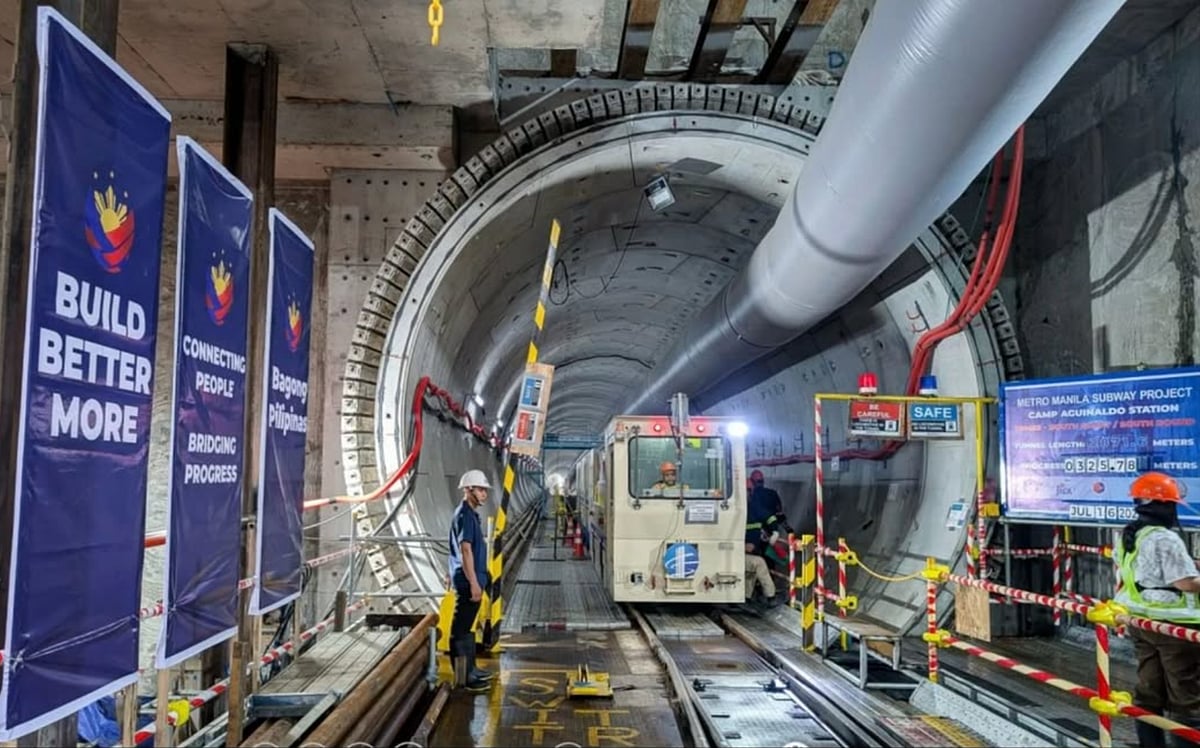
The Philippines' Department of Transportation (DoTr) recently announced the winner of the $270 -million NAIA Terminal 3 subway station contract. The station, which will serve Manila's Ninoy Aquino International Airport, forms part of the $8.2-billion Manila Subway currently under construction.
DoTr | Facebook
Manila: Philippine authorities have named the winner of ₱16.06-billion ($270 million) contract to build an underground station at the Ninoy Aquino International Airport (NAIA) Terminal 3 and its connecting tunnels.
The project was formally granted to the joint venture of Japan's Taisei Corp. and D.M. Consunji, Inc., a Filipino construction major.
The "notice of award" was issued by the Department of Transportation (DoTr), dated March 26, 2026. It forms part of the $488-billion Manila Subway project, currently under construction.
Get updated faster and for FREE: Download the Gulf News app now - simply click here.
The notice confirmed that the consortium secured Contract Package CP109.
The final figure is inclusive of 12% VAT. In addition, the contract will also include foreign-currency denominated payments, involving $20.17 million and 7.03 billion Japanese yen, reflecting bid adjustments made in accordance with the project’s bidding rules and delays due to right-of-way snags.
Accelerating projects under ARROW Act
A new Philippine law, known as the ARROW Act passed on September 12, 2025, has cut off right-of-way issues stalling the national infrastructure drive, thus allowing projects such as the Manila Subway to accelerate.
In the past, key projects were often delayed by property owners trying to get maximum "just compensation" from Filipino taxpyers in eminent domain cases, resulting in an absurd situation in which engineering projects are being solved in Philippine courts by a battery of lawyers.
Now, investors are taking a second look at the Philippines, as ROW issues fall like dominoes under the new legislation.
The Manila Subway is the country’s first-ever underground rail system.
Construction is currently accelerating, providing a glimpse into the future of state-sanctioned infrastructure projects.
June 2026 target to resolve 100% of ROW issues
At the groundbreaking of the Shaw Boulevard Station in Pasig City, government officials announced that ROW acquisition for Manila subway has reached 90.92%, with full completion (100%) targeted by June 2026.
This signals that long-delayed land issues, stuck for years in local courts, are no longer holding back progress.
Under the terms of the award, the joint venture must submit its performance security within 28 days to formalise the contract and begin mobilisation.
Major station
More importantly, once completed, the T3 station will connect NAIA with several cities comprising Metro Manila, potentially making access to the country's main aviation gateway a breeze for millions.
It would also help solve a major connectivity challenge to the country's main airport, currently accessible only by private cars, taxis and select buses.
$8.20 billion Manila Subway project
CP109 is part of the larger ₱488.5-billion ($8.2 billion) Metro Manila Subway, the government’s flagship rail project that will deliver the country’s first underground mass transit system.
The construction of the NAIA Terminal 3 Station and its tunnels is considered a critical segment that will accelerate the subway’s operational timeline and ease chronic congestion across Metro Manila.
The Notice of Award was issued to the joint venture’s authorised representative, Kazuhiro Nishimoto.
Network Links
GN StoreAbout Gulf NewsTerms & ConditionsReach by GNSitemapContact usPrivacy PolicyGN FocusHave your sayWork with usAdvertise with usGulf News epaperPrinting Services
Download our app
© Al Nisr Publishing LLC 2026. All rights reserved.