Statues are displayed at the Fortaleza, a Portuguese colonial-era fort, in the city of Luanda on November 11, 2018, the capital of Angola.
New country opens visa-free entry for Filipinos, allowing 30-day stays, new travel horizons
Angola joins list of visa-free destinations for Philippine passport holders
Last updated:
4 MIN READ
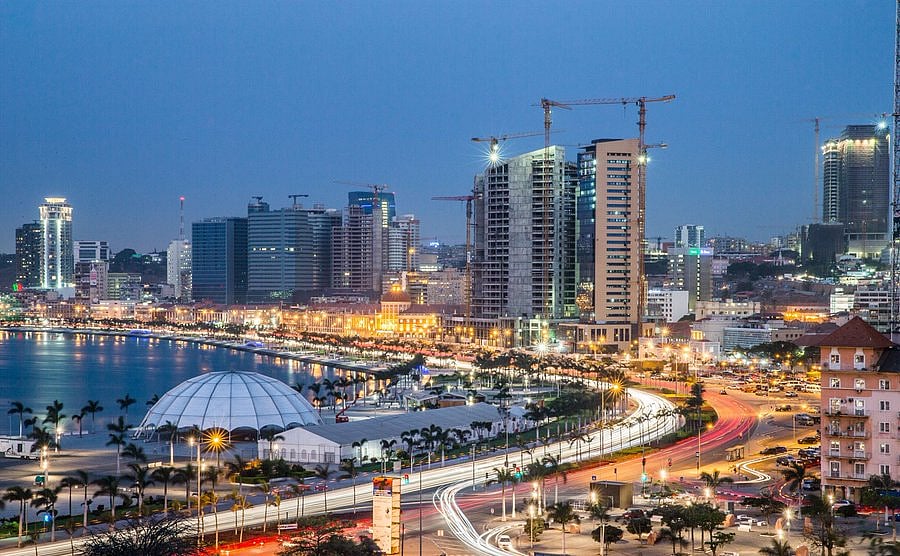
The Luanda glows along the Atlantic shoreline as waves roll in under night skies, where cranes and rising towers signal rapid construction while the Angolan capital’s waterfront pulses with vibrant nightlife and sea-breeze energy.
X | @AfricaFirsts
Manila: Good news for Filipino travelers: you can now explore Angola without a visa for short stays — a welcome expansion of the world that’s suddenly within easier reach.
Filipinos can now visit Angola visa-free for 30 days.
Get updated faster and for FREE: Download the Gulf News app now - simply click here.
The agreement between the two countries, as confirmed by the DFA, allows Filipino visitors up to 30 days per visit, and a total of 90 days per year. This opens a new long-haul destination for Filipinos eager for adventure, nature, and a fresh cultural encounter.
LEARN PORTUGUESE: The official language of Angola is Portuguese. It serves as the primary language for government, education, and media. In addition to Portuguese, there are several widely spoken indigenous Bantu languages recognised as national languages, the most prominent being Umbundu, Kimbundu, and Kikongo.
A new destination on your list
This visa-free arrangement turns Angola from a distant idea into an attainable destination for Filipino travelers seeking something off the beaten track.
Whether you’re drawn by dramatic landscapes, wildlife, or a city with a lively, evolving character, Angola now deserves a spot on the bucket list — and it’s easier to get there than before.
Why this matters
For one, it widens travel horizons: Visa-free access removes one of the key logistical hurdles for spontaneous or short-notice travel, making Angola a realistic option for holiday planning.
It also offers fresh experiences: Angola offers landscapes and cultures few Filipino tourists have seen — rugged deserts, dramatic waterfalls, Atlantic beaches, and Portuguese-influenced cities.
Luanda, the vibrant capital of Angola, is where Atlantic Ocean views meet rich culture, modern skylines and deep history. From its bustling waterfront to its colourful streets and music-filled nights, Luanda captures the energy and spirit of one of Africa’s fastest-growing cities. A general view of the construction on high-rise buildings in the capital of Luanda on April 21, 2026.
Strengthened ties
The arrangement reflects growing diplomatic goodwill and tourism cooperation between the Philippines and Angola, which can encourage more people-to-people exchanges and new travel routes.
The new visa-free travel arrangement between the Philippines and Angola opens up exciting opportunities for tourism and cross-cultural engagement.
Building on the diplomatic goodwill, the visa-free policy allows Filipinos to visit for stays of up to 30 days per visit (with a cumulative max of 90 days a year), thus easing access, which can stimulate interest in long-haul travel, creating demand for new flight routes and helping to build stronger commercial and trade ties between Southeast Asia and Southern Africa.
Angola offers diverse attractions — from the spectacular Kalandula Falls and the Kissama National Park to the vibrant history of Luanda.
Strengthening global mobility
This visa exemption allows tourists and digital nomads to experience these destinations without the historical burden of tedious visa applications, fostering meaningful cultural exploration.
This development comes as a significant milestone for Philippine passport holders.
It aligns with recent broader government efforts — such as the recent visa waiver agreement signed with Paraguay — to enhance the power and reach of the Philippine passport globally.
Beyond leisure, visa-free access makes it significantly easier for Filipino business delegations, energy sector professionals, and academics to explore emerging markets in Angola, paving the way for mutual investment and collaborative partnerships, according to the official Philippine News Agency.
Philippine passport: where it stands
The Philippine passport’s ranking has improved gradually in recent years as more countries open visa-free or visa-on-arrival access.
While precise ranking can vary by index and year, global passport indices currently place the Philippine passport in the mid-range of mobility, with roughly 70–80 destinations offering visa-free or visa-on-arrival access to Filipino citizens.
New agreements like Angola’s help boost that number and the passport’s practical travel reach.
Kalandula Falls in Angola is a breathtaking natural wonder — plunging 105 metres (344 feet) high and stretching 400 metres (1,312 feet) wide. Surrounded by lush rainforest and powerful mist, it’s one of the largest waterfalls in the world and one of Africa’s most spectacular hidden gems.
Top places to visit in Angola
If you’re thinking of making the trip, here are some highlights to consider:
Luanda — The bustling capital on the Atlantic, mixing modern developments, colonial-era buildings, vibrant markets, and lively nightlife. Great for food, city culture, and as a gateway to other regions.
Kalandula Falls — One of Africa’s largest waterfalls, set among lush scenery and dramatic cliffs; perfect for nature lovers and photographers.
Iona National Park — In southwestern Angola, offering unique desert landscapes, wildlife viewing, and part of the Namib Desert ecosystem.
Benguela and Lobito — Historic coastal towns with beaches, colonial architecture, and relaxed coastal atmosphere.
Tundavala Gap — A spectacular cliff overlooking sweeping valleys; an iconic viewpoint for dramatic panoramas.
Kissama (Quiçama) National Park — Easily accessible from Luanda, known for wildlife reintroduction programs, safaris, and seasonal migrations.
Namibe (Namib Desert) — Expansive sand dunes, stark desert beauty, and striking coastal desert scenery.
Travel tips
Check the fine print: The visa-free stay is up to 30 days per visit and capped at 90 days per year. Confirm entry requirements, passport validity, and any health or transit rules before booking.
Flights and connections: Direct flights are limited; expect to connect through regional hubs in Africa, Europe, or the Middle East.
Safety and health: Review travel advisories, recommended vaccinations, and local safety tips. Register with the DFA’s travel advisory systems if required.
Local culture: Portuguese is the official language. Learning a few basic Portuguese or carrying a phrasebook can enhance your experience.
Sign up for the Daily Briefing
Get the latest news and updates straight to your inbox
Network Links
GN StoreAbout Gulf NewsTerms & ConditionsReach by GNSitemapContact usPrivacy PolicyGN FocusHave your sayWork with usAdvertise with usGulf News epaperPrinting Services
Download our app
© Al Nisr Publishing LLC 2026. All rights reserved.