Members of a Filipino family take in the scenic beauty of Lake Kawaguchiko, with Mt. Fuji standing majestically in the background. Photo taken on March 30, 2026.
Japan opens eVisa to Filipino tourists — what's new, what to know
Filipino travelers can now apply digitally, though independent trips are still restricted
Last updated:
3 MIN READ
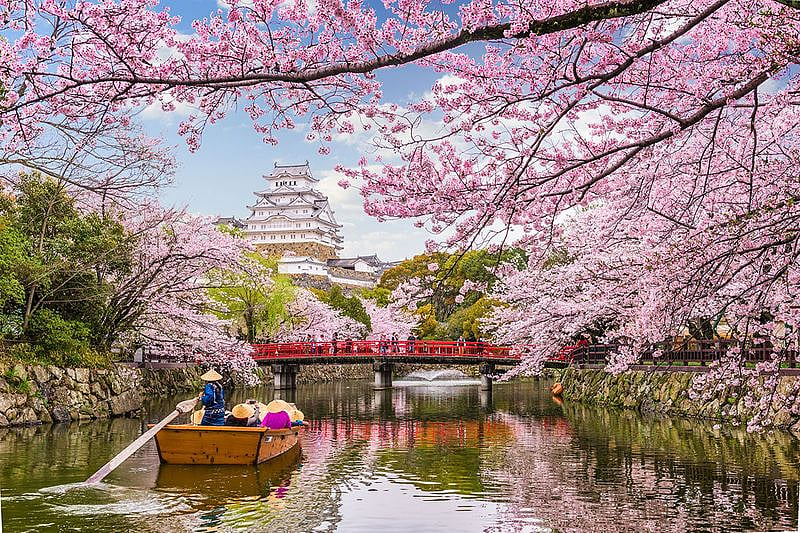
Sakura blossoms bloom in Japan. Under Japan's expanded eVisa program, eligible Filipinos may apply online if they hold an ordinary Philippine passport, reside in the Philippines, are traveling exclusively for tourism, and are joining a package tour organized by a travel agency designated by Japanese authorities.
Shutterstock
Manila: Japan has opened its electronic visa (eVisa) system to eligible Philippine passport holders for the first time, marking a significant step toward streamlining travel between the two countries.
Currently the programme comes with a major limitation: it is available only to tourists traveling on organised package tours.
When new visa rule kicked in
The expanded Japan eVISA programme, which took effect on May 15, 2026, allows qualified Filipinos living in the Philippines to apply for a visa online instead of submitting traditional paper applications.
Get updated faster and for FREE: Download the Gulf News app now - simply click here.
The move is aimed at simplifying the application process for leisure travelers, although millions of Filipinos planning independent trips, business travel, family visits or studies in Japan will still need to use the standard visa application system.
Who qualifies?
According to Japan's Ministry of Foreign Affairs, applicants must:
Hold an ordinary Philippine passport.
Reside in the Philippines.
Travel exclusively for tourism.
Join a package tour arranged by a travel agency designated by Japanese authorities.
Travelers who do not meet those conditions — including independent tourists, business travelers, students, and those visiting relatives or friends— must continue applying through the Japan Visa Application Centre (JVAC) operated by VFS Global.
What's new?
The biggest change is the reduction in documentary requirements for eligible applicants.
Filipinos applying through the package-tour eVisa program are no longer required to submit:
Bank certificates.
Bank statements.
Income Tax Returns (ITRs).
The streamlined process removes some of the financial documents that have traditionally been among the most time-consuming parts of a Japanese visa application.
Japanese authorities, however, reserve the right to request additional documents or require applicants to appear for an interview if necessary.
Tourists at Dotonbori shopping street, a famous destination for travellers and shoppers in Osaka. Japan is a land of captivating contrasts and rich traditions, from bustling metropolis to serene countryside, Japan offers an unparalleled travel experience, from the vibrant energy of Tokyo's futuristic skyline, to the ancient temples in Kyoto, and the natural beauty of Mount Fuji.
The Japan Embassy in the Philippines has clarified that the temporary visitor visa (up to 90 days of stay in Japan) remains "gratis" (or free) for Filipinos. This follows a report from The Japan Times stating that visa fees will increase starting July 1. The embassy explained that Filipinos are exempt from this fee hike, as per PNA.
Visa conditions: What to know
The eVisa issued under the new system is:
Valid for a single entry.
Intended only for tourism.
Valid for stays of up to 15 days.
Instead of a visa sticker, travelers must present their Visa Issuance Notice online upon arrival in Japan.
Japanese authorities said screenshots, printed copies and PDF versions will not be accepted, requiring travelers to access the live digital document during immigration inspection.
Why it matters
Japan remains one of the Philippines' most popular overseas destinations, attracting growing numbers of Filipino visitors for sightseeing, shopping, cultural attractions and seasonal events such as cherry blossom viewing.
The new eVisa programme lowers administrative barriers for travelers joining organised tours by eliminating several financial requirements and allowing online processing, potentially encouraging more first-time visitors and group travel.
However, the policy stops short of introducing a fully digital visa system for all Filipinos.
Independent travellers — who make up a substantial share of leisure visitors — as well as business travelers, students and people visiting family members must continue using the conventional visa application process.
The limited rollout suggests Japan is taking a gradual approach to expanding electronic visas, testing the system with organised tours before considering broader eligibility in the future.
Japan has steadily relaxed travel procedures for several countries as inbound tourism rebounds to record levels, while maintaining immigration screening measures.
For Filipino travelers, the latest change represents a significant easing of visa requirements — but only for those willing to travel as part of an accredited package tour.
The Japan Visa Application Centre (JVAC), operated by VFS Global, has five branches in the Philippines:
Japan Visa Application Centre – Quezon City
Japan Visa Application Centre – Parañaque
Japan Visa Application Centre – Makati
Japan Visa Application Centre – Cebu
Japan Visa Application Centre – Davao
For appointments, application requirements, and visa tracking, applicants can use the official VFS Global Japan Visa Philippines website.
The Embassy of Japan transferred visa application intake to these JVAC centres from April 7, 2025, replacing the previous accredited travel agency system.
Sign up for the Daily Briefing
Get the latest news and updates straight to your inbox
Network Links
GN StoreAbout Gulf NewsTerms & ConditionsReach by GNSitemapContact usPrivacy PolicyGN FocusHave your sayWork with usAdvertise with usGulf News epaperPrinting Services
Download our app
© Al Nisr Publishing LLC 2026. All rights reserved.