List: Countries offering Philippine passport holders visa-free access, Schengen next?
78 visa-free, visa-on-arrival or eTA destinations for Filipinos as of February 2026
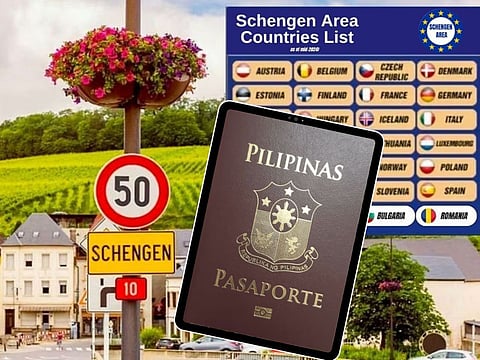
Manila: In a sign of payoffs for enhanced diplomatic drive, Filipinos’ global mobility has made huge improvements with visa-free access rising from 64 to around 78 destinations, based on the latest “dashboard”.
Philippine passport holders now enjoy visa-free access to 36 countries and territories, with additional options for visas on arrival or eTA in about 40-42 more destinations, totalling around 78 accessible without prior visas, as per the Passport Index (mid-February 2026).


Visa-free countries
Philippine passports allow visa-free entry to these 36 destinations (stays vary, typically 14-90 days):
Barbados
Benin
Brunei
Bolivia
Brazil
Côte d'Ivoire
Colombia
Costa Rica
Dominica
Fiji
Micronesia
Hong Kong
Haiti
Indonesia
Cambodia
Kiribati
Kazakhstan
Laos
Morocco
Myanmar
Mongolia
Macau
Malawi
Malaysia
Peru
Palestinian Territories
Paraguay
Rwanda
Singapore
Suriname
Thailand
Tajikistan
Taiwan
St. Vincent and the Grenadines
Vietnam
Vanuatu.
Visa-on-arrival access
Around 40 countries offer visas-on-arrival, including Maldives, Mauritius, Bolivia, Cape Verde, Djibouti, Ethiopia, and others in Africa, the Pacific, and some in the Middle East (including Oman).
Exact lists fluctuate but total mobility has expanded to 78 destinations.
ETA
Filipino citizens are required to obtain an Electronic Travel Authorisation (eTA) or similar digital entry clearance for travel to several countries, including Israel, Kenya, Sri Lanka, the Seychelles, and Pakistan.
Thailand has also implemented a mandatory ETA for visitors, which includes the Philippines.
Key destinations requiring an eTA for Philippine passport holders:
Israel: (90 days)
Kenya: Requires an eTA (90 days)
Sri Lanka: Requires an eTA (30 days
Seychelles: Visitor authorization required
Thailand: Mandatory eTA for travelers
Canada: Only for Filipinos with a previous Canadian visa in the last 10 years or a current U.S. non-immigrant visa.
Pakistan: eTA required.
Other locations: Some sources indicate potential requirements in Guinea-Bissau, Somalia, and The Gambia.
Russia (electronic visa, 30 days, as per latest updated from the Russian embassy in Manila)
Historical ranking trends
The Philippine passport has shown gradual improvement:
80th in 2022,
73rd-75th in 2024-early 2025,
72nd mid-2025,
73rd in January 2026, and
66th by February 2026 per Henley Passport Index
However, compared to its Southeast Asian peers, the Philippines lags:
Singapore ranks top 10 (193 destinations)
Japan/South Korea ~2nd (190)
Malaysia/Brunei higher (158-162).
Schengen: Diplomatic 'moonshot'
The 29-member Schengen Area (25 EU states + Iceland, Liechtenstein, Norway, and Switzerland) mandates visas for citizens of about 60 nations deemed “higher-risk” for overstays or irregular migration, based on reciprocal agreements and historical data.
The Philippines falls into this category.
Reasons: Factors like economic disparities and past overstay rates, unlike visa-exempt Asian peers such as Singapore, Japan or South Korea.
But if diplomatic work, alongside improvements in peace, reforms (better corruption curbs), ease of doing business, traffic and economic conditions, the Philippines could finally join the Upper Middle Income Countries (UMIC) league, with potentially dramatic improvements in its passport ranking.
Schengen visa application
Filipinos currently apply for Schengen via via VFS Global or embassies with passport, finances, itinerary, and insurance. Processing takes 15 days, costing €80.
There are ongoing talks that aim for exemptions, but none are finalised.
Assessment criteria
Filipino diplomats continue to work on Schengen exemption.
However, Schengen nations’ decisions hinge on "visa liberalisation dialogues," evaluating document security, illegal migration stats (e.g., asylum rejections), economic ties, and border checks.
Filipinos must prove ties to home (job, family, funds) to counter perceived “flight risks”. Currently Schengen approval rates hover around 80-90% for complete applications.
Diplomatic drive
As the Philippines’ Department of Foreign Affairs (DFA) pursues more bilateral visa-waiver agreements, negotiations for expanded access and reciprocity (e.g., recent Philippines visa-free for Chinese nationals) need to be sustained.
The diplomatic drive for 2026 remains ongoing, even as Filipino envoys continue to target tourism/business travel boosts.

