World Bank chief urges Pakistan to create 30m jobs over next decade to harness youth boom
Ajay Banga says youth boom can drive growth with focus on reforms and investment
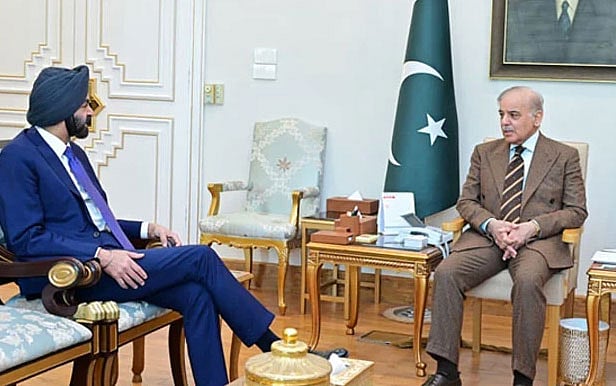
KARACHI: Pakistan must create up to 30 million jobs over the next decade to turn its rapidly growing youth population into an economic advantage — or risk instability and rising outward migration, a Reuters report said, citing World Bank President Ajay Banga.
Speaking during a visit to Pakistan this week, Banga said job creation must become the country’s top economic priority as millions of young people enter the workforce each year.
“Job creation is the North Star,” he told Reuters.
Pakistan needs to generate 2.5 million to 3 million jobs annually over the next decade, a challenge Banga described as “generational.” Failure to do so could fuel illegal migration and domestic unrest, he warned.
The comments come as Pakistan enters the implementation phase of a 10-year Country Partnership Framework with the World Bank, which commits around $4 billion a year in combined public and private financing. About half of that is expected to come from private-sector investments led by the International Finance Corporation.
Banga said the focus on private capital reflects Pakistan’s limited government spending capacity and the fact that around 90% of jobs are created by the private sector.
He outlined three key pillars for Pakistan’s job strategy: investment in human and physical infrastructure, business-friendly regulatory reforms, and improved access to financing and insurance — especially for small firms and farmers.
Labour-intensive sectors such as infrastructure, healthcare, tourism and small-scale agriculture hold the greatest employment potential, he said, noting farming alone could account for roughly a third of the jobs Pakistan will need by 2050.
Banga also pointed to Pakistan’s growing pool of freelancers as a sign of strong entrepreneurial spirit, but said better access to capital and infrastructure was needed to help small ventures scale into job-creating businesses.
The pressure is already visible in rising emigration. Nearly 4,000 doctors left Pakistan in 2025, the highest annual outflow on record, according to official data cited by Reuters.
Power sector a priority
Banga said fixing Pakistan’s troubled power sector is the most urgent short-term challenge, citing heavy losses, weak bill recovery and growing debt in electricity distribution.
He said progress on privatisation and private-sector participation would be critical to restoring financial stability and boosting investment, warning that rapid rooftop solar expansion could destabilise the grid if reforms lag behind.
“Electricity is fundamental to everything — health, education, business and jobs,” he said.
Climate resilience
Banga also urged Pakistan to integrate climate resilience into mainstream development spending, rather than treating it as a separate issue.
One of the world’s most climate-vulnerable countries, Pakistan has been repeatedly hit by floods, heatwaves and erratic monsoons.
“Build resilience into infrastructure, housing, water and agriculture,” he said.
Despite Pakistan’s economic strains, Banga said he viewed the country as a long-term opportunity for growth.
“We’re in the business of hope,” he added.

Sign up for the Daily Briefing
Get the latest news and updates straight to your inbox
Network Links
GN StoreDownload our app
© Al Nisr Publishing LLC 2026. All rights reserved.