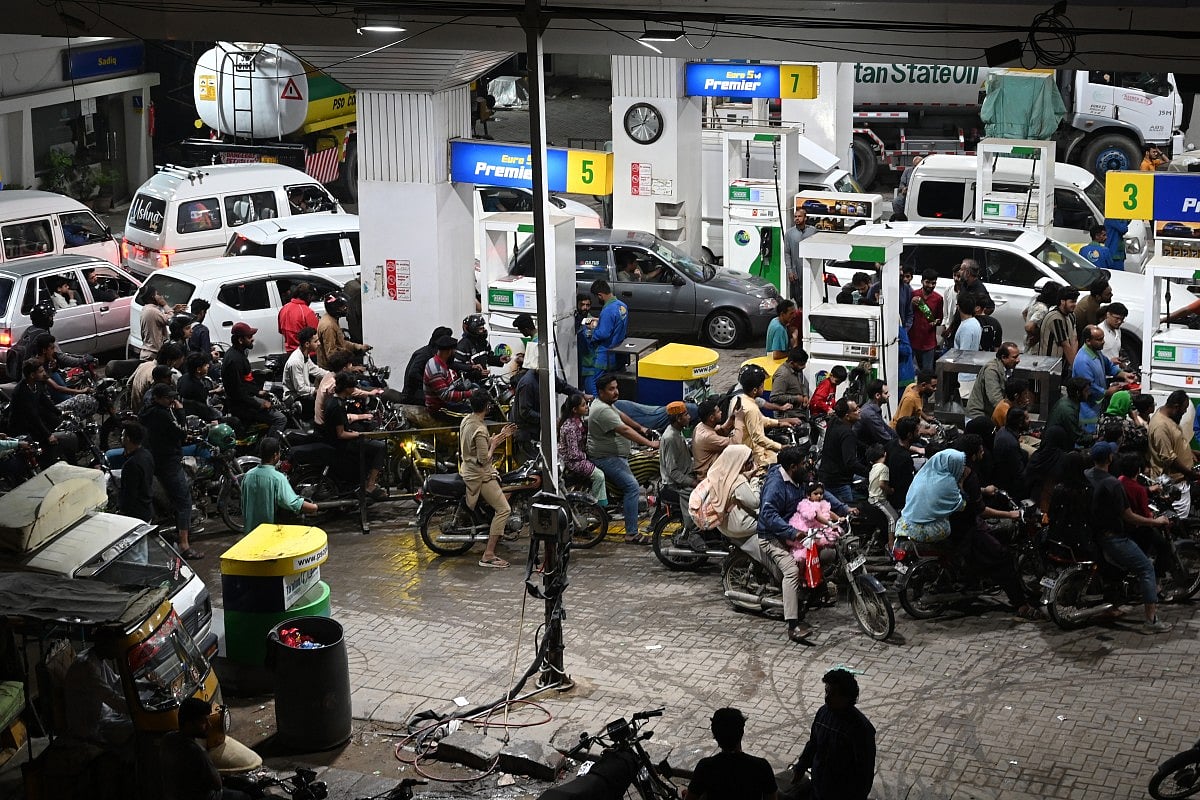
Dubai: Pakistan has sharply increased petrol and diesel prices, passing on the impact of surging global oil costs linked to the ongoing conflict in the Middle East, in a move that is expected to hit households and transport costs almost immediately.
Petrol prices have risen by 42.7% to 458.40 Pakistani rupees per litre, while diesel has jumped 54.9% to 520.35 rupees per litre, marking one of the steepest increases in recent months.
Officials said the decision reflects the reality of international markets, with the government unable to sustain subsidies amid prolonged price pressure.
“The decision made today is that as per international markets, after the increase in the petrol prices the new price will be 458.40 rupees which will be effective from tomorrow,” said Ali Pervaiz Malik, Pakistan’s petroleum minister.
Get updated faster and for FREE: Download the Gulf News app now - simply click here.
War-driven oil shock feeds into prices
The increase comes amid a sharp rise in global oil prices following the US-Israel war on Iran, which has disrupted shipping through the Strait of Hormuz, a key route for global energy supplies.
Pakistan, which relies heavily on imported oil, has been particularly exposed to the disruption, with this marking the second price hike in less than a month after a roughly 20% increase in early March.
The government had initially attempted to shield consumers through subsidies, but mounting costs have forced a rollback.
“Since the resources are limited and there is no end to this war in sight, there was no way to continue with a blanket subsidy,” Malik said.
Inflation pressure set to build
Economists warn that the impact will extend beyond fuel, feeding into broader inflation through transport, logistics and food costs, especially in a country where a significant portion of the population is already under financial strain.
Pakistan is classified as a lower-middle-income economy, with around a quarter of its population living in poverty, making it particularly vulnerable to sudden price shocks.
Authorities have already introduced austerity measures, including shorter work weeks for government offices and extended school holidays, in an effort to reduce fuel consumption.
Supply risks keep oil markets volatile
Analysts say the current surge in oil prices reflects deeper structural concerns about supply disruptions, with markets reacting to uncertainty over how long the conflict will continue.
“The absence of a clear diplomatic path has heightened uncertainty around the duration of the disruptions, pushing oil prices to the upside," said Abdelaziz Albogdady, Market Research and Fintech Strategy Manager at FXEM.
He added that even if tensions ease, supply chains may take time to recover, keeping prices elevated.
“The normalisation of supply chains is likely to be gradual, as damaged infrastructure, logistical constraints, and heightened security risks could continue to weigh on output and transport capacity.”
Limited relief in sight
Markets are expected to remain highly sensitive to geopolitical developments, with further escalation likely to push prices higher, while any signs of easing may only offer short-term relief.
“Volatility is likely to remain elevated, with a clear bias toward sustained price strength as long as supply-side risks persist,” said Albogdady.
The higher fuel costs are expected to filter quickly into daily expenses, adding to the pressure on already stretched household budgets.
- With inputs from agencies.

Sign up for the Daily Briefing
Get the latest news and updates straight to your inbox
Network Links
GN StoreDownload our app
© Al Nisr Publishing LLC 2026. All rights reserved.