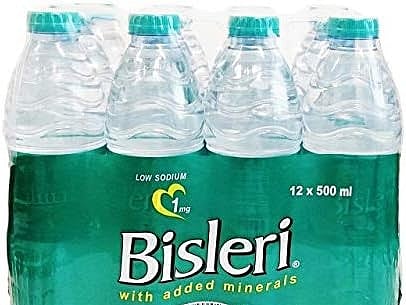
The Food Safety and Standards Authority of India (FSSAI) is taking a closer look at packaged drinking water manufacturer Bisleri International, reported Indian media, after an examination of a sample found contaminants. It has already initiated prosecution proceedings against the brand.
It also started filings against Asha Confectionery, for what it called ‘misbranded, sub-standard and unsafe chocolate cookies’. In addition to these two businesses, the licence of Urmi Lifesciences LLP was suspended owing to ‘gross hygienic violations and non-compliance of food safety standards’.
Get updated faster and for FREE: Download the Gulf News app now - simply click here.
So, what happened?
The FSSAI’s lab ran some tests on a Bisleri water sample and found it had unsafe levels of Bromate. It also had polynuclear aromatic hydrocarbons (PAHs), or pollutants, which were found in the subsequent round of testing.
What is Bromate and why is it so bad?
Bromate is one of those chemical disinfection byproducts. It forms in drinking water when ozone reacts with naturally occurring bromide. So, it cleans stuff up. Except if you have too much of it, it poses health risks, including possible cancer and kidney damage. In India, the maximum permissible limit for bromate is 0.01 mg/L (10 micrograms per litre)
Ok, so what happened next?
When it was declared unsafe, Bisleri appealed and the sample was sent to another food lab. At this lab, the water was found to have PAHs.
"The laboratory findings established violations relating to unsafe food under the FSS Act, 2006. Sanction has been granted to launch prosecution under the FSS Act, 2006, against M/s Bisleri International Pvt. Ltd," the FSSAI tweeted.
What was wrong with Asha’s cookies?
Well, a sample found that the declared sugar content was not equal to how much sugar was actually present in the item. Plus, there were ingredients such as Carmosine (synthetic red food dye), more than the allowed amount of Tartrazine (synthetic yellow food dye), and Sunset Yellow FCF (petroleum-derived orange food dye), which wasn’t supposed to be there at all.
And Urmi Lifesciences?
FSSAI listed its findings over X. Here’s a list of what an inspection found:
1. Poor hygienic conditions, cobwebs, flaking paint and dust accumulation on machinery and floors were observed.
2. Non-permitted ingredients and non-edible material (silica) were found alongside food products.
3. Raw materials and finished products lacked proper labelling, identification and traceability details.
4. Food products were stored directly on the floor without proper pallets and designated storage areas.
5. An unapproved, prima facie unsafe product intended for export was reportedly manufactured at the premises.
6. Non-compliance with pest control and food-grade packaging requirements was observed.
7. The unit received an overall compliance score of 15% (Non-Compliance Category).
Network Links
GN StoreDownload our app
© Al Nisr Publishing LLC 2026. All rights reserved.