Pawar rose under the towering presence of his uncle and Nationalist Congress Party founder Sharad Pawar.
Ajit Pawar: A life of power, splits and reinvention in Maharashtra politics
Ajit’s 3-decade journey was marked by influence, upheaval and dramatic political turns
Last updated:
3 MIN READ
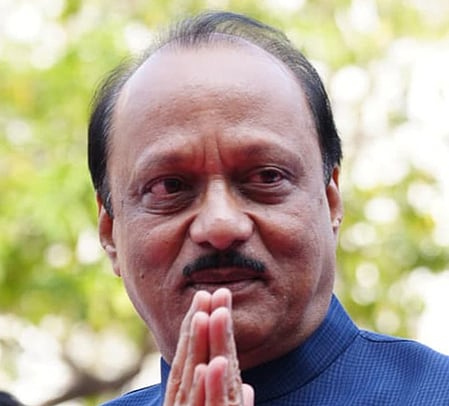
His long legislative career in the state began in 1995, when he won the Baramati Assembly seat — a constituency he would retain for nearly three decades and across seven terms, emerging as one of the most influential regional leaders in western Maharashtra.
IANS/file
Dubai: Ajit Pawar’s life in politics began in Baramati, was built in Baramati, and ended in Baramati — the sugarcane heartland that remained his constituency, his power base and the centre of his journey for over three decades.
Born in 1959 into Maharashtra’s most influential political family, Pawar rose under the towering presence of his uncle and Nationalist Congress Party founder Sharad Pawar, while steadily shaping an identity of his own.
According to NDTV, Baramati was not just Pawar’s constituency but the proving ground that nurtured his political career for over thirty years, transforming him from a young leader in his uncle’s shadow into one of Maharashtra’s most powerful politicians.
Like much of the Pawar family, his roots lay in the cooperative movement. The Times of India noted that Pawar began his public life in 1982 in the cooperative sector, first entering a sugar factory board before becoming chairman of the Pune District Central Cooperative Bank in 1991 — a role that strengthened his influence across the region.
The same year, he was elected to the Lok Sabha from Baramati, later vacating the seat for Sharad Pawar.
NCP leaders Supriya Sule and Ajit Pawar during a special session of Maharashtra Assembly, at Vidhan Bhawan in Mumbai, Wednesday, November 27, 2019.
Heavyweight portfolios
His long legislative career in the state began in 1995, when he won the Baramati Assembly seat — a constituency he would retain for nearly three decades and across seven terms, emerging as one of the most influential regional leaders in western Maharashtra.
After Sharad Pawar broke away from the Congress to form the NCP in 1999, Ajit Pawar was widely seen as the party’s political heir. That same year, at just 40, he was elevated to the Maharashtra cabinet.
Indian Express reported that Pawar went on to hold heavyweight portfolios including Irrigation, Rural Development, Water Resources and Finance — ministries that allowed him to build a vast organisational network across the state, particularly in western Maharashtra.
He achieved a historic milestone
Though he never became chief minister, the Times of India highlighted that Pawar made history as Maharashtra’s longest-serving Deputy Chief Minister, having held the post six times under governments led by Prithviraj Chavan, Devendra Fadnavis, Uddhav Thackeray and Eknath Shinde.
Known for his tough, centralised style of functioning, Pawar cultivated a loyal base within the NCP. But his rise also created unease within the Pawar family’s political circle.
Indian Express pointed out that succession tensions intensified after Sharad Pawar’s daughter Supriya Sule entered politics in 2009, and later when Rohit Pawar emerged as a third-generation leader.
Pawar’s political life was punctuated by dramatic turns.
NDTV recalled the first public rupture in November 2019, when Pawar briefly joined hands with the BJP to form a surprise government that collapsed within 80 hours — the first visible crack in the NCP family.
The divide became permanent in July 2023, when Pawar led a faction of MLAs into the BJP-led Mahayuti government, splitting the NCP down the middle.
Pawar's legacy
Months later, the Election Commission awarded Pawar’s faction the party name and symbol, leaving Sharad Pawar’s loyalists to regroup as NCP (SP).
In the 2024 Maharashtra Assembly elections, Indian Express reported that Pawar consolidated his position within the ruling alliance, with his party winning 41 of the 59 seats it contested.
NDTV summed up Pawar’s legacy as one that mirrored India’s evolving politics — where alliances shift, families fracture and reinvention becomes essential for survival.
Ajit Pawar is survived by his wife Sunetra Pawar, a Rajya Sabha MP, and two sons, Parth and Jay.
From the cooperative movement to the centre of Maharashtra’s power structure, Pawar’s journey remained inseparable from Baramati — the land that shaped his rise, sustained his influence and ultimately witnessed the end of his long political career.

A Senior Associate Editor with more than 30 years in the media, Stephen N.R. curates, edits and publishes impactful stories for Gulf News — both in print and online — focusing on Middle East politics, student issues and explainers on global topics. Stephen has spent most of his career in journalism, working behind the scenes — shaping headlines, editing copy and putting together newspaper pages with precision. For the past many years, he has brought that same dedication to the Gulf News digital team, where he curates stories, crafts explainers and helps keep both the web and print editions sharp and engaging.
Sign up for the Daily Briefing
Get the latest news and updates straight to your inbox
Network Links
GN StoreAbout Gulf NewsTerms & ConditionsReach by GNSitemapContact usPrivacy PolicyGN FocusHave your sayWork with usAdvertise with usGulf News epaperPrinting Services
Download our app
© Al Nisr Publishing LLC 2026. All rights reserved.