Hormuz crisis turns Trump-Xi summit into high-stakes showdown
China faces pressure to rein in Tehran as Trump heads to Beijing amid Araghchi visit
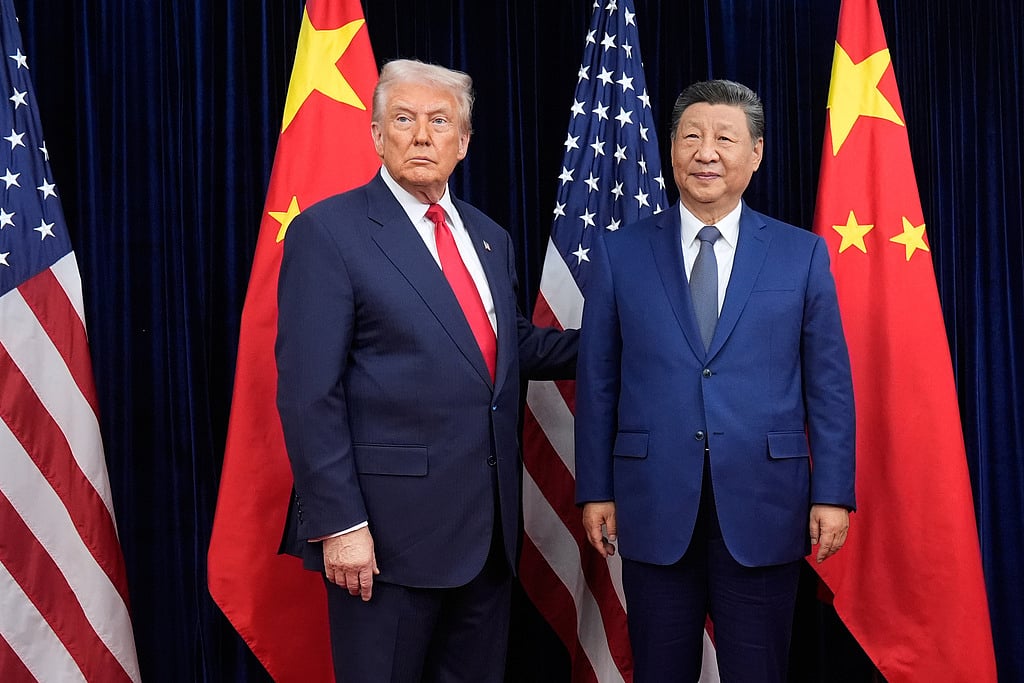
Dubai: The Iran war is rapidly reshaping global diplomacy ahead of next week’s high-stakes summit between US President Donald Trump and Chinese President Xi Jinping, with Beijing increasingly caught between its strategic ties with Tehran and mounting US pressure to help defuse the Hormuz crisis.
Iranian Foreign Minister Abbas Araghchi visited Beijing on Wednesday for talks with his Chinese counterpart in the first in-person meeting between the two allies’ top diplomats since the war began. The visit underscored Tehran’s growing reliance on Beijing as pressure mounts over the Strait of Hormuz, stalled peace efforts with Washington and fears of a wider regional conflict.
Araghchi’s Beijing trip comes just a week before Trump is scheduled to arrive in the Chinese capital for talks expected to focus heavily on the Iran war, global energy security and the worsening disruption to shipping through Hormuz.
China has played a significant but delicate role throughout the conflict. Beijing remains Iran’s biggest oil buyer and an important economic lifeline for Tehran, while also quietly encouraging diplomatic efforts aimed at preventing a full-scale regional collapse.
Difficult position
At the same time, the United States has increasingly pushed China to use its influence over Iran to reopen the strategic waterway, through which roughly a third of China’s imported oil and gas passes.
US Treasury Secretary Scott Bessent publicly urged Beijing to “step up with some diplomacy” to pressure Tehran, while Secretary of State Marco Rubio accused Iran of “trying to hold hostage the global economy.”
The pressure has placed Beijing in a difficult position.
According to CNN, Chinese officials and analysts remain deeply concerned that a prolonged Hormuz crisis could severely damage China’s energy security, supply chains and export-driven economy just as Beijing prepares for Trump’s closely watched visit.
Some Chinese analysts also believe Washington’s broader strategy extends beyond Iran itself. One Chinese source told CNN that Trump had already moved against Chinese-linked interests in Venezuela before turning to Iran, effectively “clipping China’s wings” across key energy regions. The concern in Beijing is that sustained pressure on Tehran could gradually weaken China’s access to critical oil routes and strategic partners across the Middle East.
Trump-China ties: Why the summit matters
First major face-to-face meeting between US President Donald Trump and Chinese President Xi Jinping since the Iran war escalated.
Scheduled for May 14–15 in Beijing, with the Middle East crisis now looming over the talks.
The relationship remains strained over:
Trade tariffs
Technology restrictions
Taiwan tensions
Rare earth supply chains
Sanctions on Chinese firms
The Iran war has added a new flashpoint:
China buys large volumes of Iranian oil.
The Strait of Hormuz is vital for Chinese energy imports.
Washington wants Beijing to pressure Tehran to reopen shipping routes.
Chinese analysts believe Trump wants a diplomatic breakthrough before visiting Beijing to project strength ahead of US midterm elections.
Beijing, however, sees the summit as a chance to stabilize ties and avoid a deeper economic confrontation with the US.
According to Brookings Institution analysts, expectations for major breakthroughs remain low, with both sides focused more on preventing relations from worsening.
Possible outcomes being discussed include:
Chinese purchases of US farm goods and Boeing aircraft
Limited tariff adjustments
Broader trade understandings
Talks on supply chains and technology controls
Analysts say the summit’s success may depend less on major deals and more on whether both leaders leave without a fresh crisis erupting.
More than regional war for China
The Iran conflict has therefore become more than a regional war for China. It is increasingly being viewed in Beijing as part of a broader geopolitical struggle with Washington over trade, energy and global influence.
CNN, citing Chinese sources familiar with internal discussions, reported that Beijing sees the Trump summit as a rare opportunity to stabilize ties after years of worsening tensions over tariffs, technology restrictions, Taiwan and sanctions on Chinese firms.
But the war has complicated those calculations.
“The sudden introduction of Iran into the center of US-China relations has made things difficult for the Chinese side,” Chinese foreign policy scholar Cui Hongjian told CNN.
Chinese analysts quoted by CNN also suggested the prolonged conflict may have weakened Washington’s bargaining position by dragging the US into a costly and open-ended confrontation that has rattled global energy markets without producing a decisive outcome.
Limited expectations
“Trump now would want to turn the Iran page as quickly as possible,” Chinese foreign policy adviser Wu Xinbo told CNN, arguing that the US no longer appears to hold a dominant upper hand.
At the same time, Beijing remains cautious about appearing too close to Tehran during the crisis.
Chinese officials fear that if Trump secures a diplomatic breakthrough with Iran before arriving in Beijing, he could use it to project renewed American strength during the summit. But they are also wary that excessive Chinese pressure on Tehran could create the impression that Beijing abandoned a long-time strategic partner under US pressure.
Analysis by the Brookings Institution suggests expectations for major breakthroughs at the Trump-Xi summit remain limited despite efforts by both sides to stabilize ties.
Brookings experts said the relationship currently rests more on avoiding confrontation than building genuine long-term trust, with both governments still divided by trade disputes, technology rivalry and tensions over Taiwan.
Still, both leaders are expected to use the summit to project stability at a time when the Iran war has shaken global markets and heightened fears of wider economic fallout.
Throughout the conflict, China has repeatedly called for de-escalation while positioning itself as a stabilizing force focused on energy security and economic continuity.
“The US is fighting without winning, China is winning without fighting,” former European Union Chamber of Commerce in China president Joerg Wuttke told CNN.
Yet much could still change before Trump lands in Beijing.
Any renewed fighting in Iran, escalation in Hormuz or collapse of fragile ceasefire efforts could quickly overshadow the summit — turning what was intended as a carefully managed diplomatic showcase into a meeting dominated by war, oil and rising global uncertainty.

Sign up for the Daily Briefing
Get the latest news and updates straight to your inbox
Network Links
GN StoreDownload our app
© Al Nisr Publishing LLC 2026. All rights reserved.