After claiming Iran victory, Trump warns Nato over Hormuz
Trump seeks help to reopen Hormuz as doubts grow over claims Iran war is already won
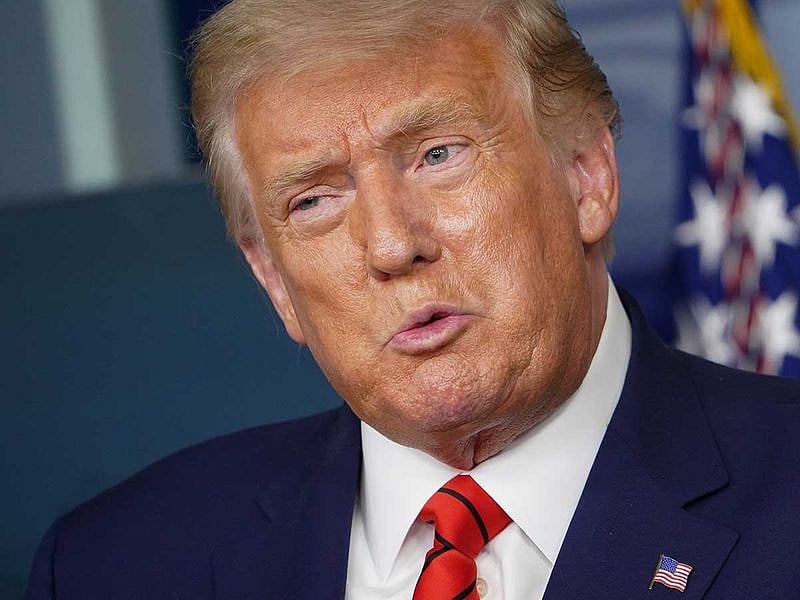
Dubai: Just a week ago, US President Donald Trump suggested Britain did not need to send ships to the Middle East, saying the United States had already “won” the war with Iran.
Now the tone appears to have shifted.
Trump is urging allies — including Nato partners, Britain and even China — to help reopen the Strait of Hormuz, the vital route for global oil shipments.
In remarks reported by CNN and the Financial Times, he warned that a lack of response from Europe could affect the future of Nato, while also hinting that broader geopolitical relationships could depend on whether countries help restore shipping through the strait.
The appeal highlights the tension between Trump’s repeated declarations that the war is already won and the reality of a conflict that appears far from settled.
Early victory claims meet strategic reality
Administration officials continue to project confidence about the war’s trajectory.
US Ambassador to the United Nations Mike Waltz told CNN’s State of the Union that American forces had achieved what he called a “dominant victory, the likes of which we haven’t seen in modern American military history.”
5 challenges facing Trump in the Iran war
Strait of Hormuz crisis: Iran’s actions have effectively halted traffic through the strategic oil route, sending global prices higher.
Iran’s uranium stockpile: Despite US strikes, Iran may still possess highly enriched uranium that could revive nuclear ambitions.
Kharg Island dilemma: Targeting Iran’s key oil export hub could weaken Tehran but risks casualties and economic turmoil.
No diplomatic exit yet: Iran has rejected Trump’s demand for unconditional surrender and no negotiations are underway.
Political pressure at home: Memories of Iraq and Afghanistan make Americans wary of another prolonged Middle East war.
Energy Secretary Chris Wright was also optimistic, telling ABC News that the conflict could end within “weeks.”
But Israeli officials have suggested their air campaign against Iranian military and intelligence targets could continue for at least three more weeks, underscoring uncertainty about how long the fighting may last.
History offers a cautionary reminder that wars are rarely defined in their opening weeks. The United States’ overwhelming military advantage often produces early battlefield success, but the political and strategic consequences of conflicts tend to unfold over time.
Challenges to a quick end
Several obstacles stand between Washington and a swift end to the conflict.
The most immediate is the Strait of Hormuz. Iran’s actions have effectively halted traffic through the narrow waterway that carries roughly a fifth of the world’s oil supply, sending global energy prices sharply higher.
Clearing Iranian missile batteries, drones and possible sea mines from the strait could take time and may require a multinational naval effort. So far, the response to Trump’s call for help from foreign navies has been cautious.
Trump argued in comments cited by CNN that Europe and China depend far more heavily on Gulf oil than the United States and therefore have a greater stake in reopening the route.
Nuclear concerns remain
Another unresolved issue is Iran’s nuclear material.
Despite Trump’s earlier claim that US strikes had “obliterated” Iran’s nuclear programme, analysts believe Iran may still possess stocks of highly enriched uranium.
Securing or removing such material would be a complex and risky operation that could require large deployments of US special forces and potentially lead to direct ground combat with Iranian troops.
Risks of widening the conflict
Another option discussed by analysts involves targeting Kharg Island, the hub of Iran’s oil exports and a crucial source of revenue for the government.
US air strikes reportedly targeted the island over the weekend. But capturing or disabling it outright could require a major amphibious operation and risk significant casualties, environmental damage and severe disruption to global energy markets.
Mike Waltz suggested to CNN that the administration would likely keep such options available if Trump chose to further degrade Iran’s economic capabilities.
Uncertain political outcome
Inside Iran, there are few signs that the government’s grip on power is weakening.
Although the pace of Iranian drone attacks on Gulf states appears to have slowed — possibly due to damage inflicted by US and Israeli strikes — projectiles continue to target locations across the region.
Meanwhile, the appointment of Mojtaba Khamenei as Iran’s new supreme leader signals that Tehran intends to continue its confrontation with Washington rather than seek a quick diplomatic settlement.
Scepticism at home
Back in Washington, predictions that the war could end quickly are being met with scepticism outside Trump’s political base.
Republicans in Congress have largely supported the military campaign, but concerns remain that a prolonged conflict could carry political risks ahead of November’s midterm elections.
Defence Secretary Pete Hegseth has rejected comparisons with the wars in Iraq and Afghanistan, insisting the current conflict is fundamentally different.
Yet critics argue that the administration’s unclear endgame and the absence of congressional authorization have raised serious questions about how — and when — the war will end.
For a country still haunted by the wars in Iraq and Afghanistan, the real question may not be whether the United States can win the opening phase of a conflict — but whether it can avoid being drawn into another long and unpredictable struggle.

Sign up for the Daily Briefing
Get the latest news and updates straight to your inbox
Network Links
GN StoreDownload our app
© Al Nisr Publishing LLC 2026. All rights reserved.