UAE to enter intense summer heat and dry conditions from June 7
Al Qayz season brings soaring temperatures, heatwaves, dust and humidity
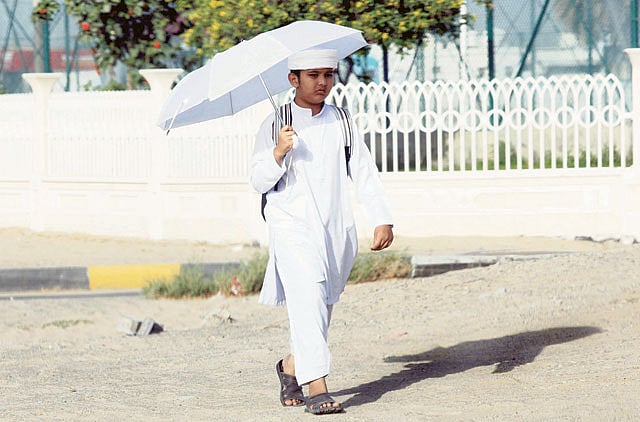
The UAE will enter a period of intense summer heat and dry conditions from June 7 as the Pleiades star cluster rises above the eastern horizon, marking the start of the Gulf region’s traditional summer season known in Arabic as “Al Qayz”, a leading Emirati astronomer said.
Ibrahim Al Jarwan, Chairman of the Emirates Astronomical Society and a member of the Arab Union for Astronomy and Space Sciences, said Arabs have historically regarded the dawn appearance of the Pleiades as a key seasonal marker signalling the onset of extreme summer heat and arid weather.
Get updated faster and for FREE: Download the Gulf News app now - simply click here.
"The Arabs say that Al Qayz extends from the rising of the Pleiades until the rising of Suhail", Al Jarwan said, referring to the star Canopus, whose appearance in late August traditionally signals the gradual end of the harsh summer season.
According to traditional weather lore, the 13-day Pleiades period runs from June 7 to June 19, while the broader Pleiades season extends until July 2 and marks the first phase of Al Qayz. It is followed by the seasons of Al Jawza, Al Marzam and Al Kulaibin, each bringing progressively hotter and, later, more humid conditions.
Temperatures typically rise throughout June before reaching their annual peak in July and August. During June, daytime highs generally range between 40°C and 43°C, with overnight lows between 28°C and 31°C. In July, daytime temperatures usually range from 41°C to 43°C, while night-time temperatures rise to between 30°C and 33°C.
Al Jarwan said periodic heatwaves, known locally as “Waghrat Al Qayz” or “Jamrat Al Qayz” (the hot embers of summer), can push temperatures at least 4°C above seasonal averages for two days or more. These episodes typically occur between July and mid-August and may drive temperatures above 50°C across parts of the UAE and the Arabian Peninsula.
The season is also associated with dust-laden north-westerly winds known as “Al Bawareh” and hot, dry desert winds called “Samoom”, which can stir sand and dust and reduce visibility.
During the Pleiades season, the sun approaches its northernmost position ahead of the summer solstice on June 21, bringing the longest daylight hours of the year in the Northern Hemisphere. Traditionally, the period also coincides with the start of the date harvest season in parts of the UAE.
Humidity levels typically increase during the second half of summer, particularly in coastal areas, making conditions feel significantly hotter than actual temperatures. Average maximum humidity ranges from 75 per cent to 90 per cent in June and 80 per cent to 90 per cent in July, while minimum humidity generally ranges between 35 per cent and 45 per cent in June and 40 per cent to 50 per cent in July.
Network Links
GN StoreDownload our app
© Al Nisr Publishing LLC 2026. All rights reserved.