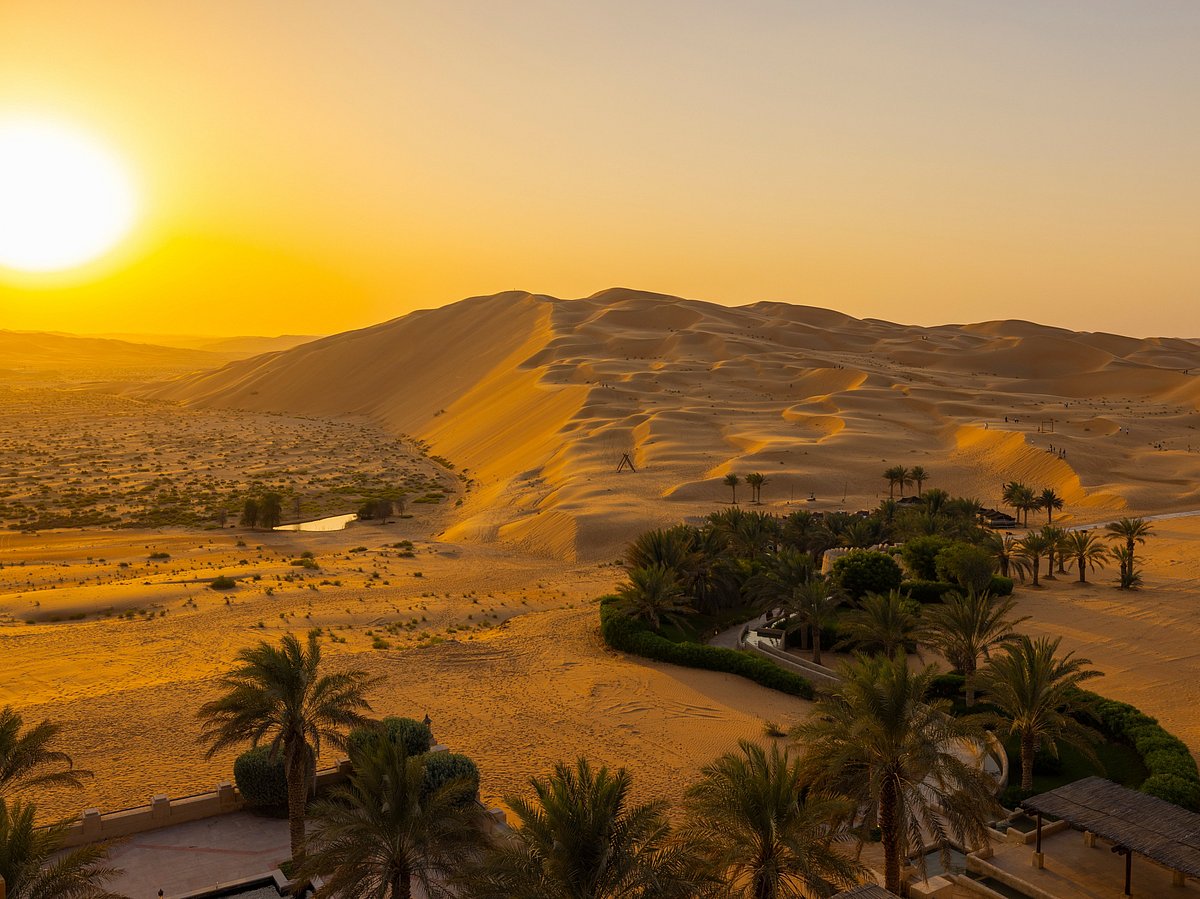
Dubai: The UAE is beginning to feel the first real pulse of summer, with temperatures already climbing above seasonal norms, even as unsettled spring weather continues to bring the chance of rain in the days ahead.
On Monday, temperatures in parts of the country touched 40°C, a notable spike for April and several degrees above the typical range for this time of year. Average highs usually hover between 32°C and 34°C along coastal areas, and 34°C to 36°C inland, making this early surge an exception rather than the rule.
Yet the heat has not arrived in full force just yet.
The country is still within what is locally known as the Sarrayat season, a transitional spring period, typically running from mid-March to early May, marked by sudden and short-lived weather fluctuations.
Get updated faster and for FREE: Download the Gulf News app now - simply click here.
During this time, towering thunderclouds can develop rapidly, often bringing brief but intense rainfall, gusty winds, and dust storms, particularly in the afternoon or early morning hours.
Meteorologists say this mix of heat and unsettled weather is exactly what this period is known for. A low-pressure system affecting central parts of the Arabian Peninsula, particularly Saudi Arabia, is generating unstable conditions.
While the UAE is not expected to be directly impacted, indirect effects, including cloud formation and isolated rainfall, remain possible over the coming days.
At the same time, recent weeks have seen unusually mild conditions. In some coastal cities, temperatures stayed below 30°C, while certain inland areas recorded lows dropping below 15°C and even below 10°C in locations such as Raknah well below the seasonal average.
According to Ibrahim Al Jarwan, Chairman of the Board of Directors of the Emirates Astronomical Society and member of the Arab Union for Astronomy and Space Sciences, the current pattern suugests the season is shifting out of spring.
He noted that while the period from mid-March to early May is typically associated with atmospheric instability, this year has seen a mix of cooler-than-average spells followed by sudden temperature spikes, including the unusual early reading of 40°C.
“This is part of the transitional phase,” he explained, adding that such fluctuations are characteristic of the season, which can occasionally extend into early May depending on regional weather systems.
However, a more decisive shift is expected soon.
From mid-May onwards, the Indian monsoon low-pressure system, a dominant climatic driver across the region, begins to intensify.
Originating between northern India, Pakistan and Iran, this system draws in hot and humid air masses, gradually pushing temperatures higher across the Gulf.
By this stage, Al Jarwan expects conditions to stabilise, marking the effective start of summer across the UAE. Temperatures are projected to consistently exceed 40°C, with some southern and inland areas potentially approaching 50°C at peak.
In the meantime, the country sits between seasons, where rainclouds and rising heat coexist, and where a brief afternoon storm can still interrupt an otherwise sweltering day.
Summer, however, is no longer a distant prospect. It is already beginning to announce itself.
Network Links
GN StoreDownload our app
© Al Nisr Publishing LLC 2026. All rights reserved.