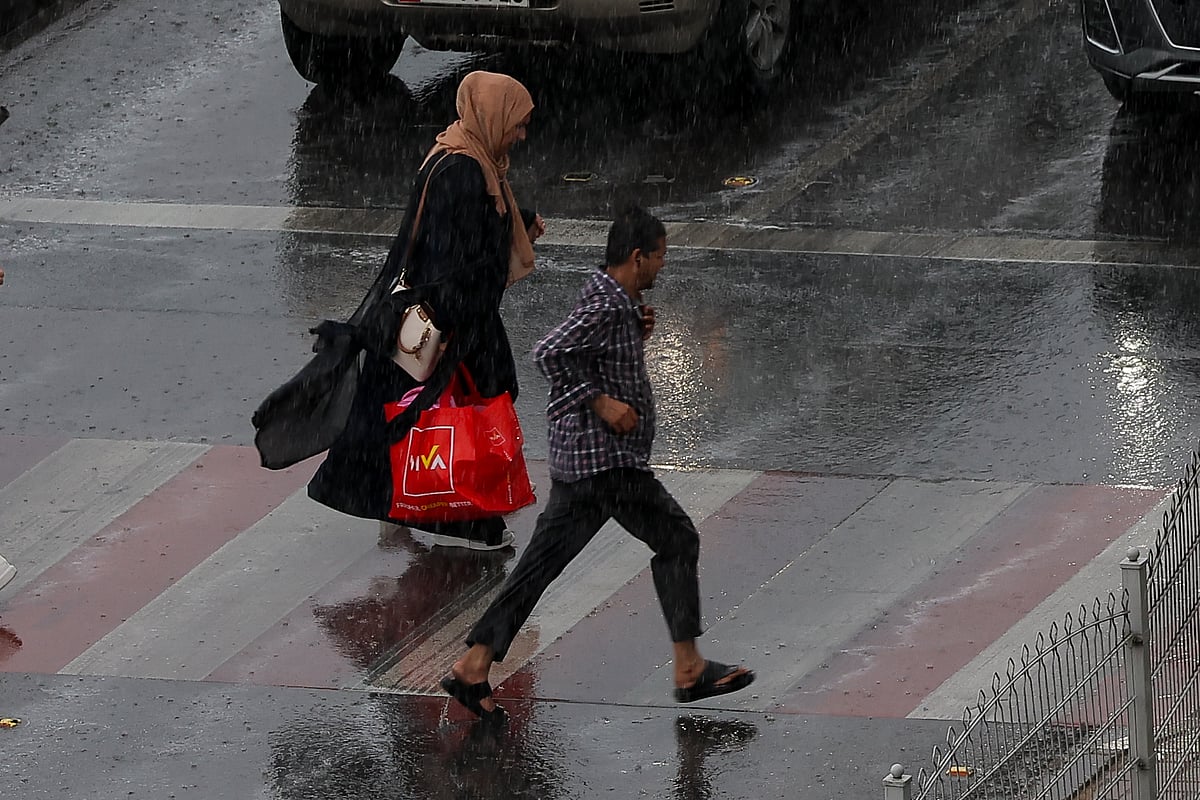
The UAE is set to experience unstable weather from Monday, March 23 to Friday, March 27, with intermittent rainfall of varying intensity, winds reaching up to 50 km/hr, dust haze, reduced visibility, and light to moderate sea conditions in the Arabian Gulf and Sea of Oman. A chance of hail is also possible, the National Centre of Meteorology (NCM) said.
Stay updated: Get the latest faster by downloading the Gulf News app now - it's completely free. Click here for Apple or here for Android. You can also find it on the Huawei AppGallery.
The NCM explained that a surface low-pressure system, combined with an extension of an upper-air low-pressure trough, is driving the unsettled conditions, increasing cloud formation and the likelihood of convective rainfall over scattered areas.
The UAE’s Higher Committee for Internal Security and NCEMA, in coordination with the Ministry of Interior, the NCM, and other key authorities, have reviewed national preparedness and reinforced readiness to respond to weather-related challenges.
Continuous monitoring and analysis of weather developments are underway, with preventive guidance and safety updates being shared through official channels. Authorities emphasised that public safety and the protection of lives and property remain top priorities, while businesses and institutions are activating continuity plans as needed.
Safety measures
Avoid valleys, flood-prone areas, dams, and water accumulation points.
Stay away from mountainous terrain and open areas during heavy rainfall.
Refrain from sea travel during rain.
Drive with extreme caution: Reduce speed, maintain safe distance, avoid sudden braking, and keep vehicle windows and lights clear.
Follow official weather updates via authorised channels and local authorities.
Contact emergency services when required (Dubai):
Dubai Civil Defense: 997
Dubai Ambulance: 998
Dubai Police: 999
DEWA: 991
RTA: 800 9090
Dubai Municipality: 800 900
Dubai Health: 80060
Dos
Stay informed through official weather channels.
Drive only if necessary and maintain vigilance at all times.
Use low-beam headlights in reduced visibility.
Keep away from electrical lines, open areas, and trees during rainfall.
Follow instructions from government authorities and emergency services.
Don’ts
Do not enter valleys or flood channels during active water flow.
Do not drive into flooded roads or areas of accumulated rainwater.
Avoid distractions while driving, including mobile phones and filming.
Do not obstruct emergency responders during severe weather incidents.
Do not rely on unofficial sources or rumours for updates.
Penalties for violations
Entering valleys during active water flow: Dh2,000 fine, 23 black points, vehicle impoundment for 60 days.
Obstructing emergency responders during severe weather: Dh1,000 fine, 4 black points, 60-day vehicle impoundment.
Gathering near flood-prone areas, dams, or valleys during heavy rain: Dh1,000 fine, 6 black points.
Authorities urge the public to prioritise safety, follow official guidance, and stay alert throughout the forecasted weather.
Safety tips: Driving in rain
Before you drive:
Check brakes, tyres, headlights, windshield wipers, and washer fluid.
Ensure windows and mirrors are clean.
Plan extra travel time, as rain can slow traffic.
On the road:
Reduce speed and maintain a safe distance from the vehicle ahead.
Avoid overtaking; wet roads increase the risk of slipping.
Follow traffic signs and accelerate gradually at traffic lights.
Turn on headlights and use fog lights in low visibility; avoid high beams in fog.
Use hazard lights only in emergencies.
In risky conditions:
Avoid flooded streets; never underestimate water depth.
Exercise caution at intersections where water mixes with oil, creating slippery surfaces.
Stay in your lane in tunnels; lighting may be poor.
After passing through deep water, test brakes at low speed.
General advice:
Drive patiently and carefully.
Avoid stopping on the road or near lane markings.
Always watch for emergency signs and adjust driving accordingly.
Sign up for the Daily Briefing
Get the latest news and updates straight to your inbox
Network Links
GN StoreDownload our app
© Al Nisr Publishing LLC 2026. All rights reserved.