The UAE has acceded to several international agreements, most notably the Convention on International Trade in Endangered Species of Wild Fauna and Flora
UAE Biodiversity Strategy: 58 mammal species assessed in Red List
The project provides essential data for developing conservation strategies
Last updated:
4 MIN READ
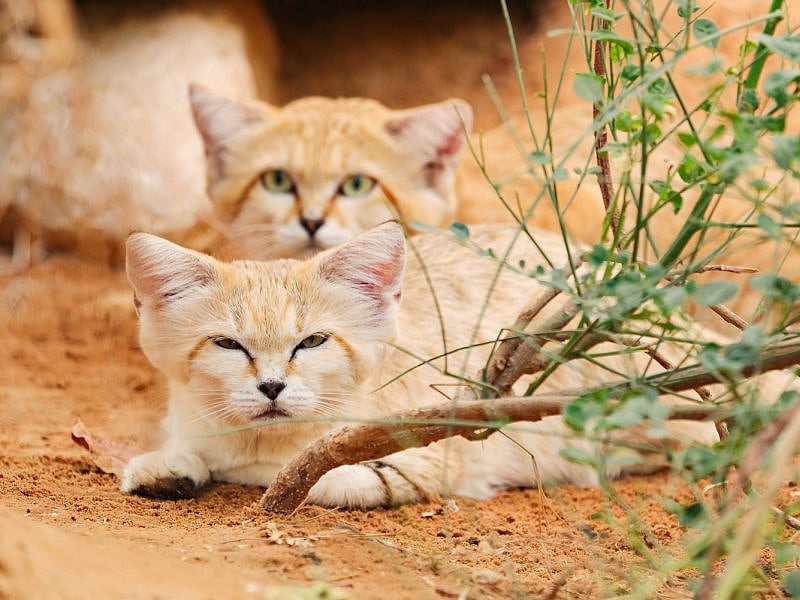
The UAE is home to a diverse range of terrestrial and marine mammals.
Supplied
The general framework of the National Biodiversity Strategy 2031 has revealed that 58 mammal species in the UAE have been assessed, including 39 terrestrial and 19 marine species, most of which were evaluated under the National Red List Project.
Issued by the Ministry of Climate Change and Environment, the strategy stated that the proportions of terrestrial and marine mammal species assessed in each Red List category include:
• 3 regionally extinct species (5%),
• 4 critically endangered species (7%),
• 7 endangered species (12%),
• 3 vulnerable species (5%),
• 3 near-threatened species (5%),
• 13 species of least concern (23%), and
• 25 data-deficient species (43%).
The UAE is home to a diverse range of terrestrial and marine mammals, including the Arabian oryx, Arabian wildcat, Arabian wolf, sand cat, striped hyena, and the Arabian leopard, in addition to whales, humpback dolphins, dugongs, and marine turtles. Five species of marine turtles inhabit UAE waters: green turtles, hawksbill turtles, loggerhead turtles, leatherback turtles, and olive ridley turtles.
The National Red List
The UAE National Red List is an initiative launched by the Ministry of Climate Change and Environment in 2022 to assess and protect local biodiversity and to identify threatened species, including reptiles, mammals, birds, fish, and plants, in cooperation with international organizations such as the International Union for Conservation of Nature (IUCN). The project provides essential data for developing conservation strategies and supporting scientific research in line with the country’s national sustainability goals.
The Red List aims to:
• assess species status and measure extinction risks for local terrestrial and marine species;
• support national strategies by implementing the UAE’s commitments under global environmental agreements, including the Sustainable Development Goals;
• develop future plans through the provision of scientific data for effective policies and programmes to protect species and natural habitats; and
• promote scientific research by encouraging studies on data-deficient species and enriching the national database of threatened species.
International Conventions
The UAE has acceded to several international agreements, most notably the Convention on International Trade in Endangered Species of Wild Fauna and Flora (CITES); the Convention on Biological Diversity and its protocols on biosafety of genetically modified resources and fair and equitable sharing of genetic resources; the Ramsar Convention on Wetlands of International Importance; the GCC Convention on the Conservation of Wildlife and Natural Habitats; the Convention on Migratory Species; and membership in the International Union for Conservation of Nature and other global alliances.
National Red List of endangered species
As part of its strategy to conserve local biodiversity and protect threatened species, the Ministry launched the National Red List of Endangered Species at the beginning of 2022, providing a comprehensive assessment of species status in the UAE’s local environment.
The project seeks to strengthen the country’s international competitiveness indicators and to fulfil its obligations under international and regional conventions, while implementing national strategies and plans such as the National Climate Change Plan 2017–2050, the National Climate Adaptation Programme, and the National Biodiversity Strategy issued in 2014.
The list focuses on assessing the status of terrestrial species, measuring the effectiveness of existing conservation policies, identifying protection requirements, and contributing to the achievement of Sustainable Development Goals 14 and 15 related to the conservation of terrestrial and marine life.
A total of 1,167 species have been assessed within the local environment, including 58 native mammal species (39 terrestrial and 19 marine). The UAE also hosts 72 species of reptiles and amphibians (57 terrestrial reptiles, 13 marine reptiles, and 2 amphibians), in addition to 598 native plant species.
Marine species list
The project also evaluated selected marine species, including 126 species of bony fish, 80 species of cartilaginous fish, 66 species of corals, and 167 species of local birds.
A national project to conserve endangered species
The assessment of 58 terrestrial and marine mammal species forms part of a broader national project launched to evaluate the conservation status of local species and identify threats, in support of the National Biodiversity Strategy and the development of effective policies to protect wildlife. The project places particular emphasis on endangered species such as the Arabian wolf, Arabian leopard, whales, dolphins, and dugongs, through accurate scientific data, distribution mapping, and the expansion of protected areas.
Network Links
GN StoreAbout Gulf NewsTerms & ConditionsReach by GNSitemapContact usPrivacy PolicyGN FocusHave your sayWork with usAdvertise with usGulf News epaperPrinting Services
Download our app
© Al Nisr Publishing LLC 2026. All rights reserved.