Nearly 4,000 UAE road accidents linked to four risky driving behaviours
3,997 accidents were recorded between 2021 and 2024 causing damages exceeding Dh17 million
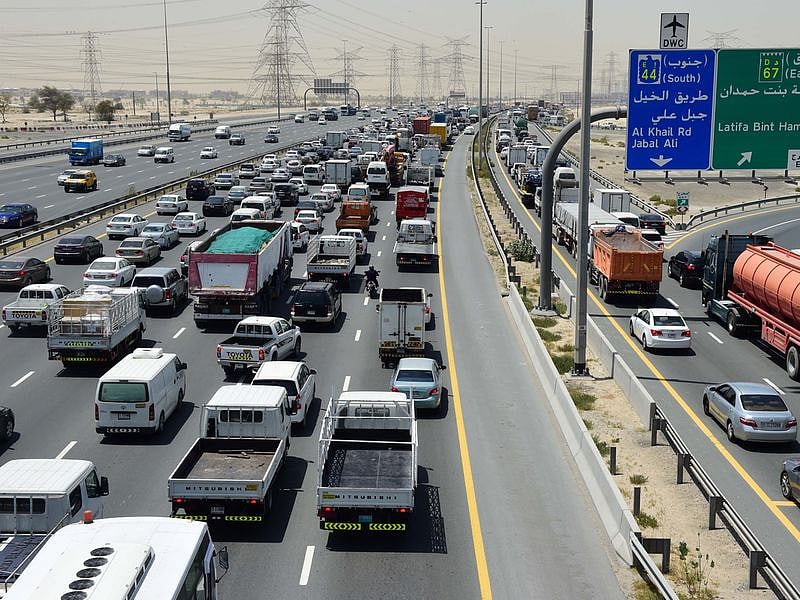
Dubai: Nearly 4,000 accidents were recorded on UAE federal roads over a four-year period due to four forms of negative driving behaviour, according to a parliamentary report that warned human conduct remains one of the biggest obstacles to traffic flow and road safety despite the country’s world-class infrastructure.
The report, issued by the Constitutional, Legislative and Appeals Affairs Committee at the Federal National Council, revealed that 3,997 accidents were recorded between 2021 and 2024, causing damages exceeding Dh17 million.
Get updated faster and for FREE: Download the Gulf News app now - simply click here.
The committee said the UAE has achieved global recognition in road quality, ranking fifth worldwide, but stressed that traffic congestion and accident risks continue to pose a challenge requiring greater coordination between authorities.
According to data from the Ministry of Energy and Infrastructure, as reported by Emarat Al Youm, the majority of accidents were linked to four key forms of risky driver behaviour: sudden swerving, failure to leave sufficient distance between vehicles, speeding and driver fatigue.
The report noted that many of the incidents stemmed from split-second decisions taken during moments of distraction, anger or exhaustion, warning that even minor collisions can trigger severe traffic congestion and secondary accidents by increasing stress levels among stranded motorists.
Lawmakers said the persistence of congestion despite the quality of the country’s infrastructure shows that engineering solutions alone are no longer sufficient, calling instead for more advanced behavioural traffic management approaches focused on improving how drivers interact with road systems.
The report added that traditional awareness campaigns centred solely on legal compliance may no longer be enough to address behavioural risks, urging authorities to coordinate on developing more effective behavioural awareness frameworks.
Alongside the findings, the report highlighted several UAE initiatives using smart technologies and artificial intelligence to improve traffic flow and road efficiency.
In Dubai, the Roads and Transport Authority operates the “Guide Clear – Drive Data” platform, which uses artificial intelligence and big data analytics to analyse real-time and historical traffic patterns, reducing traffic reporting and analysis times from weeks to just three minutes.
Meanwhile, Abu Dhabi’s Integrated Transport Centre has launched two initiatives with Google aimed at enhancing AI-driven transport sustainability.
One initiative, known as “Green Light”, analyses intersection data to improve traffic signal efficiency while reducing congestion and carbon emissions. The second relies on Google AI technologies and mapping data to predict traffic congestion and support traffic management planning.
The report also revealed a proposal discussed by the الإمارات Society of Urban Planning involving a smart application capable of dynamically adjusting the number of lanes on federal highways during peak hours. Under the proposal, one direction could temporarily expand from three lanes to four, while the opposite side would be reduced from three lanes to two.
The committee also pointed to several operational challenges, including difficulties in data sharing between entities, uneven technical readiness in some areas and the need for additional training on smart systems and data analysis.
The government said efforts are underway to address those challenges through electronic integration projects, updated regulatory frameworks and strategic partnerships aligned with the UAE’s digital transformation and AI ambitions.
In its response to the committee, the government stressed that the UAE continues to invest heavily in smart road infrastructure and safety systems, including the installation of 50 smart monitoring stations across the Northern Emirates.
According to the Ministry of Energy and Infrastructure, the stations provide live road data, including traffic density, vehicle types, average speeds and peak-hour movement patterns, helping authorities make data-driven decisions to improve traffic flow and identify accident-prone locations.
The ministry added that future plans include expanding AI-powered systems, integrating data with Interior Ministry operations rooms and increasing the coverage of smart gateways and traffic lanes across the federal road network.
Network Links
GN StoreDownload our app
© Al Nisr Publishing LLC 2026. All rights reserved.