The Dh565-million Dubai Loop project connects the most important commercial, residential and touristic areas with the most active zones in the city.”
Dubai Loop: RTA reveals the first four stations for high-speed tunnel network
The high-speed tunnel project will move people underground in minutes
Last updated:
2 MIN READ
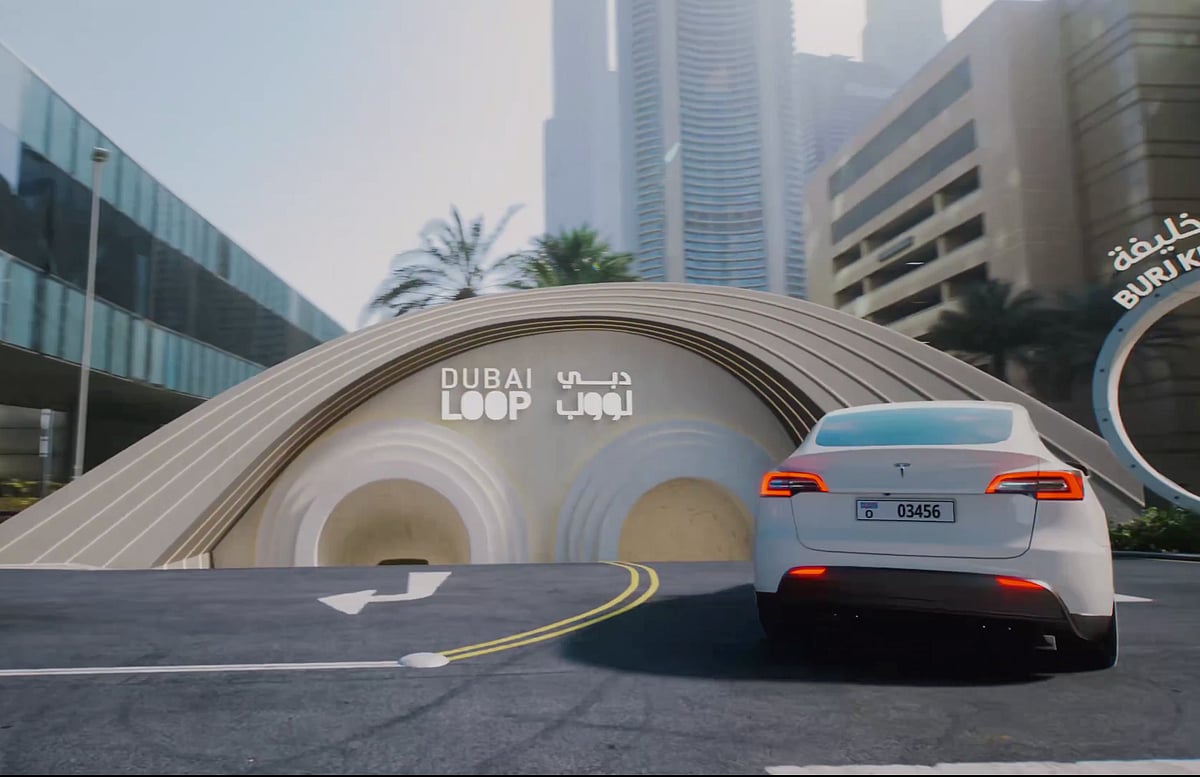
An artist's view of the Dubai Loop project: The first phase will kick off with the construction of a 6.4-km pilot route, with four stations and linking the Dubai International Financial Centre and Dubai Mall.
X | @rta_dubai
Dubai: Dubai Loop, the high-speed underground road system, will feature four stations linking the Dubai International Financial Centre with Dubai Mall and Burj Khalifa.
In a recent video posted by Dubai’s Roads and Transport Authority (RTA), the four stations were identified as:
Burj Khalifa
DIFC 2
Zabeel Dubai Mall Parking
ICD Brookfield Place
The first phase of construction was announced on February 3 by RTA. The underground transport project will be developed in partnership with Elon Musk’s Boring Company, with an initial investment of about Dh565 million ($153.85 million).
The first phase will cover 6.4km, while the project will eventually span 24 kilometres. This phase will pave the way for expansion into the full project alignment, which will extend up to 22.2km and include 19 stations, connecting Dubai World Trade Centre and the financial district with Business Bay.
How will the Dubai Loop work?
The system is designed to move people, not cars. Passengers will book trips at stations and be transported underground without driving at any point.
The Dubai Loop will operate as a people-mover system, focusing on first- and last-mile journeys while bypassing surface congestion.
Electric vehicles will carry passengers through dedicated underground tunnels, with trips starting only from designated stations. Private cars will not enter the system. For example, if you are in the DIFC area and want to go to Dubai Mall or a destination on the way, you go to the station and order the service.
The electric vehicles will move independently through the tunnels using an operating system, delivering passengers directly between stations. The tunnels, with a diameter of 3.6 metres, are built specifically for this purpose and are not accessible to the general road network.
Will the Dubai Loop reduce traffic?
The 6.4-kilometre pilot route will connect Dubai International Financial Centre to Dubai Mall, cutting travel time from around 20 minutes to about three minutes.
The pilot route is expected to serve around 13,000 passengers per day, while also addressing first- and last-mile connectivity challenges. The full route is projected to have a total capacity of about 30,000 passengers per day.
Network Links
GN StoreAbout Gulf NewsTerms & ConditionsReach by GNSitemapContact usPrivacy PolicyGN FocusHave your sayWork with usAdvertise with usGulf News epaperPrinting Services
Download our app
© Al Nisr Publishing LLC 2026. All rights reserved.