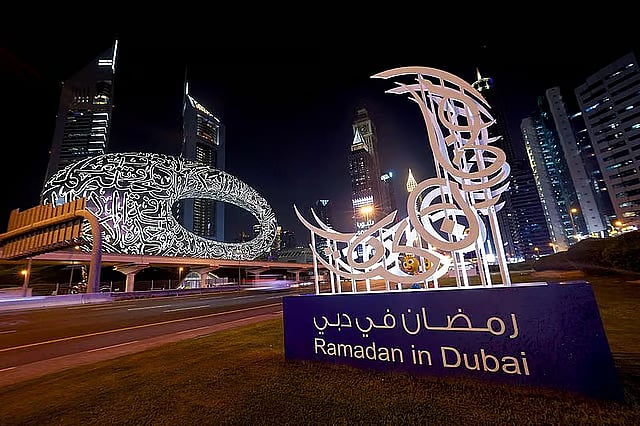
Dubai: Ramadan is one of the most meaningful times of the year in Dubai, a month defined by reflection, fasting and a strong sense of community.
During the holy month, the city slows, the evenings stretch longer, and daily life takes on a quieter, more reflective rhythm.
For a few weeks each year, Muslims fast from sunrise to sunset, and the wider community, citizens, residents and visitors alike, moves together through a shared moment defined by patience, generosity and togetherness.
For newcomers or visitors, Ramadan is also one of the most rewarding times to experience Dubai. Ramadan markets come alive after dark, charitable initiatives expand across neighbourhoods, and iftar and suhoor tables bring people together in ways that feel both intimate and communal.
Understanding a few simple dos and don’ts helps ensure you experience the month with ease, respect and confidence, in line with official UAE guidance.
One of the most common questions is whether people can eat or drink in public. During daylight hours, Muslims observing Ramadan fast from sunrise to sunset. Non-Muslims are not required to fast, and restaurants and cafés have been permitted in recent years to operate throughout the day.
However, out of respect, eating, drinking, smoking or chewing gum in public spaces during daylight hours is discouraged. Many hotels and venues provide discreet dining areas for guests who are not fasting.
As evening approaches, the city shifts. The fast is broken at sunset with iftar, and joining one is one of the most meaningful ways to experience Ramadan. Hotels across Dubai host iftar buffets featuring traditional Arabic dishes and familiar favourites.
For a warm, welcoming atmosphere, many hotels offer carefully curated spreads that encourage people to gather, share and slow down. Accepting an invitation to iftar is considered polite and appreciated, and it is often the moment when the spirit of Ramadan feels most tangible.
Dress is another area where small adjustments go a long way. Dubai is generally relaxed, but Ramadan guidelines encourage more modest clothing, particularly in public spaces, cultural sites and historical areas. Covering shoulders and knees is a simple, respectful gesture that reflects awareness of local customs.
Sound matters, too. Ramadan is a time of calm and reflection, and loud music, raised voices or public arguments are frowned upon. Keeping conversations measured and using headphones rather than speakers helps preserve the peaceful atmosphere. Bars and restaurants may still play music in the evenings, but public spaces tend to remain quieter than usual.
Alcohol service continues at licensed venues, although some establishments pause daytime service during Ramadan. Policies vary, so it is best to check ahead if this is relevant to your plans.
Daily routines also change. Working hours across the UAE are reduced by two hours for all employees, regardless of whether they are fasting. Shopping malls often open later and stay open well into the night, particularly at weekends. Some restaurants may remain closed until sunset, and paid parking schedules may shift.
As sunset nears, the roads deserve extra care. The period just before iftar often sees heavier traffic, as fasting drivers make their way home. Fatigue and time pressure can play a role, so driving cautiously and allowing extra time is advised. Taxis can also be harder to find at sunset, as some drivers pause to break their fast, making advance booking a sensible option.
Longstanding traditions continue throughout the city. In several locations, cannons are fired at sunset to signal the end of the fast, a practice that connects modern Dubai with its past. If you witness it, you are seeing a ritual that has marked Ramadan evenings for generations.
Beyond etiquette, Ramadan is an opportunity to explore Dubai’s cultural depth. Guided visits to places such as mosques offer insight into Islamic traditions and the meaning of the month, and many locals are happy to answer questions or share personal reflections. Using simple greetings like “Ramadan Mubarak” or “Ramadan Kareem” is a thoughtful way to connect.
There are also a few things best avoided. Public displays of affection, such as hugging or kissing, are considered inappropriate during Ramadan. Loud music in cars or public areas should be kept to a minimum. Assuming that business hours run as usual can lead to frustration, as many organisations operate on adjusted schedules.
When is Ramadan in 2026?
In 2026, Ramadan is expected to begin on Thursday, February 19, based on astronomical predictions and expected moon-sighting outcomes in the UAE.
Because the start of the holy month depends on the sighting of the new crescent moon, the exact date will be confirmed officially closer to the time by the UAE’s religious authorities.
If the February 19 start is confirmed and Ramadan runs for 30 days, the holy month would conclude around Thursday, March 19, 2026, with Eid Al Fitr likely to fall on Friday, March 20, 2026.
Sign up for the Daily Briefing
Get the latest news and updates straight to your inbox
Network Links
GN StoreDownload our app
© Al Nisr Publishing LLC 2026. All rights reserved.