How a Filipino expat in the UAE completed a marathon while undergoing dialysis
Carlo Bacalla is a Chronic Kidney Disease patient who just completed the ADNOC Marathon
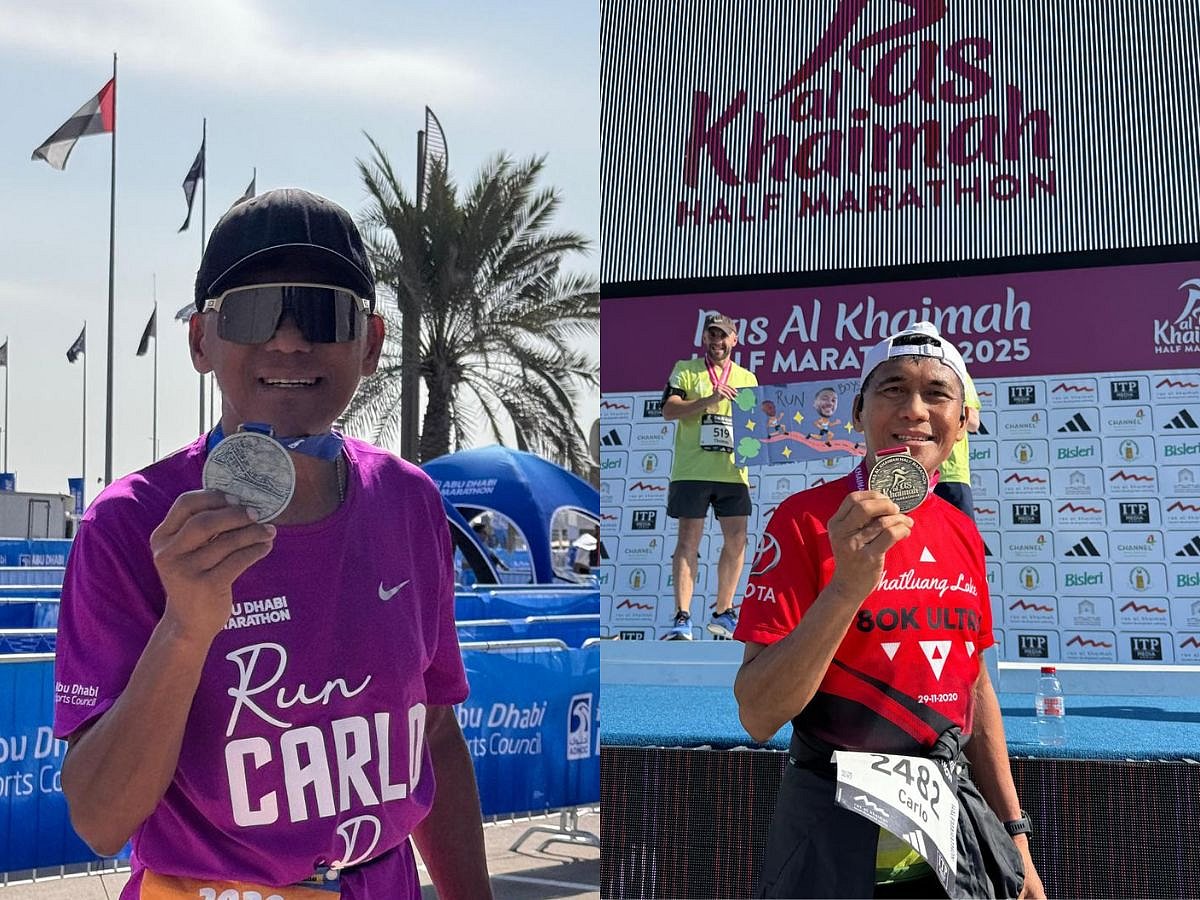
Dubai: When Carlo Bacalla laced up his running shoes at the start line of the ADNOC Abu Dhabi Marathon in December, it marked far more than another race finish. For the 63-year-old Filipino retiree living in the UAE, it was his first full marathon since beginning hemodialysis treatment and a powerful comeback after a life-altering diagnosis.
Bacalla had originally set his sights on the New York City Marathon this year, but his entry was denied due to the event’s one-time deferral policy. Instead of shelving his plans, he redirected his focus to Abu Dhabi’s flagship race. The timing made it deeply personal: it came just over a year after he began dialysis in August 2024.
A diagnosis that changed everything
In April last year, Bacalla was diagnosed with Chronic Kidney Disease (CKD), a moment that left him reeling.
“The one-year journey back to my first full 42.195-kilometre marathon comeback was tedious and demanded patience, humility, determination, and discipline,” he told Gulf News. “When I was diagnosed, so many questions ran through my mind: How did this happen? What went wrong? Will I survive? What’s God’s plan?”
The diagnosis came as a shock, particularly for someone who had led an active life for decades. Bacalla, who has been running since the 1980s, initially believed he would have to give up the sport entirely.
“I thought I had to pause my life and stop running,” he said.
Learning to live with dialysis, not surrender to it
Now retired and living in Abu Dhabi with his wife, Bacalla previously worked in technical education, teaching youth in the Philippines and parts of Africa. With a background in engineering, he approached his illness analytically, spending months consulting nephrologists in Argentina and the Philippines to understand his options.
“The goal was to avoid dialysis, which doctors often call a ‘life sentence’,” he said. “After weighing the pros and cons, I opted for surgery. That’s when the ‘CKD patient’ label appeared on my medical records.”
Despite the emotional weight of the diagnosis, Bacalla found reassurance in his doctor’s advice.
“They told me all patients should live their lives as normally as possible,” he said.
While his body was no longer the same, he took those words as permission to try, slowly and carefully.
Starting again from zero
The physical reality was humbling. Bacalla remembers struggling to jog even 100 metres without feeling completely drained.
“It was frustrating. My energy levels were nothing like before,” he said.
But instead of quitting, he rebuilt from the ground up. A 5km run-walk became 7km. Non-stop runs stretched from one kilometre to two, then three, until he could finally run 5km continuously again.
Progress was slow, but it was steady and it restored his confidence.
Choosing movement over fear
Well-meaning friends and family often urged Bacalla to rest and avoid exertion. While he understood their concern, doing nothing felt worse.
“For someone active, sitting idle and watching a disease take over is harder,” he said. “You need a challenge, something to distract you from the pain and constant hospital visits.”
After his first outpatient dialysis session, Bacalla made a decision that symbolised his mindset: he walked six kilometres home from the hospital.
“I assured my doctor I’d be fine, and if I didn’t feel good, I’d take a taxi,” he said. “That walk felt good. It gave me confidence.”
Soon after, he began planning his first 5km run-walk.
A lifetime of running and resilience
Before CKD, Bacalla was no stranger to endurance. He has participated in races across Southeast Asia and ran marathons in Laos between 2014 and 2021 to raise money for charity.
In 2018, after devastating floods displaced thousands in Laos, he ran 169 kilometres from north to south to raise funds for affected communities.
Going from ultra-distance charity runs to struggling through short jogs was a difficult reality to accept but Bacalla never saw it as permanent.
“Fate wasn’t sealed,” he said.
Finding community on UAE roads
New to the UAE, Bacalla sought out fellow runners and joined Adidas Runners and Dubai Creek Striders, attending track interval training sessions and rebuilding his race confidence.
He gradually returned to competitive events, starting with the Police Academy 5km fun run, followed by the Garmin 10km, before completing the Ras Al Khaimah Half Marathon in January 2025.
He also founded his own running group, Contra Sol, a community of beginner runners who love running but “hate the sun”.
After being rejected by the New York City Marathon, Bacalla joined his team for a demanding 32km Tri-Emirates run in September, which helped set the foundation for a bigger goal.
Training for a full marathon while on dialysis
Even while undergoing regular dialysis, Bacalla didn’t just train himself. He trained others.
“I convinced my group to attempt their first full marathon - the ADNOC Marathon,” he said. “I assured them that with proper training, they could finish it.”
He designed an 18-week training plan, adapting it around work commitments and medical schedules. Weekend long runs gradually built up to 36 kilometres.
The ADNOC Abu Dhabi Marathon, which covers the full 42.2km distance, became the ultimate test.
“Standing together at the starting line at 6am on December 13 was already an achievement,” he said. “Seeing them cross the finish line in under six hours was incredible.”
Watching the first-time marathoners finish reminded Bacalla of his own journey.
“I saw myself in them - people chasing an impossible dream, struggling, persevering, and making it through.
Still running, still hopeful
Bacalla’s journey is far from over. He plans to apply for the New York City Marathon again and hopes to one day run other major races, including Chicago, Berlin, and Tokyo.
While he remains on dialysis, he continues to live actively, follow a natural diet, and lean on his faith.
“Honestly, I still hope this is temporary,” he said. “I believe that in God’s time, I will heal and return to my normal life.”
He has declined suggestions for a kidney transplant, feeling it would be unfair to a potential donor. Still, hope remains central to his outlook.
“The desire for a reversal in my kidney function keeps me going,” he said.
For Bacalla, every run is no longer just about distance, it’s about defying limitations, one step at a time.
Network Links
GN StoreDownload our app
© Al Nisr Publishing LLC 2026. All rights reserved.