Lightning strikes Burj Khalifa: Here’s how it stays safe
Smart engineering keeps high-rise structures and residents safe
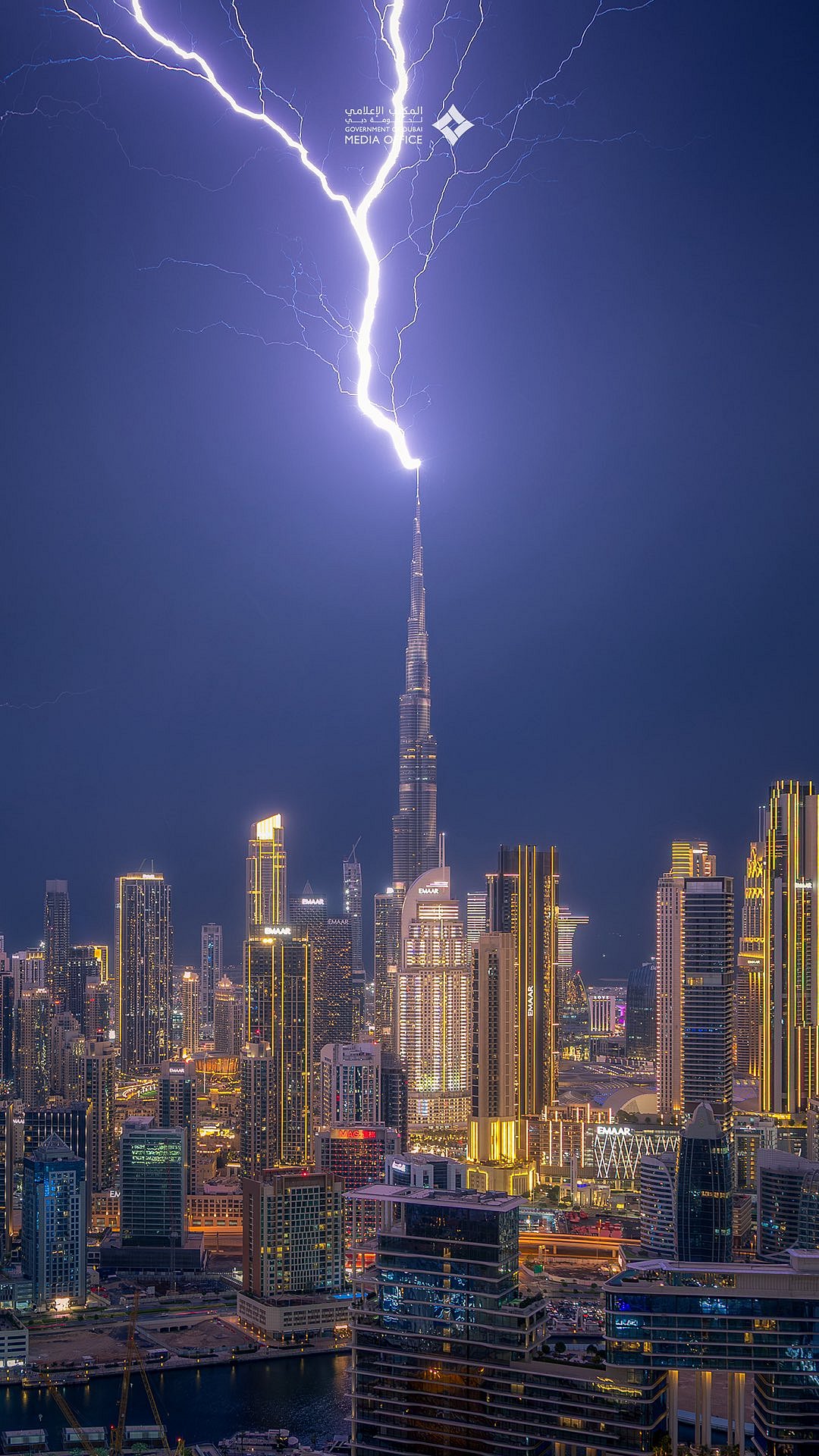
Dubai: In a display of nature’s power, Burj Khalifa has been struck by lightning during the recent evening storm, as heavy rains have swept across the UAE this week.
The moment has lit up the skyline, leaving residents both in awe and at the same time reassured of the tower’s advanced safety design.
Stay updated: Get the latest faster by downloading the Gulf News app now - it's completely free. Click here for Apple or here for Android. You can also find it on the Huawei AppGallery.
Why Burj Khalifa gets struck
At 828 metres tall, the Burj Khalifa has become the highest point in Dubai, making it the likely target during a thunderstorm.
In simple terms, the tower acts as the city’s lightning rod, safely attracting and directing lightning away from surrounding areas.
How the building stays protected
Despite the visuals, the strike has posed no danger to people inside. That’s because the building has been equipped with a smart lightning protection system.
At the very top, is a specialised lightning rod that has been designed to take the hit. Once lightning strikes, the electrical current is guided along a network of metal conductors running down the exterior of the building.
The tower’s steel frame acts like a secure pathway, ensuring that the electricity travels safely downward.
Where does the electricity go
After travelling outside the building, the electrical charge is safely dispersed into the ground through its grounding system.
This prevents the current from entering the building’s interior, protecting residents, visitors, elevators, lighting systems, and other equipments.
In effect, the structure works like a shield, keeping the dangerous energy outside.
What causes lightning
Lightning is an electrical discharge that has been caused by imbalances between storm clouds and the ground, or within the clouds themselves.
During storms, particles of rain, ice, or snow collide inside clouds, building up electrical charges. Typically, the lower reaches of the cloud become negatively charged, while the ground below becomes positively charged.
When the difference grows large, nature releases energy in the form of lightning to balance it out.
A proven design
This isn’t the first time the Burj Khalifa has been struck by lightning and it likely won’t be the last.
Over the years, multiple strikes have been recorded, yet the building has not sustained damage. Each time, the system has functioned exactly as it has been designed, with people inside kept safe.
As unstable weather is inevitable, skyscrapers have been built to withstand nature’s extremes. The Burj Khalifa has stood as an example of how modern engineering keeps dangers away and even creates a spectacle for those watching from below.
Network Links
GN StoreDownload our app
© Al Nisr Publishing LLC 2026. All rights reserved.