Thunder roars over UAE: Flashes of lightning, heavy downpours amid flash flood warnings
NCM issues flood alert: Heavy rains, thunderclaps, lightning streaks flash overhead
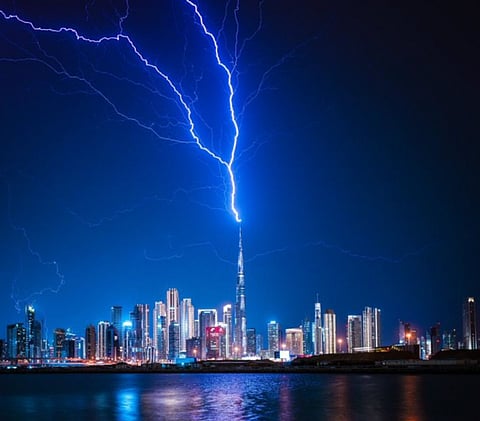
Abu Dhabi: Heavy rains and strong winds continued to affect large parts of the UAE, as unstable weather brought thunderstorms, dust-raising winds and reduced visibility, prompting authorities to activate emergency measures and issue safety warnings across the country.
Residents across the United Arab Emirates reported flashes of lightning, booming thunder, and heavy downpours as an intense weather system swept through major cities overnight on Thursday into early Friday morning (March 27), triggering alerts.
According to National Centre of Meteorology (NCM), unstable conditions driven by a low-pressure system have brought repeated waves of rain, strong winds, and thunderstorms across the country.
From Dubai to Abu Dhabi and the northern emirates, residents said the skies put on a full-blown light-and-sound show — booming thunderclaps and electric streaks of lightning flashing overhead, all at the height of raging storm clouds that dumped sheets of rain across a vast stretch of the area.
Stay updated: Get the latest faster by downloading the Gulf News app - it's completely free. Click here for Apple or here for Android. You can also find it on the Huawei AppGallery.
Authorities reassured the public that such thunder is a normal feature of the current storm system, even as conditions remained volatile.
Eastern regions, particularly Fujairah, have been among the hardest hit. Rainfall intensity has been highest in areas such as Taawun, where gauges recorded the heaviest accumulation so far during this weather episode, according to live updates.
Unstable weather system
Weathermen said the country remained under the influence of an unstable weather system caused by an extension of a surface low-pressure system combined with an upper-air trough, leading to the formation of convective clouds and rainfall of varying intensity.
Thunder and lightning were reported across several areas, while heavy rainfall flooded streets in some locations and caused debris to be blown off building facades.
Some trees were also felled due to strong winds accompanying the storm.
On Thursday evening, heavy rain fell across Sharjah, causing wadis to flow and temporarily disrupting traffic on roads including Mleiha–Shawka Road.
Rainfall was also recorded across Dubai and extended overnight to several other parts of the country.
The NCM said rainfall would continue into Friday as the country remained affected by the weather system, with convective clouds moving across Al Dhafra and the northern emirates.
Heavy rainfall, 60kph wind speeds
Weather stations recorded significant rainfall totals, including 47.9mm in Al Tawiyeen, 39.7mm in Al Marjan, 33.3mm in Khor Fakkan, 31.6mm in Khatm Al Shakla and 28.3mm at Khor Fakkan Port, highlighting the intensity of the weather system.
Wind speeds reached up to 60kph at times, leading to rough sea conditions in both the Arabian Gulf and the Sea of Oman.
Road speed reduction activated
In response to the weather conditions, Abu Dhabi Police activated speed reduction systems on several major roads, lowering speed limits to 60kph on routes including Abu Dhabi-Al Ain Road and Sheikh Khalifa bin Zayed International Road, among others.
Avoid unnecessary outdoor activities: NCEMA
The National Emergency Crisis and Disaster Management Authority (NCEMA) urged the public to avoid unnecessary outdoor activities and stay away from billboards, unstable trees and loose objects during periods of strong winds.
Authorities also advised motorists to avoid driving during heavy rainfall unless necessary, prepare emergency kits, avoid flooded roads and secure outdoor property against strong winds and hail.
The Ministry of Interior also advised the public of three violations related to unsafe behaviour during rainy weather.
These include gathering near valleys, dams and flood zones, entering flowing wadis regardless of the level of risk, and obstructing emergency or traffic authorities during adverse weather conditions.
Fines for these violations range from Dh1,000 to Dh2,000, along with traffic points and possible vehicle impoundment for up to 60 days depending on the offence.
Rapid response
Emergency teams across the country increased their readiness levels, with field teams deployed to monitor water accumulation and ensure traffic flow.
Authorities said rapid response plans were activated to deal with incidents and ensure public safety.
Abu Dhabi Civil Defence also issued safety guidance, including limiting movement unless necessary, disconnecting unnecessary electrical devices, securing windows, and moving to higher floors if water enters homes. Motorists whose vehicles become trapped in floodwaters were advised to move to higher ground and seek assistance.
The Integrated Transport Centre in Abu Dhabi said it was monitoring traffic around the clock through its traffic management centre and had increased the deployment of road service patrols to respond quickly to accidents or breakdowns.
Separately, the Ministry of Health and Prevention issued public health advice on preventing mosquito breeding following heavy rainfall and water accumulation. The ministry advised avoiding stagnant water, wearing protective clothing, using insect repellent and installing window screens, particularly in rural and agricultural areas.
The NCM said weather conditions were expected to gradually improve from Saturday, with partly cloudy skies and a further drop in temperatures, although winds may remain active at times.
By Sunday and Monday, conditions are expected to stabilise further, with generally fair to partly cloudy weather and improving sea conditions in the Arabian Gulf, although some rough conditions may persist in the Sea of Oman.
Authorities have urged the public to remain cautious, particularly while driving in low visibility, avoid flood-prone areas, and follow official safety guidance to ensure public safety.
NCEMA clarification
Meanwhile, the The National Emergency Crisis and Disasters Management Authority (NCEMA) has issued a clarification on the current weather condition: "We emphasize that in the event of any threat, warnings, and instructions will be issued immediately through the National Early Warning System to ensure everyone's safety."

