Flying with a power bank? UAE experts reveal the battery risks travellers miss
When a battery is damaged, poorly manufactured or handled incorrectly, it can overheat
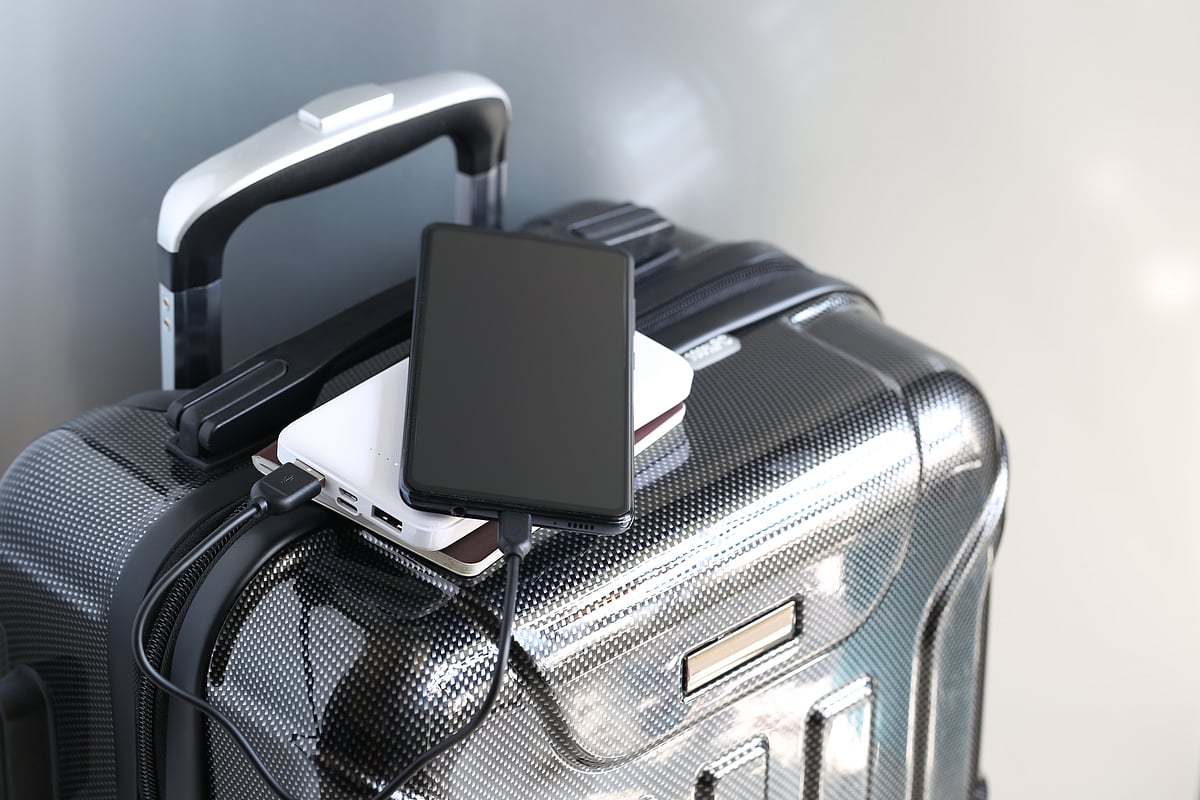
You can't travel without a power bank.
Yet, you need to be careful when you travel with it.
No doubt, power banks are a travel lifeline. You need them during long-haul flights, airport delays and sightseeing days when charging points are nowhere to be found. For many passengers, they are as routine as a passport or boarding pass.
Yet, their convenience comes with a rather concentrated energy source, that can turn dangerous, if something goes wrong.
Lithium-ion batteries are used safely in millions of devices every day, but when a battery is damaged, poorly manufactured or handled incorrectly, it can overheat rapidly and, in rare cases, enter a chain reaction known as thermal runaway, creating smoke, fire and potentially toxic gases.
The risk is amplified on aircraft, where a battery failure happens in a confined environment thousands of feet above the ground.
As Medy Navani, Co-Founder of Instinkt explains, "Unlike phones or laptops, which are part of fully engineered and tightly controlled systems, power banks are often loosely regulated and widely sourced from varying levels of manufacturing quality."
He explains further: Inside an aircraft, conditions are very different, pressure, environment, and limited response capability all increase the potential impact of any failure. When a lithium battery malfunctions, one of the first risks is the release of highly toxic gases. These are not ordinary fumes, they pose a serious threat to human health, particularly to the respiratory system. At the same time, the battery can generate extreme heat, leading to fire scenarios that are difficult to control mid-air. This risk is not theoretical, it is immediate and operational.
Why airlines treat power banks differently
The biggest misconception among travellers is that a power bank is simply another gadget battery. However, it is not.
Unlike the battery inside a smartphone or laptop, a power bank is carried separately, often thrown into bags, exposed to knocks, connected to different chargers and purchased from a wide range of manufacturers. They contain high-capacity lithium-ion batteries, that store a significant amount of energy, explains Ashish Panjabi, COO of Jacky's Retail.
While lithium-ion technology is safe when designed and manufactured correctly, a damaged, defective or poorly made battery can overheat and, in rare cases, enter thermal runaway, which can result in fire.
And so, that is the reason why airlines require power banks to remain in cabin baggage, instead of checked luggage. A battery fire in the passenger cabin can be detected and managed quickly by trained crew. A device hidden inside a checked suitcase in the aircraft hold is far harder to access.
Mukul Anand, Founder of R3 Factory, says the concern is not just the battery itself but the fact that power banks are spare batteries being carried in large numbers. “They store substantial energy in a compact enclosure and are carried in very large numbers,” he says. “Unlike an installed battery, a power bank is a spare battery and must remain in the cabin, where crew can respond.”
According to industry guidance, travellers should also be aware that airline rules can differ. The general limit for many airlines is that power banks up to 100 watt-hours (Wh) can be carried in cabin baggage, although passengers should always check their airline’s latest requirements.
What happens when a lithium battery fails?
A lithium-ion battery does not suddenly catch fire without warning. Inside the battery are carefully separated components that allow energy to be stored and released safely. But damage, manufacturing defects, overheating or electrical faults can disrupt that balance.
“When a lithium-ion cell fails, it can enter a process known as thermal runaway,” says Navani. That is a rapid chain reaction where the battery overheats, releases flammable gases, and can ignite or explode.
The failure can begin when the internal components of the battery become compromised. A damaged separator, manufacturing defect, overcharge or internal short, can allow the positive and negative parts of a cell to interact, says Anand. The heat rises faster, than it can escape. The internal reactions accelerate, pressure builds, and the cell may swell, vent hot gases, ignite or rupture.
In power banks containing multiple cells, the problem can spread. “In a multi-cell pack, the heat can trigger cell-to-cell propagation,” Anand adds, explaining why some battery incidents can flare up repeatedly even after appearing to stop.
Apart from fire, experts warn about another danger: The gases released during a battery failure. When a lithium battery malfunctions, one of the first risks is the release of highly toxic gases, adds Navani. “These are not ordinary fumes, they pose a serious threat to human health, particularly to the respiratory system.”
On an aircraft, where hundreds of people share a confined space, prevention becomes far more important than trying to control a failure after it starts.
Why your phone battery is not the same as your power bank
Many travellers wonder why airlines focus so heavily on power banks when smartphones and laptops also contain lithium-ion batteries. The difference is not just the chemistry, it is the level of engineering, protection and quality control built around the battery.
As Navani adds, devices like phones and laptops are engineered as complete systems. Their batteries are integrated, tested, and protected by multiple layers of hardware and software controls.”
A smartphone battery works within a tightly controlled ecosystem, with sensors, charging systems and software designed to monitor temperature, power flow and performance. Power banks, however, are standalone products, and that means there can be much wider differences in how they are made.
“Unlike the batteries inside smartphones or laptops, power banks are standalone battery packs that are regularly transported, dropped and connected to multiple devices,” says Panjabi. “They also vary significantly in quality depending on the manufacturer.”
That difference matters because the safety of a power bank depends heavily on what is inside it. A reputable power bank uses quality battery cells and multiple protection mechanisms, while lower-quality products may cut corners on both materials and safety features, according to Panjabi.
However, the battery chemistry itself may be similar, but the surrounding technology can differ greatly, adds Anand. The difference is system integration. “A power bank is a standalone charger and energy store; cell quality, wiring, insulation, voltage conversion and protection circuitry can vary widely.”
For travellers, that means a familiar-looking product does not always guarantee safety. The internal components, testing standards and manufacturing quality often matter more than appearance.
The warning signs travellers should never ignore
A damaged power bank often provides clues before it becomes dangerous.
Travellers should avoid carrying devices that show physical changes or unusual behaviour, experts say.
Warning signs include:
swelling or a distorted casing
unusual heat during charging or normal use
cracks, dents or visible damage
leaking fluid
strange smells
discolouration
unusual noises
inconsistent charging performance
sudden drops in battery capacity
Travellers need to understand that power banks, like all electronic devices, degrade over time, and that older units, naturally carry a higher risk of failure.”
Panjabi says passengers should inspect their power banks before travelling. “If it shows signs of swelling, cracks, leaks, excessive heat during normal use or visible physical damage, it should not be used or taken on board.”
Furthermore, the less obvious issues should be treated seriously. Hissing, popping, a loose or burnt port, erratic charging, rapid capacity loss, a missing watt-hour rating or a manufacturer recall are also red flags.
A power bank that feels dangerously hot should not simply be packed away and forgotten. It should be removed from use and handled responsibly through an authorised recycling channel.
Are cheap power banks putting travellers at risk?
A low price tag does not automatically mean a power bank is unsafe. However, experts warn that counterfeit products and poorly manufactured devices can carry far greater risks because they may lack the safety systems designed to prevent battery failure.
According to Anand, these products may contain rejected, recycled or mismatched battery cells, poor insulation, weak internal connections, fake capacity ratings and incomplete battery-management systems.
And, the biggest concern is not just affordability, as Panjabi notes, but whether, the product has been manufactured and tested to recognised safety standards “Counterfeit or poorly manufactured products often use lower-quality battery cells and may lack essential protection circuits that guard against overheating, overcharging and short circuits,” he says.
For UAE travellers, where online shopping and imported electronics are widely accessible, knowing where a product comes from is just as important as the brand name printed on it.
Panjabi advises consumers to look for products that comply with the Emirates Conformity Assessment Scheme (ECAS), which verifies that electronic products meet local safety requirements. “Products imported through unofficial channels or received as unverified promotional giveaways may not have undergone these checks, making them a higher safety risk,” he says.
Buying from an authorised retailer also provides greater confidence that the product has been sourced through legitimate distribution channels and meets required safety standards.
What safety features should travellers look for?
A safe power bank is not just about a familiar logo or attractive design.
Experts recommend looking for:
clear capacity and watt-hour labelling
recognised brand information
warranty and traceable manufacturer details
overcharge protection
over-discharge protection
short-circuit protection
temperature control
voltage regulation
automatic shutdown features
Anand recommends checking for recognised safety certifications, including transport and product testing standards such as UN 38.3, UL 2056 or IEC 62133-2, where applicable.
How travellers can stay safe before take-off
The safest power bank is one that is treated with the same care as any other important travel item.
Before flying:
check your airline’s power bank rules
ensure the capacity is clearly labelled
carry it only in cabin baggage
protect charging ports from metal objects that could cause short circuits
avoid damaged or ageing devices
do not leave it exposed to extreme heat
During the flight, passengers should not charge power banks unless permitted by the airline.
“If a power bank heats, swells, smells unusual or smokes, stop using it and alert the cabin crew immediately,” says Anand.
Network Links
GN StoreDownload our app
© Al Nisr Publishing LLC 2026. All rights reserved.