Ahmed Bin Ali Al Sayegh, Minister of Health and Prevention,UAE, Dennis Chang, Professor of Pharmacology and Director,National Institute of Complementary Medicine and Anupriya Patel, Minister of State for Health and Family Welfare and Chemicals and Fertilizers,Republic of India during a session “From Policy to Practice: Investing in the Future of Integrative Medicine” on the final day of World Governments Summit. Photo: Virendra Saklani/Gulf News
UAE to blend traditional Emirati medicine with modern healthcare
Age-old Emirati remedies could soon be prescribed alongside modern treatments
Last updated:
3 MIN READ
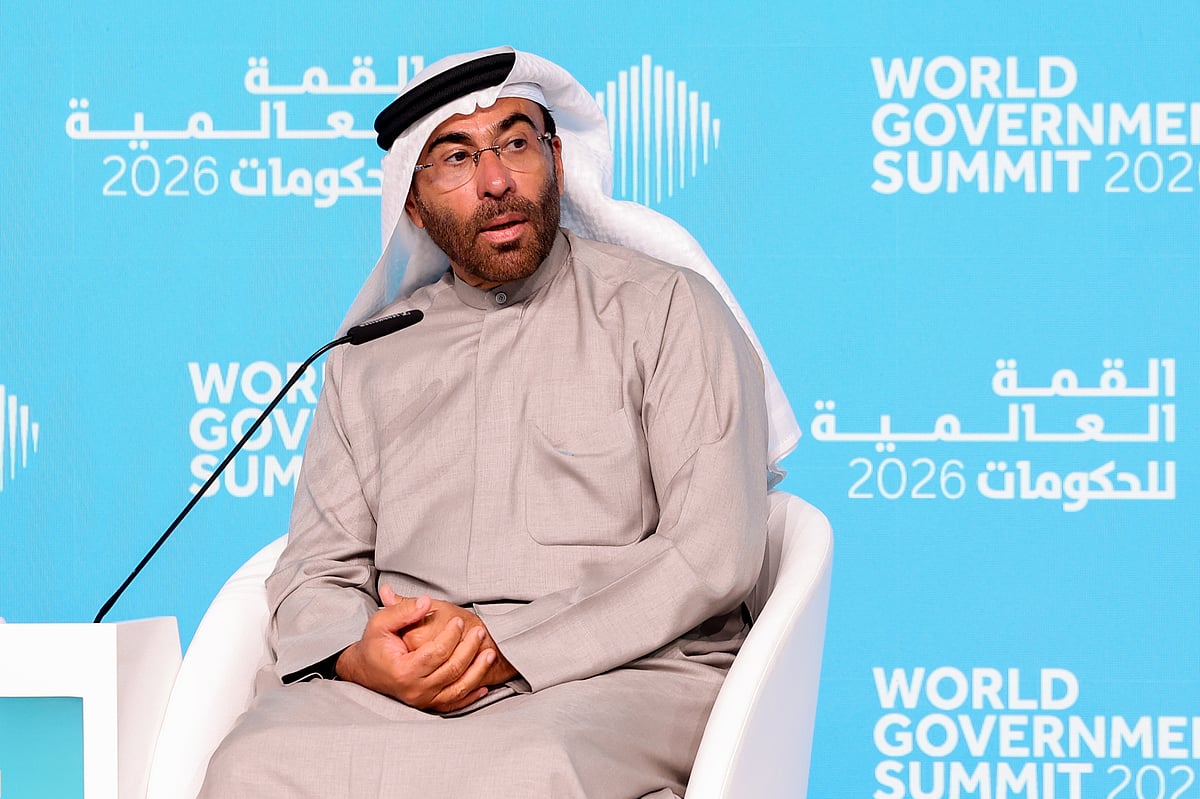
Ahmed Bin Ali Al Sayegh, Minister of Health and Prevention,UAE, during a session “From Policy to Practice: Investing in the Future of Integrative Medicine” on the final day of World Governments Summit.
Virendra Saklani/Gulf News
Dubai: The UAE is exploring a more holistic approach to healthcare, aiming to blend traditional Emirati medicine with modern medical practices in clinics and health centres across the country.
“Back then, we didn’t have cars to take us even if there was a medical centre, so we had to rely on traditional Emirati medicine. It was the mothers and aunts that took care of injuries and sickness when doctors and clinics were not in reach, so we still want to retain that and bring that cultural element back in modern medical clinics,” said Ahmed Al Sayegh, Minister of Health and Prevention, during a panel discussion at the World Government Summit 2026 in Dubai.
Al Sayegh explained that the revival of traditional medicine will be scientific and structured, with a clear framework for licensing and regulation to ensure safety. “We cannot do this if we don’t have a legislative framework, also look at higher education that include integrative medicine in it. We want to bring back the medicine of our ancestors,” he added.
What is integrative medicine?
Integrative medicine combines conventional Western medicine with safe and evidence-based complementary therapies. According to the Cleveland Clinic, it is a patient-centred approach that treats the whole person - mind, body, and spirit, rather than just symptoms, often including lifestyle changes to promote long-term wellness.
While promising, the approach comes with some scepticism. Professor Dennis Chang, Professor of Pharmacology and Director, National Institute of Complementary Medicine, who was also on the panel, noted the need for strong evidence. “The evidence for supporting integrative medicine needs to [be] as rigorous as conventional medicine regarding efficacy, safety and quality of treatment and medicine,” he said.
Chang added that research tools traditionally used for pharmaceuticals are being adapted for integrative medicine, and new methods are developing quickly. “There will be more tools and resources to judge the efficiency of integrative medicine,” he said.
Lessons from India
India has formally adopted integrative medicine in its national health policy. Anupriya Patel, Minister of State for Health and Family Welfare in India, shared her country’s experience.
“India has formally recognised integrative medicine in its health policy, this is taking place at a primary level especially. We have a huge network of 100,000 ‘Ayushman Arogya Mandir’ wellness centres where we offer 12 essential services which incorporate traditional Indian medicine, yoga and lifestyle-based changes,” Patel explained.
How integrative medicine could work in the UAE
Al Sayegh highlighted post-natal care as an area where traditional and modern medicine could complement each other. He noted that almost 60 years ago, the UAE had high maternal and infant mortality rates, which are now extremely low thanks to modern medicine.
“In the past, during post-birth care, many women would be prescribed certain foods, exercise, and remedies to restore their bodies after such an extreme period. During the 40 days after birth, we used to have midwives that would come and heal women back to vitality. We still have that practice, but we need to train the youth to keep this practice alive, while also ensuring it is backed by modern science and research,” he said.
Network Links
GN StoreAbout Gulf NewsTerms & ConditionsReach by GNSitemapContact usPrivacy PolicyGN FocusHave your sayWork with usAdvertise with usGulf News epaperPrinting Services
Download our app
© Al Nisr Publishing LLC 2026. All rights reserved.