Sharjah: Kanaf Centre has become the first centre in the UAE and the wider Middle East to adopt an advanced forensic technology designed to detect injuries and other evidence that may not be visible to the naked eye in child protection cases.
The Child Safety Organisation said the Safe Ultra System, which has been integrated into Kanaf’s approved forensic procedures, will strengthen the documentation of suspected child abuse and sexual assault cases while supporting judicial proceedings and protecting children’s rights.
Get updated faster and for FREE: Download the Gulf News app now - simply click here.
The technology uses multispectral imaging to identify physical injuries and other indicators that can be difficult to detect under conventional lighting. It can reveal bruises and contusions, including injuries beneath the skin after visible signs have faded, as well as bite and fingernail marks, scratches, lacerations, burns and vascular changes.
It can also detect body fluids associated with criminal cases and sexual assaults and assist medical teams in collecting relevant samples.
The system is powered by ForenScope CMS, a secure digital case management platform that allows specialists to review images, prepare and edit reports, process information and centrally archive case records.
Each case is documented and tracked through a clear procedural sequence, helping preserve the integrity and legal admissibility of forensic evidence.
Hanadi Al Yafei, Director General of the Child Safety Organisation and Chairperson of Kanaf’s Higher Committee, said the technology was introduced with the child’s best interests as the priority.
“This step is guided first and foremost by the best interests of the child. A precise and responsible assessment can reduce the need for repeated procedures and spare children and their families further psychological distress,” she said.
“Every decision at Kanaf begins with the child’s right to care in a safe environment that respects their dignity and emotional well-being. Understanding what they have experienced and identifying their individual needs are essential to providing the right pathway for their recovery and long-term future,” she added.
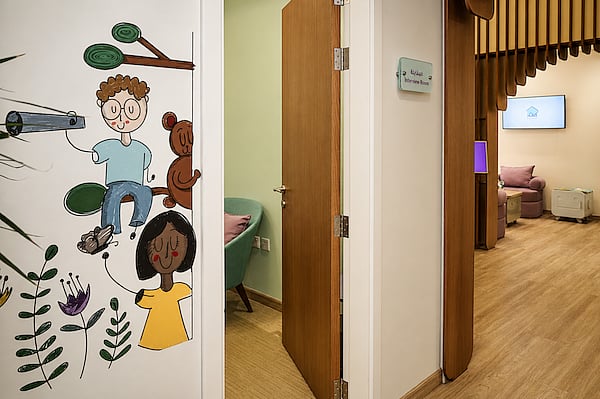
The upgraded system has been incorporated into Kanaf’s approved procedures within an environment designed to take into account the psychological and social needs of each child while preserving their dignity and privacy.
Dr Mohammed Al Kaabi, Head of the Judicial Department, said the technology represented a significant advancement in forensic medical documentation.
“It can identify indicators that are invisible to the naked eye, including subdermal bruising after external signs have faded, and assist in examining cases involving physical abuse and sexual assault,” he said.
He added that the system could reduce the risk of evidence being lost and limit the need for repeated examinations that could place additional psychological pressure on children.
“Precise documentation helps safeguard children’s rights and reinforces the credibility of forensic medical reports before judicial authorities,” Al Kaabi said.
Counsellor Anwar Al Harmoudi, Attorney General of the Emirate of Sharjah and member of Kanaf’s Higher Committee, said scientifically documented evidence could support more informed judicial decisions and contribute to faster and more accurate justice.
He said the technology could help establish that a crime had occurred even when visible signs were absent, helping address evidentiary gaps in sensitive cases.
“This capability is particularly important when children are involved, helping ensure their rights are not compromised by insufficient evidence,” he said.
“It also strengthens accountability and reflects the close institutional coordination between Kanaf, forensic medicine services and the Public Prosecution,” he added.
By streamlining the process from initial assessment to reporting, the system produces reliable outputs in multiple formats while preserving the quality of the original data.
The technology is designed to reduce the risk of errors or loss of information while enabling specialist teams to manage cases more efficiently without compromising children’s safety or privacy.
Kanaf’s forensic medicine team has undergone specialised training to use the system within established workflows.
The investment is intended to build specialist expertise, strengthen national capabilities and bring forensic practices in child protection cases in line with international standards.
The technology forms part of the Child Safety Organisation’s broader efforts to establish an integrated framework for child protection, including raising community awareness, preventing risks and promoting a culture of child safety.
Kanaf’s specialised intervention and response services provide children and their families with a coordinated pathway covering reassurance, psychological and social care, treatment and recovery.
The centre works closely with health, social and judicial authorities while keeping parents and guardians at the centre of the child’s care and recovery.
Families receive guidance tailored to the circumstances and social context of each case, while specialised government entities from the legal, social, educational and health sectors work under one roof to simplify access to reporting, assessment, treatment and follow-up services.
Kanaf follows the internationally recognised Barnahus model, which brings investigation, psychological care, education and social reintegration together around the individual needs of the child.
The approach reflects Sharjah’s emphasis on care, solidarity and shared responsibility in protecting children and safeguarding their rights.
Network Links
GN StoreDownload our app
© Al Nisr Publishing LLC 2026. All rights reserved.