Apple finally folds: The Dh8,499 iPhone Duo — the good, the bad and Crackgate
For a first attempt, the hardware has made a remarkably strong impression
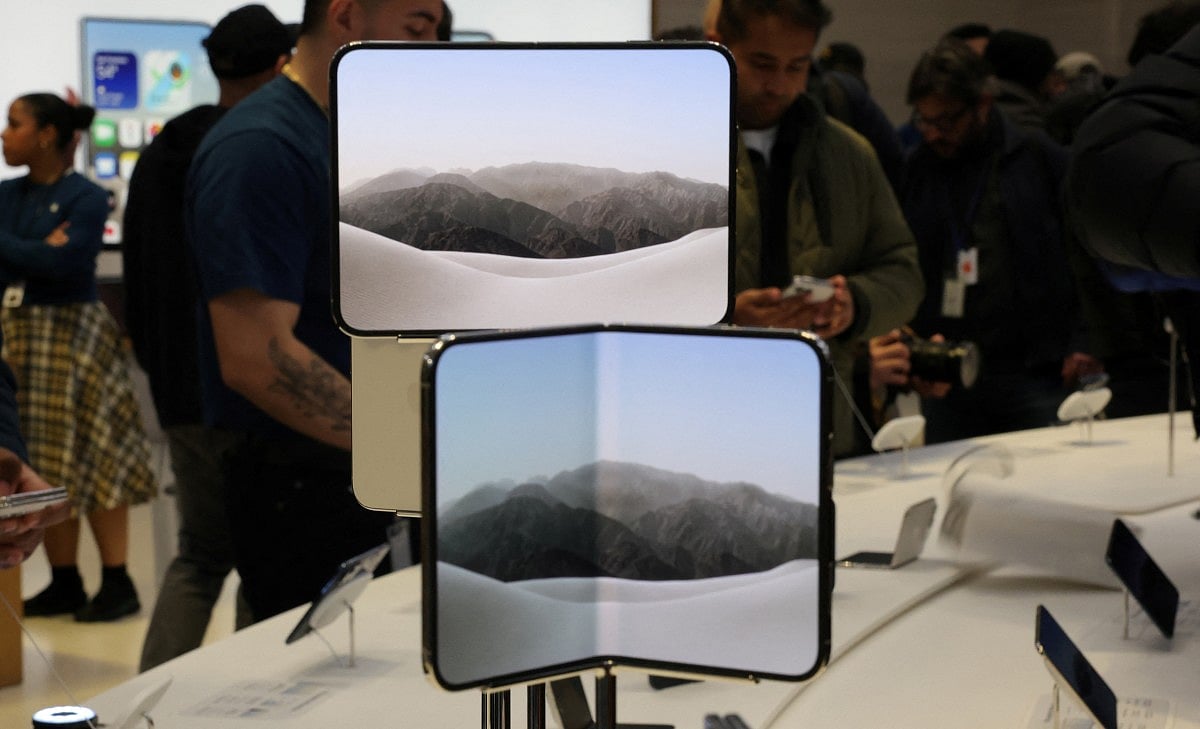
Apple waited seven years after Samsung’s first Galaxy Fold to ship a folding phone. The bet was that patience would buy polish. Ten days after pre-orders opened and three days after it reached customers on October 23, that bet looks half right: the iPhone Duo sold out in minutes and reviewers broadly call it the best-designed foldable yet. Then the inner screens started cracking along the hinge, and the internet reached for its favorite suffix: “Crackgate.”
Here is what the Dh 8,499 Duo gets right, what it gets wrong, and what the people who tested it actually said.
Demand outran supply in minutes
By the only measure available this early, whether Apple can make enough, the Duo is a hit. Apple hasn’t disclosed sales, so the numbers remain estimates and reports.
Pre-orders opened on October 16, and the first signs of demand came almost immediately. Analyst Max Weinbach reported that the phone had sold out at every store around New York and Connecticut within three minutes, according to CBS News. By 8.30am Eastern, 9to5Mac found that every configuration had slipped to a late-January shipping date.
Supply, however, may be part of the story. Nikkei Asia reported in September that Apple was building only a few hundred units a day, well below the pace of a typical iPhone launch.
There are signs that demand is nevertheless exceeding expectations. On October 26, Taiwan’s Economic Daily reported that Apple had asked suppliers to raise orders by 30%. It also said 2026 shipment estimates had risen from about 6 million to between 8 million and 10 million, with 33 million projected by 2027.
Analyst Dan Ives summed up the situation neatly: demand is running “well ahead of supply”. That may be good news for Apple, but the real test comes when the second wave ships in late January, after prospective buyers have had time to weigh the glowing reviews against the photos of cracked screens.
What Apple got right
For a first attempt, the hardware has made a remarkably strong impression. Reviewers have praised the hinge, the build and the inner display, even when they disagree about whether the phone is worth buying.
The inner display has won praise, too, particularly for its matte “nano-texture” finish. At 7.6 inches, it offers a wider canvas than rival foldables, closer to an iPad mini. Tom’s Guide found that the finish reduced glare outdoors and made the crease less noticeable than on other foldables it had tested. There is a compromise: colours and blacks look slightly less punchy.
Apple has also managed to make the hardware feel considered rather than experimental. The titanium frame and IP68 dust and water resistance are notable achievements for a first-generation device, TechRadar observed. Its unusual proportions have divided opinion, but 9to5Mac found the squat, folded phone more comfortable to hold than the iPhone 18 Pro Max, despite its extra weight.
Performance is another bright spot. The Duo runs the same A20 Pro chip as the iPhone 18 Pro, and Gizmodo found that its battery life came surprisingly close to that of the conventional flagship. The software offers glimpses of why the folding format might matter, too. Reviewers particularly liked the way animations carry apps from the outer display to the inner screen, while updated apps such as Netflix, Flighty and Apple Books make better use of the extra space.
Taken together, these strengths explain why reviewers have been so enthusiastic about the design. The question is whether the compromises are worth living with.
What’s wrong: Costs you pay every day
Techaeris captured the central problem with a sharp observation: the Duo’s benefits are occasional, but its costs are constant. Opening it up to watch a film or read a book can feel transformative. Carrying it around, taking photos and using everyday apps are less convincing experiences.
Start with the weight. At 254 grams, the Duo is the heaviest iPhone yet, even heavier than the 18 Pro Max. MKBHD (YouTube handle of Marques Brownlee) points out that Samsung’s Galaxy Z Fold 8 is noticeably thinner and about 20% lighter, making Apple’s design harder to justify on portability alone.
The cameras are another compromise. Although the Duo has two 48-megapixel cameras, it lacks a telephoto lens, leaving digital cropping to handle zoom. It also misses out on ProRAW, ProRes video and spatial video. The selfie camera beneath the inner display fares particularly poorly.
Then there is the outer display. At 5.4 inches, the cover screen is short enough to make everyday typing feel cramped. The Verge expects many owners to find it too small to use comfortably, particularly when the keyboard takes up part of the display.
Software remains a work in progress. Apps that have not been updated can appear with black bars, stretched layouts or misplaced buttons. MKBHD flagged Spotify, Google Maps and Discord, although the situation is changing quickly: WIRED noticed Instagram, Threads, Slack and Google releasing updates within a day.
Some omissions are harder to work around. There is no Face ID or Action Button, and the price makes the compromises more conspicuous. The Duo starts at $1,999 for 256GB and reaches $3,199 for 2TB, making it the most expensive iPhone yet without offering Apple's best camera system.
The Face ID problem
The Duo is the first flagship iPhone since 2017 to drop Face ID. Apple has replaced facial recognition with Touch ID built into the side button, as on an iPad. For many reviewers, that feels like a step backwards.
The biggest frustration is the extra effort involved in unlocking the phone. MKBHD found that Apple had built a deliberate pause into the fingerprint-unlock process: users land on the Lock Screen first and must keep their finger down to continue. Other reviewers reported occasional failed reads, while left-handed users found the button awkward to reach.
There are ways to make the process less cumbersome. The “Rest Finger to Open” setting removes the extra swipe, and an Apple Watch can unlock the phone automatically. For AppleInsider’s reviewer, the watch workaround worked so well that he often forgot Face ID was missing.
Not everyone considers the change a deal-breaker. One TechRadar writer actually prefers fingerprint recognition, finding it quick and convenient without the complications of sunglasses or a scarf interfering with facial recognition.
The likely explanation for the switch is a combination of space constraints and design choices. With two displays, Apple would have had to decide where Face ID should work, whereas a sensor in the side button sidesteps the problem.
The omission may not last. Bloomberg’s Mark Gurman reports that Apple is testing Duo 2 prototypes with Face ID hidden beneath the outer display, and expects the feature to return within one or two generations.
Crackgate: a real pattern, unknown scale
The biggest question hanging over the Duo is not about its weight or cameras. Within hours of launch, owners began posting pictures of inner screens cracked along the fold. The damage appears strikingly similar across reports, but the scale of the problem and its cause remain unclear. Apple has not commented publicly.
The first accounts were alarming. One of the most widely shared cases, reported by MacRumors, involved an owner in Melbourne who said the screen cracked after about six hours of use and fewer than 20 openings. He felt something give beneath the display near the hinge before hearing an audible crack. In Dallas, another buyer said their screen broke during setup, after roughly four folds.
By Sunday, reports had emerged from Australia, the US, Canada, China and India, including accounts involving demo units in Chinese stores. According to 9to5Mac, the damage follows a similar pattern: a crack running down the middle, followed by a bright band of stuck pixels across half the display.
One particularly harsh test has added to the concern. YouTuber Zach Nelson, behind JerryRigEverything, found that dust worked its way into the hinge despite the phone’s dust-resistance rating. His bend test left a permanent green line before the inner screen stopped working. Nelson said most folding phones he had tested over the years survived his routine. “The iPhone Duo did not.”
That is not the whole picture, however. YouTuber Tim Pan’s folding test also left the screen intact. AppleInsider polled Apple Stores and found none reporting broken units coming in. At least one viral image also carried a note on X claiming it had been altered using AI.
For now, several explanations remain possible. A faulty batch of hinge components is one theory; a teardown by YouTuber CuriousHagi points to a potentially failing hinge element. Others have suggested that pressing the middle of the screen while closing the phone could cause damage, or that repeated handling of store demo units may be contributing to the reports. None of these explanations has been confirmed.
For buyers who do encounter a cracked display, early reports suggest Apple Stores have generally replaced affected phones on the spot. Damage resulting from normal use is covered by the one-year warranty, and buyers have a 14-day return window. In the US, an out-of-warranty inner-screen replacement costs $999, or $99 with AppleCare+, which costs $399.
Until the cause is clearer, owners would be wise to open and close the phone gently, keep grit away from the hinge and avoid pressing directly on the crease.
What reviewers say
On one point, the reviews agree: the Duo is the best foldable you can buy. They divide on whether it’s the right iPhone to buy.
The most enthusiastic see Apple’s late arrival as a strength. 9to5Mac came away convinced the form factor is “the future of the iPhone,” and TechRadar praised a company that watched the category stumble and mature before stepping in with something fully realized. Gizmodo agreed the wait was the right move. Engadget, calling it “a first-class foldable,” and Tom’s Guide, which rated it 4.5 out of 5, both named it the best-designed foldable they had tested. Both added a catch: the hardware is ready, but many apps are not.
That catch is where the middle of the pack lands. CNET felt Apple was late to the party but stole the show anyway. The most popular reviewers on YouTube were charmed, describing a phone polished around the edges but still rough in the middle, and naming the missing Face ID as the miss buyers will feel most. Even the testers who folded it tens of thousands of times without breaking it came back with a list of bugs and a phone that ran warm in the hand.
The sceptics take those same flaws and draw a harder conclusion. The Verge called the Duo messy, expensive and fun, an “early adopter special,” and admitted that going back to a regular iPhone often felt like a relief. The Wall Street Journal summed up the doubt in a headline: too much iPhone, too little iPad. WIRED’s advice was simply to wait for the Duo 2.
Network Links
GN StoreDownload our app
© Al Nisr Publishing LLC 2026. All rights reserved.