Etihad Rail passenger service guide: Stations, routes, travel times and what to expect
Etihad Rail routes, travel times, train features, nol card use and launch details
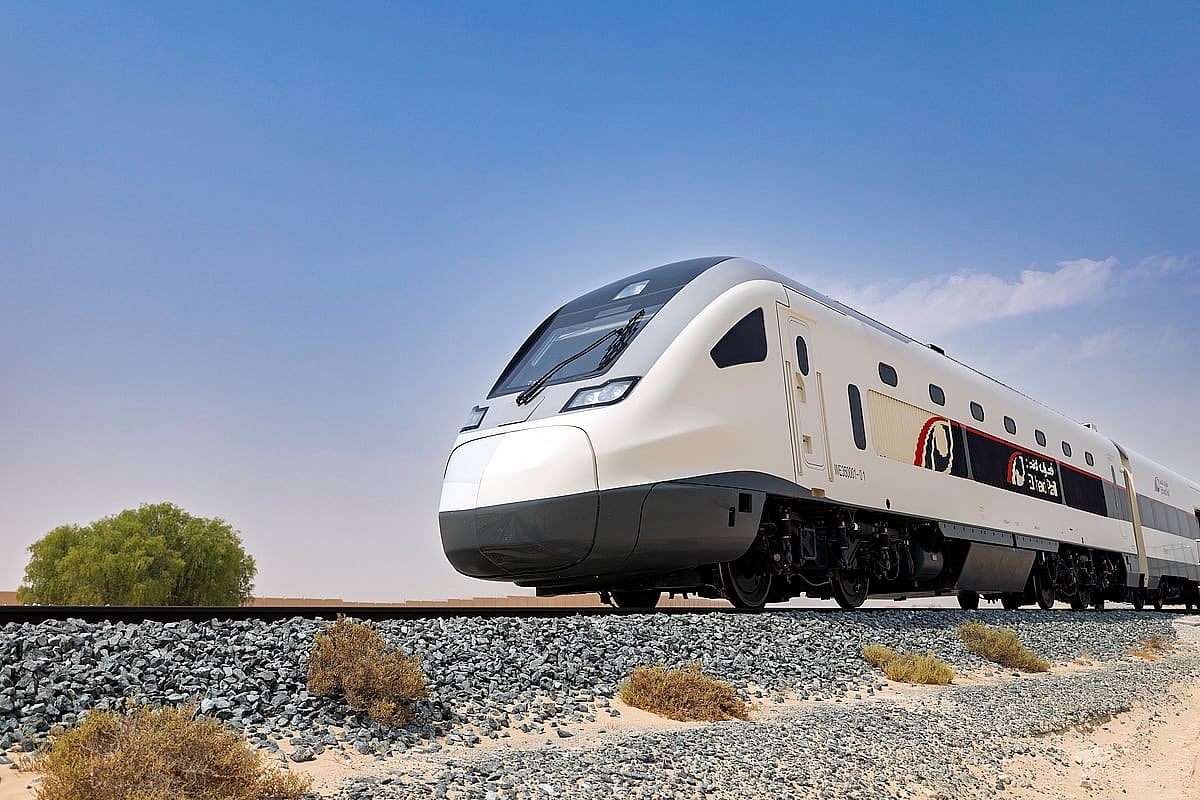
Dubai: As Etihad Rail moves closer to launching its long-awaited passenger service, the company has revealed full details of the UAE’s national rail network, marking a major milestone in the country’s transport development.
On Thursday, Etihad Rail unveiled seven new stations in addition to the four stations previously announced, confirming the scale of the network and how it will connect communities across the UAE.
Once operational, the passenger rail network will link 11 stations nationwide, stretching from Al Sila near the Saudi border to Al Dhaid in Sharjah, and from the western region of Abu Dhabi to Fujairah on the east coast.
Here’s a breakdown of everything announced so far.
Etihad Rail stations across the UAE
In early 2025, Etihad Rail announced the first four main passenger stations located in Abu Dhabi, Dubai, Sharjah and Fujairah. On Thursday, the company revealed the remaining stations in Al Sila, Al Dhannah, Al Mirfa, Madinat Zayed, Mezairaa, Al Faya and Al Dhaid.
These stations will be commissioned in phases as the passenger service rolls out.
Full list of Etihad Rail passenger stations
Mohammed Bin Zayed City, Abu Dhabi
Jumeirah Golf Estates, Dubai
University City, Sharjah
Al Hilal area, Fujairah
Al Sila
Al Dhannah
Al Mirfa
Madinat Zayed
Mezairaa
Al Faya
Al Dhaid
When will Etihad Rail passenger services begin?
Etihad Rail has reaffirmed that passenger operations will begin in 2026, with safety and service quality remaining the top priorities as the network transitions from freight-only operations to passenger travel.
What has already been completed on the Etihad Rail network?
In 2023, Etihad Rail launched its expanded rail network covering 900 kilometres, connecting all seven emirates from Ghuweifat on the Abu Dhabi–Saudi Arabia border to Fujairah on the east coast. Freight train operations are now fully operational across the UAE.
The existing railway network already links major maritime ports and industrial zones, including Khalifa Port in Abu Dhabi, Jebel Ali Port in Dubai, the Port of Fujairah, the Industrial City of Abu Dhabi (ICAD), Al Ruwais and Ghuweifat. This has significantly strengthened logistics connectivity and trade capabilities across the country.
UAE–Oman rail link: Hafeet Rail project explained
In 2024, the UAE and Oman announced the Hafeet Rail project, which will connect the two countries by train. Etihad Rail, Oman Rail and Mubadala Investment Company signed an agreement to commence construction of the cross-border railway.
The project will span 303 kilometres, linking Sohar in Oman to Al Wathba in Abu Dhabi. It will connect directly with the UAE National Rail Network, enabling smoother passenger and freight movement between the two nations.
Etihad Rail travel times and top speeds
The Etihad Rail passenger trains are designed to reach speeds of up to 200 km/h, reducing commute times by 30 to 40 per cent compared to existing transport options.
Once services are operational, Etihad Rail has shared the following estimated journey durations for key routes:
Abu Dhabi to Dubai: 57 minutes
Abu Dhabi to Al Ruwais: 70 minutes
Abu Dhabi to Fujairah: 105 minutes
Train features and passenger experience
Each Etihad Rail passenger train will have a capacity of up to 400 passengers and will feature modern onboard amenities. These include Wi-Fi, entertainment systems, charging points and a selection of food and beverage options designed to enhance comfort during travel.
Passenger services will operate using two different train models. Chinese-built CRC coaches will carry around 365 passengers, while Spanish-manufactured CAF coaches will accommodate approximately 369 passengers. Despite slight design differences, both train models follow the same three-class layout.
Economy Class features face-to-face seating in dark grey, designed for short and medium-distance journeys. Family Class offers opposing seats with larger shared tables, catering to group and family travel.
First Class provides wider, adjustable seats with a focus on enhanced comfort.
All cabins include overhead luggage storage, foldable tables behind seats and dedicated spaces for larger baggage.
nol card to be accepted on Etihad Rail
In 2024, it was confirmed that passengers will be able to use their nol cards when travelling on Etihad Rail. The Roads and Transport Authority (RTA) and Etihad Rail signed a Memorandum of Understanding (MoU) to integrate ticket booking and fare payment with the nol system.
The collaboration aims to provide a unified and user-friendly payment solution for passengers travelling across the UAE by rail, allowing seamless connections between different modes of public transport.
Network Links
GN StoreDownload our app
© Al Nisr Publishing LLC 2026. All rights reserved.