UAE school photos: Parents could face up to Dh500,000 fine for privacy breach
Another child in the frame? The privacy issue can start before you post the photo
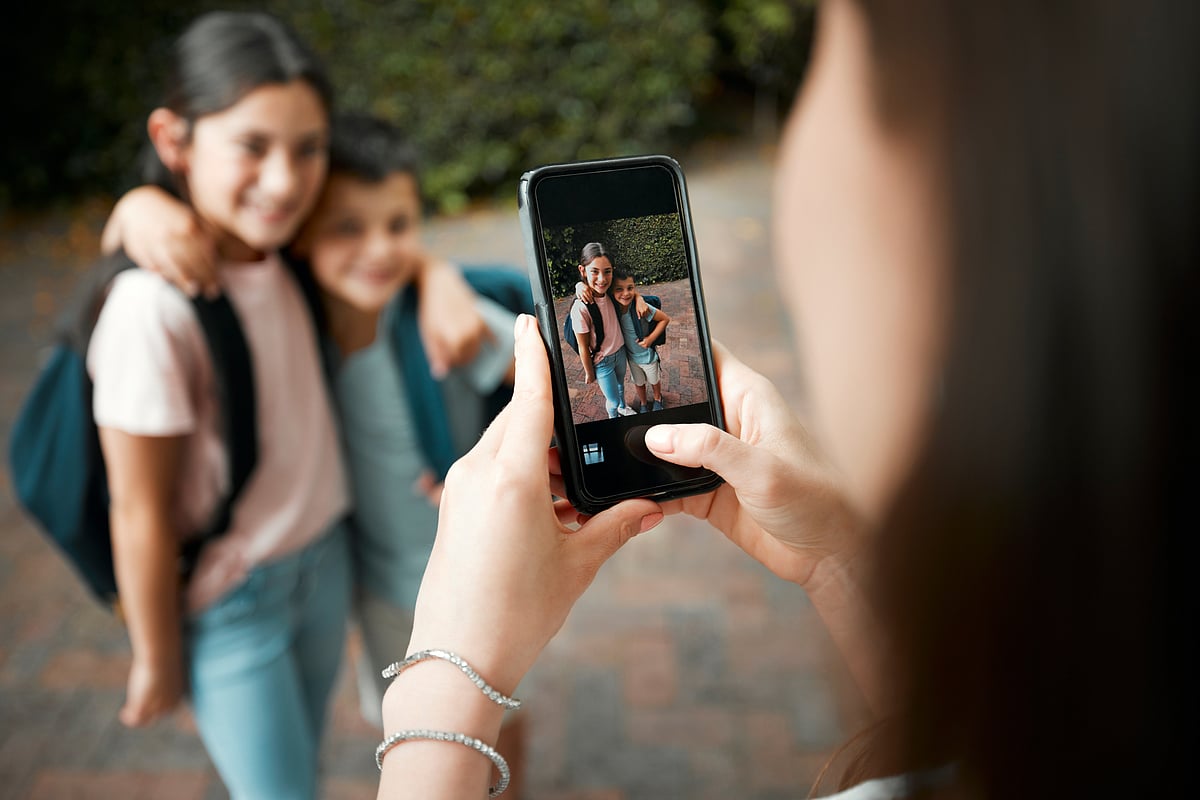
Dubai: Parents taking photographs or videos of children on school premises without consent could face fines of up to Dh500,000 under UAE privacy laws if a complaint is raised with the authorities and the conduct is found to constitute an offence, legal experts have said.
The clarification comes after Gulf News reported on Monday that schools in Dubai and Sharjah have issued circulars asking parents and visitors not to photograph or film students on campus, or share images containing other children through WhatsApp groups, social media or other digital platforms without appropriate consent.
While parents may assume the concern applies mainly to posting photographs publicly, lawyers told Gulf News that UAE law can also cover the act of taking a photograph without consent and sharing it privately.
Get updated faster and for FREE: Download the Gulf News app now - simply click here.
When could the penalty apply?
The Dh500,000 figure is not an automatic fine imposed by a school for taking a photograph. It is a potential penalty under the UAE Cybercrimes Law where a complaint is raised with the authorities and the conduct is found to constitute an offence.
Dr Hassan Elhais, Senior Legal Consultant at Amal Alrashedi Lawyers & Legal Consultants, explained that parents or visitors could face at least six months in prison, a fine of Dh150,000 to Dh500,000, or both, if photographing or sharing a child’s image is found to violate their privacy under Article 44 of the UAE Cybercrimes Law. The provision covers the use of electronic technology to intentionally invade another person’s privacy or private or family life without consent or lawful authorisation.
“Taking the photograph itself can create criminal exposure and public posting is not essential. Article 44 covers photographing people in public or private places, and transferring, disclosing, copying or retaining electronic images. Its wording therefore means that forwarding an image to a closed WhatsApp parents group is not automatically exempt.”
This means a photo does not have to be posted publicly on social media for it to potentially raise a legal issue. Taking a photograph without consent may itself create legal exposure, while sharing or forwarding the image in a private WhatsApp group is not automatically exempt simply because the group is closed.
Elhais added that a more serious penalty could apply if an image or recording is digitally altered with the intention of defaming or offending another person.
“A more serious penalty applies where someone digitally alters an image or recording with the intention of defaming or offending another person: imprisonment for at least one year, a fine of Dh250,000–500,000, or both.”
Children have a right to privacy
Awatif Al Khouri, founder and managing partner of Awatif Mohammad Shoqi Advocates and Legal Consultancy, said photographing or recording students on school premises without the explicit consent of their parents or legal guardians constitutes a violation of privacy.
“Under the UAE Cybercrimes Law, Article 44 makes it a criminal offence to use any electronic means to breach a person's privacy. This includes taking photographs of others without their consent, as well as sharing or publishing those images on WhatsApp groups, social media or other digital platforms,” she said.
Al Khouri also pointed to Federal Law No. 3 of 2016 concerning Child Rights, commonly known as Wadeema's Law. “Furthermore, the UAE Child Rights Law, commonly known as Wadeema's Law, protects minors and establishes a child's fundamental right to privacy under Article 5,” she said.
“A child's privacy and dignity must be respected in all circumstances, and by enforcing these policies, schools are safeguarding the students.”
Under the UAE’s Personal Data Protection Law, personal information generally cannot be collected or used without consent, except in specific circumstances allowed by law. Schools are also required to protect students’ privacy and rights.
Can parents photograph their own children at school events?
Some schools have told parents that photography may be permitted during designated events, but have asked them to photograph or film their own children only and avoid capturing or sharing images of other students.
The recent circulars have also reminded parents that on regular school days, restrictions can extend across classrooms, corridors, playgrounds, assemblies and drop-off and pick-up areas.
Parents should therefore check their school's photography policy, particularly during events when taking pictures may be permitted. They should also remember that sending an image to a private group does not necessarily remove the privacy implications.
Network Links
GN StoreDownload our app
© Al Nisr Publishing LLC 2026. All rights reserved.