Pysanky style Easter eggs
Why do we celebrate Easter with eggs? Traditions, games and meanings explained
Over time, the eggs evolved into a playful and artistic tradition
Last updated:
3 MIN READ
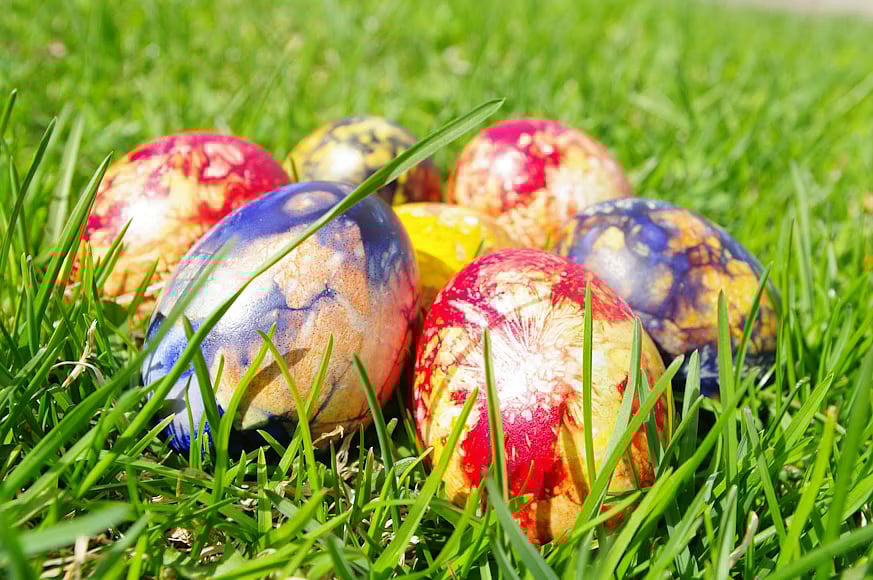
They represented life, and the hope of a new beginning.
Unsplash/Jurga Ka
During Easter, you see shop shelves lined up with giant chocolate eggs and rabbits. Sometimes, you buy them and still don't eat them, because they look just so good (and when I say you, I mean me).
They spell cheer and chocolate, yes, but more than that, they have a story that goes quite a way back.
And it involves rituals and history.
Before we devoured chocolate bunnies, there were Easter eggs. They represented life, and the hope of a new beginning. The truth is, their connection to Easter has a lot to do with timing. The celebration falls in spring, a season that carries a sense of joy and mirth.
Everything feels far more alive, then.
In that setting, eggs fit in. They hold up a mirror of what’s happening in nature: something small and still holding the promise of new life. Across different cultures, especially in springtime celebrations, eggs became an easy, almost instinctive way to mark renewal, after all, what better metaphor for life than something that quite literally hatches?
Over time, this symbol evolved into a playful and artistic tradition. People began decorating eggs, turning them into tiny canvases that celebrated the colours and energy of the season. In parts of Eastern Europe, for instance, intricately designed eggs like pysanky became true works of art, featuring detailed patterns and vibrant hues passed down through generations.
Why do we dye Easter eggs?
Colouring eggs started as a way to make them feel special, and it quickly turned into an artsy ritual. When the tradition became tied to Easter, early versions were surprisingly simple. In places like Mesopotamia, eggs were often dyed in a single bold colour, most commonly red, before the palette gradually expanded over time.
As the custom spread across Europe, it became more creative and expressive. People began experimenting with natural dyes, like onion skins, beetroot, and flowers, to create different shades and patterns. The single colour practice transformed into something more decorative, with layered colours, intricate designs, and regional styles like hand-painted eggs.
Each colour means something joyful and seasonal, for instance yellow for sunshine, green for spring, and blue for calm skies. But more than anything, dyeing eggs is simply a fun, hands-on tradition that brings families together.
One of the most intriguing Easter egg traditions comes from Ukraine, where eggs are turned into miniature works of art called pysanky. Using a wax-and-dye technique, artists draw intricate patterns on the eggs before carefully layering vibrant colours, then remove the wax to reveal stunning designs. These eggs often feature geometric shapes, floral motifs, or symbols inspired by nature, each carrying meanings like new beginnings, protection, and good fortune. Unlike the chocolate eggs most of us know, pysanky are usually kept as keepsakes, passed down through generations, or displayed as part of spring celebrations, proving that an egg can be both a canvas and a symbol of life’s fresh starts.
And the egg hunts?
You might have watched children, run around the garden looking for eggs. That's one of the most favourite parts of Easter in action.
The idea is simple: Hide the eggs, then let the fun begin. It's now a tradition, complete with baskets, clues, and sweet rewards. There's a thrill of discovery, and maybe a dash of competitiveness.
Rolling, tapping, and more
Easter eggs are also part of games and traditions around the world.
Egg rolling (famously held at White House) involves gently pushing eggs across the ground in a playful race.
Egg tapping: This friendly game is as straightforward as it is competitive: two players tap their eggs together, and the one whose shell stays intact wins. Variations of this tradition can be found across countries like Greece, the UK, and parts of the Middle East, making it one of the most widely shared Easter customs.
A little fun, rivalry and lots of laughter, and that's what Easter is all about.
Network Links
GN StoreAbout Gulf NewsTerms & ConditionsReach by GNSitemapContact usPrivacy PolicyGN FocusHave your sayWork with usAdvertise with usGulf News epaperPrinting Services
Download our app
© Al Nisr Publishing LLC 2026. All rights reserved.