Stranger Things ratings: 96% to 56% on Rotten Tomatoes — how every season stacks up before the finale
Stranger Things Season 1 ratings remains unmatched
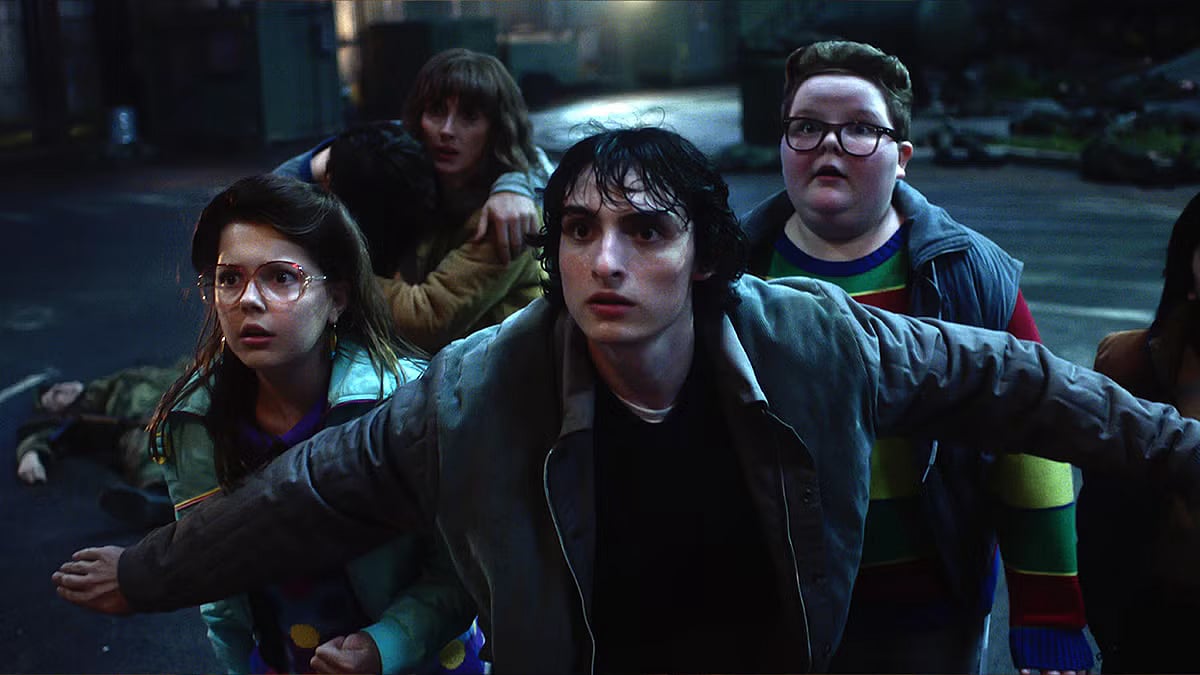
Nothing quite topped Stranger Things Season 1. Before the sprawling mythology and detailed explanations of the supernatural, it was a grounded story: a working mother, Joyce Byers (Winona Ryder), desperately searching for her missing son, Will (Noah Schnapp), who disappears one night. His friends — Mike (Finn Wolfhard), Dustin (Gaten Matarazzo), and Lucas (Caleb McLaughlin) — scramble to unravel the mystery and soon encounter a strange girl in the woods named Eleven, or 'El' for short, her hand marked with the number that gives her her name.
The later seasons expanded the story, deepened friendships, and took darker, more ambitious turns. And depending on who you ask, they sometimes got a little messy. With all five seasons now out, the verdict is clear: not every trip to the Upside Down was the same.
Here’s how every season stacks up, from highest-rated to lowest, based on critical reception — and how fans responded.
1. Season 1 (2016)
Tomatometer: 97% | Audience Score: 96%
The season that started it all — and never quite got beaten.
Season 1 is Stranger Things at its most grounded: A missing boy, a mysterious girl with a shaved head, government secrets, and just enough horror to feel dangerous without overwhelming the heart of the story. The pacing was tight, the mystery perfectly calibrated, and the emotional payoff genuine.
Critics and audiences were almost unanimously on board, praising its nostalgia and its restraint. Nothing felt bloated. Nothing was over-explained. It trusted the audience — and that trust paid off.
Lightning in a bottle. Still unmatched.
2. Season 2 (2017)
Tomatometer: 94% | Audience Score: 90%
Bigger stakes, deeper trauma — and a show learning how to sequel itself. After Eleven's sudden disappearance in Season 1, the group, especially Mike, try to move on with their life, but unfortunately, Will, who probably has had the worst childhood almost competing with Eleven, is possessed by the horrors of the Upside Down. El returns, Will is safe, and everyone goes for the much-awaited Snow Ball. And hello to the new character, Max, who entered as a breath of fresh air.
Season 2 expanded the mythology, explored the cost of surviving the Upside Down, and leaned harder into horror. While it wasn’t as lean as Season 1 (yes, Eleven's sister episode divided fans), it made up for it with character growth — particularly for Eleven, Will and Steve Harrington, who quickly became a fan-favourite, just because Jo Keery was that endearing.
Critics praised its emotional depth and ambition, even if it occasionally stumbled under the weight of its own world-building.
A strong follow-up that proved Season 1 wasn’t a fluke.
3. Season 4 (2022)
Tomatometer: 90% | Audience Score: 89%
They really ran up that hill, and what a run it was.
Darker, longer, and genuinely terrifying — Stranger Things goes full horror.
Season 4 dragged the stakes into nightmare territory. Vecna emerged as the show’s most chilling villain yet, the tone shifted decisively toward psychological horror, and the split-location storytelling gave the series a fresh urgency.
Critics applauded the ambition and performances, especially Sadie Sink’s devastating arc, though some flagged the very long runtimes as indulgent. Still, this was Stranger Things evolving — and mostly pulling it off.
Bloated at times, brilliant at its best.
4. Season 3 (2019)
Tomatometer: 89% | Audience Score: 86%
The neon-lit, mall-set season that chose vibes over subtlety.
Season 3 leaned hard into spectacle: bigger action, brighter colours, broader humour. The Starcourt Mall became the show’s most memorable setting, and the Russian subplot pushed the series firmly into blockbuster territory.
While hugely entertaining, critics noted a tonal shift — less mystery, more chaos — and a reliance on excess. Fans loved the fun, but some missed the quieter emotional beats of earlier seasons.
A crowd-pleaser that sacrificed nuance for noise.
5. Season 5 (2025)
Tomatometer: 83% | Audience Score: 56%
Ambitious, emotional — and deeply divisive.
The final season aimed to wrap everything up: the Upside Down, Vecna, Hawkins, and years of fan expectations. Critics were generally kind, praising its scale and commitment to closure. Audiences, however, were far more split.
Some loved the emotional farewells and full-circle moments; others felt the ending struggled under the weight of its own mythology. The sharp drop in audience score reflects just how polarising the last season proved to be. Nevertheless, the finale is still yet to come.
Not a disaster — but not the universally beloved goodbye many hoped for.
Network Links
GN StoreDownload our app
© Al Nisr Publishing LLC 2026. All rights reserved.