US actor Adrien Brody holds the Oscar for Best Actor in a Leading Role for "The Brutalist" as he attends the Vanity Fair Oscar Party at the Wallis Annenberg Center for the Performing Arts in Beverly Hills, California, on March 2, 2025.
How Adrien Brody showed rare vulnerable side at Red Sea Fest after Aishwarya Rai, Ana de Armas and Dakota Johnson
In a compelling master-class in Saudi, Gulf News saw Adrien Brody at his most vulnerable
Last updated:
5 MIN READ
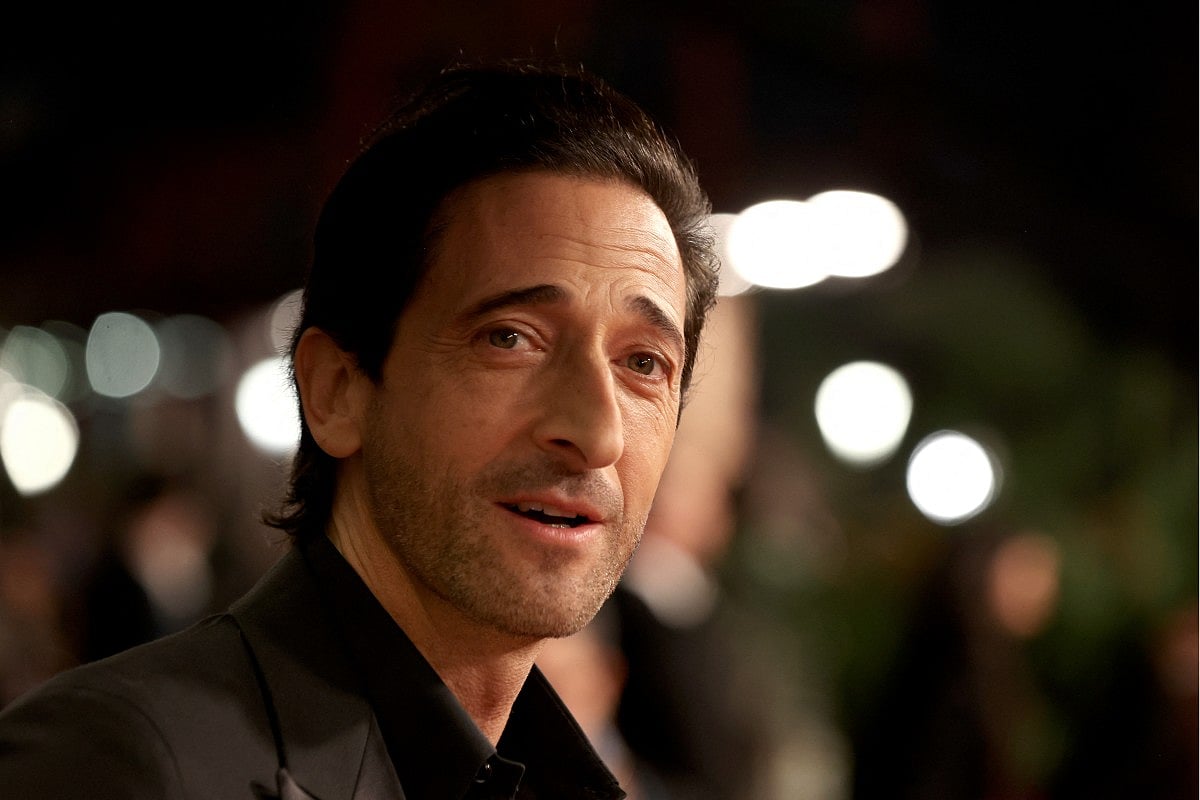
US actor Adrien Brody arrives for the opening ceremony of the 5th edition of the Red Sea Film Festival in Jeddah on December 4, 2025.
AFP-PATRICK BAZ
Jeddah, Saudi Arabia: I’ve attended my fair share of masterclasses at the on-going Red Sea International Film Festival — often with remarkable women like Aishwarya Rai Bachchan, Dakota Johnson, and Ana de Armas — and each one has left me with a different flavour of insight.
But last evening's session on December 6 at the Red Souq hall with Oscar winner Adrien Brody had an entirely different vibe. Less polished, less ornamental, and far more stripped down. His honesty didn’t come dressed in glamour or dramatic pauses. It felt more like someone thinking out loud about the realities of a career that has stretched over decades, through breakthroughs, droughts, and multiple versions of himself.
The Brutalist star began with something very few actors are willing to admit so plainly: filmmaking is often physically miserable. He recalled his celebrated film 'The Brutalist' shot in 23 days — “no rest, insufficient turnaround” — as if reading out a lab report.
Twelve-to-fourteen-hour days, six days a week, for weeks. The way he delivered it was almost dry, but in that dryness was a kind of truth most people prefer to soften. There was no romantic spiel about passion. It was work. Hard, relentless work.
What I appreciated was his refusal to dramatise his sacrifices.
“There’s no way to say, I’m going to hold back today,” he said. “The way I hold back is… I don’t have a personal life then.”
His acting process, he claims, is painfully austere.
During intense shoots like the one from his Oscar-winning turn in The Brutalist, he withdraws. He eats alone. He doesn’t socialise with co-stars even if he likes them.
“Your body has to digest if you eat food. Your emotions have to digest.”
Sitting in the audience, I realised I’ve never heard an actor describe solitude as a survival tactic rather than a romantic affectation. It caught me off guard.
When someone asked how he chooses scripts, he didn’t pretend to possess a mystical instinct. His answer was messy and familiar — like anyone who works in a deadline-driven industry. You get a script on Wednesday, your agent says the studio wants an answer by Friday, and life is too chaotic that week to read it with the attention it deserves. Maybe you say yes too quickly. Maybe you say no because you’re distracted. Maybe the project goes to someone else entirely.
“Sometimes you’re not meant to do it,” he said. The acceptance in his tone felt weathered, not cynical.
Later, he added something that deepened this point: “I assumed I had less to prove after my Oscar-win,” he said, looking back at the post-Academy win phase of his career.
“I thought I could take work that felt interesting. But you have a responsibility — to yourself and to your career trajectory. It takes time to understand that.” He hasn’t done a film since The Brutalist, he said, not because he hasn’t been offered good roles, but because “they didn’t feel quite right.”
There was a refreshing absence of defensiveness. No “I turned everything down because I’m artistic” energy. It was more: I’ve learned how long certain choices live with you.
He returned to a theme he repeated throughout the session — his need to be immersed, to problem-solve, to be in motion.
“I love to work. I love to collaborate. I love being immersed,” he said. “I thrive on that level of immersion.” It wasn’t said poetically. It sounded like someone describing their baseline operating temperature.
Adrien Brody and Guillermo del Toro attend Netflix's Frankenstein NYC Tastemaker Screening at Crosby Street Hotel on October 22, 2025 in New York City.
What struck me, too, was how he viewed his early career — back when anonymity allowed him to experiment freely. “I did a lot of things that I found interesting,” he said. “Those films don’t always perform under subjective criteria.” The line was almost funny, even if unintentionally so. He seemed grateful for the freedom obscurity once offered, but also realistic about how success narrows your options rather than widens them.
There was also a moment where he stepped outside himself and acknowledged the place he was speaking in.
“It’s wonderful to witness the evolution of the festival and what Saudi is doing in film,” he said. He spoke about young filmmakers, women whose voices have been underserved, and the broader sense of cultural empowerment unfolding here. It didn’t sound rehearsed. It sounded like someone observing rather than pandering.
One of the more touching moments came when a man in the audience shared a story about watching The Pianist with his Polish grandfather shortly before he passed away — their final memory together. The room went almost unnaturally still.
Brody didn’t reach for emotion. Instead, he spoke about responsibility — portraying real history, real people, real trauma.
“I’m grateful I had the chance to help memorialize them,” he said. The simplicity of the word “grateful” landed heavier than any sentimental performance could have.
Before wrapping, he pivoted back to something deeply human — replenishment. “We all have to replenish,” he said. “We’re not machines.” For him, refilling the well means painting, making music, spending time with family, disappearing into nature. “Even then, sometimes it’s not enough,” he admitted. “I find myself constantly trying to create things and ideas. But inevitably, you have to give yourself quiet time.”
What I loved was that this wasn’t framed as “balance.” It was framed as maintenance — the bare minimum required to keep functioning in a creative field that drains you even as it feeds you.
Walking out, I realised what set this masterclass apart from the others I’ve attended. With Aishwarya Rai Bachchan, Dakota Johnson, and Ana de Armas, the conversations often leaned toward elegance, intuition, and the emotional intelligence of performance. Brody’s session was the opposite: stripped of glamour, stripped of mythology, and almost entirely focused on the unromantic mechanics of staying alive — artistically, emotionally, physically — in a profession that constantly tests all three.
Dakota Johnson (Image source: Instagram/@redseafilm)
It wasn’t inspirational in the traditional sense. But it was grounding. And sometimes grounding is exactly what you need.
Network Links
GN StoreAbout Gulf NewsTerms & ConditionsReach by GNSitemapContact usPrivacy PolicyGN FocusHave your sayWork with usAdvertise with usGulf News epaperPrinting Services
Download our app
© Al Nisr Publishing LLC 2026. All rights reserved.