AR Rahman gets candid in Gulf News interview.
AR Rahman outrage and controversy: Why we should listen to Oscar winner's interview before cancelling him
News flash: The Oscar winner is incredibly thorough and nothing he says is accidental.
Last updated:
2 MIN READ
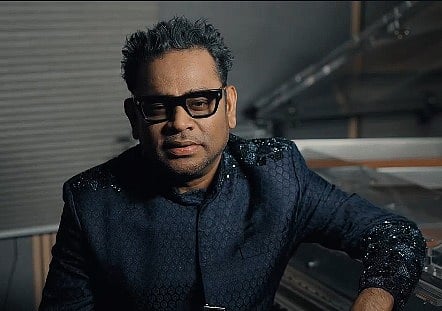
AR Rahman
Dubai: I’ve interviewed Oscar-winning music composer and one of India's biggest cultural exports AR Rahman several times over the past 19 years of my career, and if there’s one thing I can say with absolute certainty, it’s this: Rahman gives the most measured responses of any artist I’ve encountered.
He is careful. Thoughtful. Almost painfully precise. His team is always hovering around him, watching every word, every pause, every inflection - making sure he’s saying exactly what he intends to say.
Rahman is also deeply particular about his angle that the photographer films him in. He's incredibly thorough and nothing he says is accidental.
So before everyone jumps to conclusions and indulges in selective outrage over his recent in-depth interview, do me a favour: watch the entire 86 minuts, 26 seconds interview he gave to Haroon Rashid on the BBC Asian network.
Full disclosure: Haroon and I have hung out at the IIFA Awards. He is one of the most responsible journalists out there — someone who listens, probes, and allows context to breathe. This wasn’t a “gotcha” interview. It was a conversation.
Now, back to Rahman.
What he was speaking about (quite clearly) was how the music landscape in Bollywood has changed, and how power today often sits with people who may not fully understand music, its process, or its cultural weight. That frustration isn’t new, and it isn’t controversial, unless you’re determined to hear something else.
Yes, he may have faced discrimination along communal lines in the past. But that part? It’s largely Chinese whispers. He may have alluded to it, but if you actually listen to his response in full context, you’ll realise Rahman was being incredibly diplomatic, almost to a fault.
But what he did do was touch a nerve. Prejudices exist everywhere. Even in our own workplaces and in our personal lives. And pretending otherwise doesn’t make us progressive, it just makes us dishonest.
Rahman was also making a larger, far more powerful point, one that many seem determined to ignore. He spoke about how extraordinary it is that his upcoming project Ramayana with Ranbir Kapoor brings together Hans Zimmer, a Jewish composer, and himself — a Hindu-born musician who embraced Islam collaborating on an Indian mythological epic, Ramayana. If that isn’t a statement about art transcending identity, then what is?
My plea is simple: see everything in context. Listen fully. Resist selective outrage for outrage’s sake. AR Rahman wasn’t stirring controversy. He was doing what he has always done — speaking carefully, diplomatically, and with a deep awareness of the world he operates in.
And sometimes, that’s enough to make people uncomfortable.
Network Links
GN StoreAbout Gulf NewsTerms & ConditionsReach by GNSitemapContact usPrivacy PolicyGN FocusHave your sayWork with usAdvertise with usGulf News epaperPrinting Services
Download our app
© Al Nisr Publishing LLC 2026. All rights reserved.