AR Rahman’s daughters Khatija and Raheema defend him amid backlash and character assassination
Oscar-winner is under fire after comment during recent interview was taken out of context
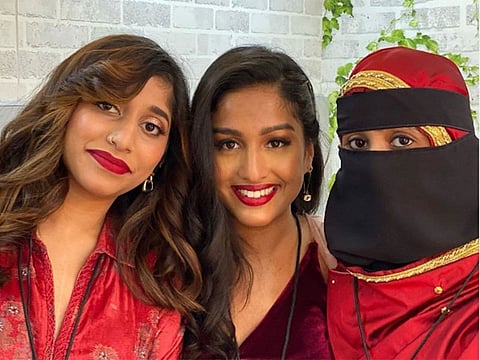
Dubai: Oscar-winning composer AR Rahman's daughters, Khatija and Raheema, took to Instagram to defend their Oscar-winning father following intense criticism over comments he made in a recent interview about the shifting power dynamics within the Hindi film industry.
The controversy erupted after AR Rahman suggested in an interview with BBC Asian Network that he may have seen reduced work opportunities over the past several years due to a change in who wields influence in the industry. Those with authority may not be experts in music, he added.
In the same interview, that has now snowballed into a huge row, AR Rahman suggested it “might be a communal thing", a perception, he clarified, based on what he had heard through what he described as “Chinese whispers”
Both his daughters are standing strong with their father. Earlier today, they shared an elaborate post by Malayalam composer Kailas Menon titled “Disagree, don’t disgrace".
In his note, Menon argued that Rahman was speaking from personal experience and had every right to do so.
“You may disagree with him, but you cannot deny him the freedom to express his experience,” he wrote.
He added that the reaction had crossed from disagreement into abuse, accusing critics of indulging in “character assassination” and hate speech under the guise of opinion.
Menon also underscored Rahman’s legacy, pointing to his decades-long contribution to Indian cinema, Tamil culture and global music. He said an artist’s body of work cannot be erased simply because of a personal viewpoint.
“Criticism is fine, but outrage without respect says more about us than about him,” he wrote.
Khatija went a step further by reacting to Menon’s post with clapping, fire, heart and hundred emojis.
The criticism eventually prompted Rahman to issue a video statement on Sunday, clarifying his intentions. “India is my inspiration, my teacher and my home,” he said.
“My purpose has always been to uplift, honour and serve through music. I have never wished to cause pain, and I hope my sincerity is felt.”
Rahman also mentioned his upcoming collaboration with Hans Zimmer on Nitesh Tiwari’s two-part cinematic adaptation of the Ramayana, calling it an honour.
The remarks that triggered the debate were made during a BBC interview, where Rahman was asked whether there was prejudice in the Hindi film industry against non-Maharashtrian or Tamil artists.


