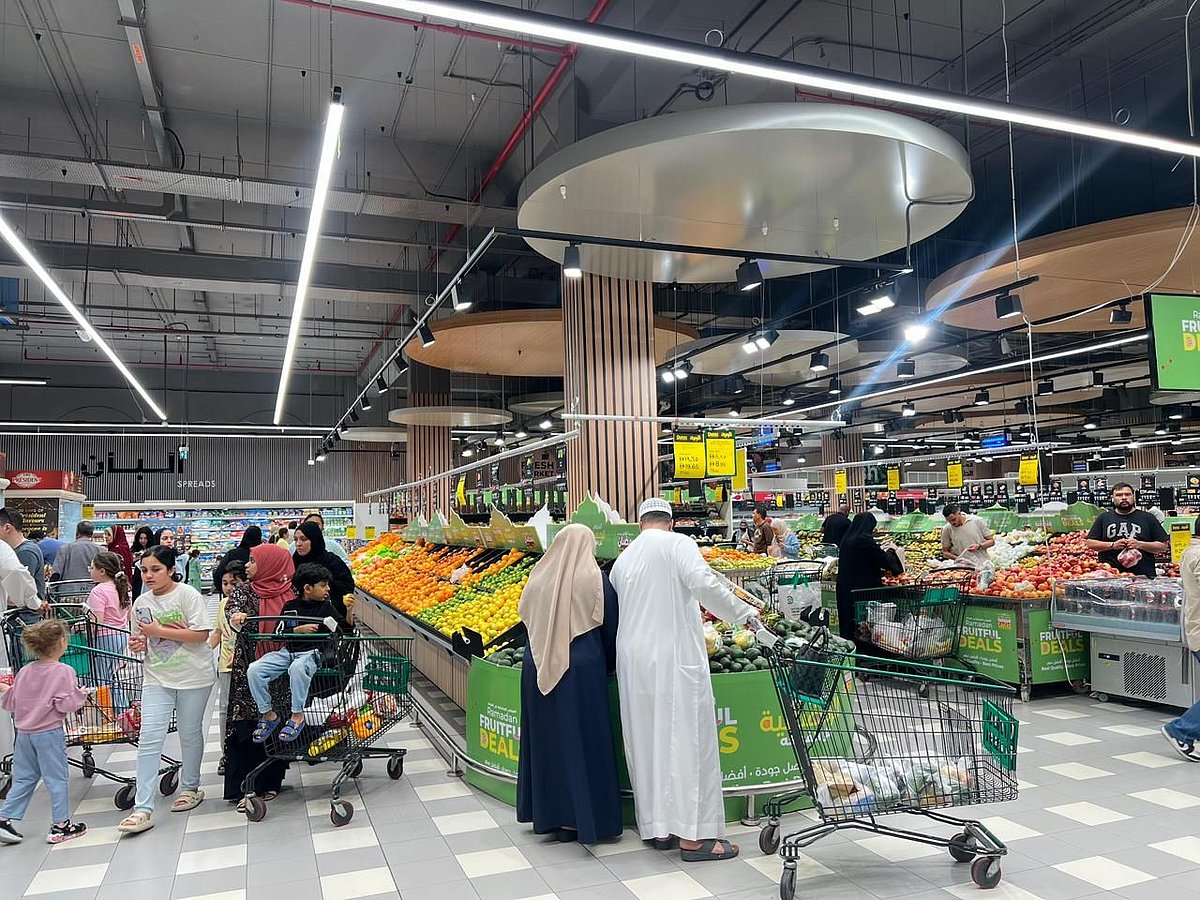
Dubai: Supermarket shelves across the UAE remain stocked with months of staple supplies, even as geopolitical tensions place renewed focus on shipping lanes, freight costs and energy markets. Retailers and supply chain leaders say the system is absorbing stress without disruption, supported by buffer inventory, diversified sourcing and close coordination with authorities.
Government oversight remains active, with strategic reserves described as robust and diversified. Industry operators insist the operational picture on the ground matches that assurance.
Months of inventory across staples
Across rice, wheat, cooking oil and dairy, inventory cover extends for several months through a combination of in-store holdings, regional distribution centres and forward procurement contracts. That multi-layered stock positioning provides breathing room should transit routes tighten.
Stay updated: Get the latest faster by downloading the Gulf News app now - it's completely free. Click here for Apple or here for Android. You can also find it on the Huawei AppGallery.
At Lulu Group, buffer levels are supported by a global sourcing footprint spanning 26 international offices. V Nandakumar, Global Director of Marketing and Communications, said the network enables the company to “quickly rebalance supply flows should there be any temporary disruption to regional shipping routes.” He stressed that uninterrupted supply and price stability remain the priority, adding that cost pressures from freight and energy are being absorbed through efficiencies and long-term supplier relationships. Any retail price adjustments, he noted, would only be considered after “sustained and significant input cost changes.”
Al Maya Group confirmed three to five months of buffer stock across key staples. A diversified sourcing structure allows flexibility if constraints emerge at major transit points. Kamal Vachani, Deputy CEO, Group Director and Partner, said the group’s focus remains on maintaining adequate stock and stable supply, stating plainly that “there is absolutely no shortage, and customers can shop with confidence.”
Dinesh Pagarani, Director at Choithrams, confirmed that the supermarket typically carries between 40 and 60 days of non-perishable inventory, with suppliers holding similar levels. The retailer imports from more than 40 countries and maintains alternative port and road combinations as standard practice. Its spokesperson said no shortages are foreseen under current conditions, and contingency plans are already established should the Strait of Hormuz remain restricted for an extended period. Another supermarket Viva also confirmed that all its stores across the UAE, Oman and Saudi Arabia remain fully operational, with ample stock levels and a steady flow of supplies.
At Organic Foods & Café, approximately three months of imported shelf-stable inventory is maintained. Firas Nasir, CEO and Co-CIO of the Gulf Japan Food Fund, said the supply chain can be re-mapped by adjusting “air, sea and land” routes depending on where disruption occurs. He added that locally sourced items offer added resilience because shipping constraints are less directly impactful on end products.
Diversification as structural shield
Geographic spread remains the backbone of the UAE’s food model. Rice flows largely from India and Pakistan, wheat and dairy inputs from Europe and Australia, oils from Southeast Asia, and proteins from Africa and South America. That dispersion reduces concentration risk at any single chokepoint.
Supply chain expert and Managing Director, Business Optima, Joachim Yebouet, explained that most operators maintain one to three months of staple stock depending on commodity type and storage capacity. Wheat and flour benefit from organised reserves and milling infrastructure, while rice and cooking oil are more exposed to import timing cycles. If a disruption were to stretch beyond eight to twelve weeks, coordinated reserve releases and rerouting via alternative Gulf or Red Sea ports would become essential, albeit at higher cost and longer lead times.
Pricing pressure and absorption capacity
Energy and freight premiums remain the central variables. Retailers say scale and contractual depth are cushioning immediate effects. Sustained cost escalation, however, would eventually require selective adjustments if input pressures persist.
Product-level impact varies depending on margin cushion and whether cost increases are temporary or structural. With several months of inventory already secured across major chains, immediate price transmission appears limited in the short term.
Panic buying contained
Retailers reported a temporary surge in purchases of water, rice, flour, dairy and canned goods over the weekend. Some short-lived empty shelves reflected replenishment timing rather than stock shortages. Deliveries were increased to stabilise availability and traffic has since normalised.
Product-level impact varies depending on margin cushion and whether cost increases are temporary or structural. With several months of inventory already secured across major chains, immediate price transmission appears limited in the short term.
Panic buying contained
Retailers reported a temporary surge in purchases of water, rice, flour, dairy and canned goods over the weekend. Some short-lived empty shelves reflected replenishment timing rather than stock shortages. Deliveries were increased to stabilise availability and traffic has since normalised.
Consumer behaviour remains a key variable. Yebouet cautioned that precautionary buying itself can amplify stress, while Nasir described UAE shoppers as exhibiting quiet confidence in national resilience.
At the small business level, operations continue smoothly. Souad Mchida, owner of Bab Eloued Food Truck, said “we’re not facing any major pressure points with grocery supplies at the moment, and operations are running smoothly,” adding that the country’s stability provides confidence that keeps markets active.
A live stress test of the model
Current conditions are widely seen as a real-time assessment of the UAE’s food security architecture. Strong public-private coordination, advanced logistics corridors and diversified trade partnerships distinguish the country from many import-dependent economies in the region.
Local production of fruit, vegetables, dairy and eggs, combined with large-scale distribution ecosystems serving both domestic and regional markets, strengthens shock absorption.
Even as geopolitical risks remain elevated, supply continuity across the UAE’s grocery sector remains anchored by planning, scale and coordination rather than short-term reaction.
Network Links
GN StoreDownload our app
© Al Nisr Publishing LLC 2026. All rights reserved.