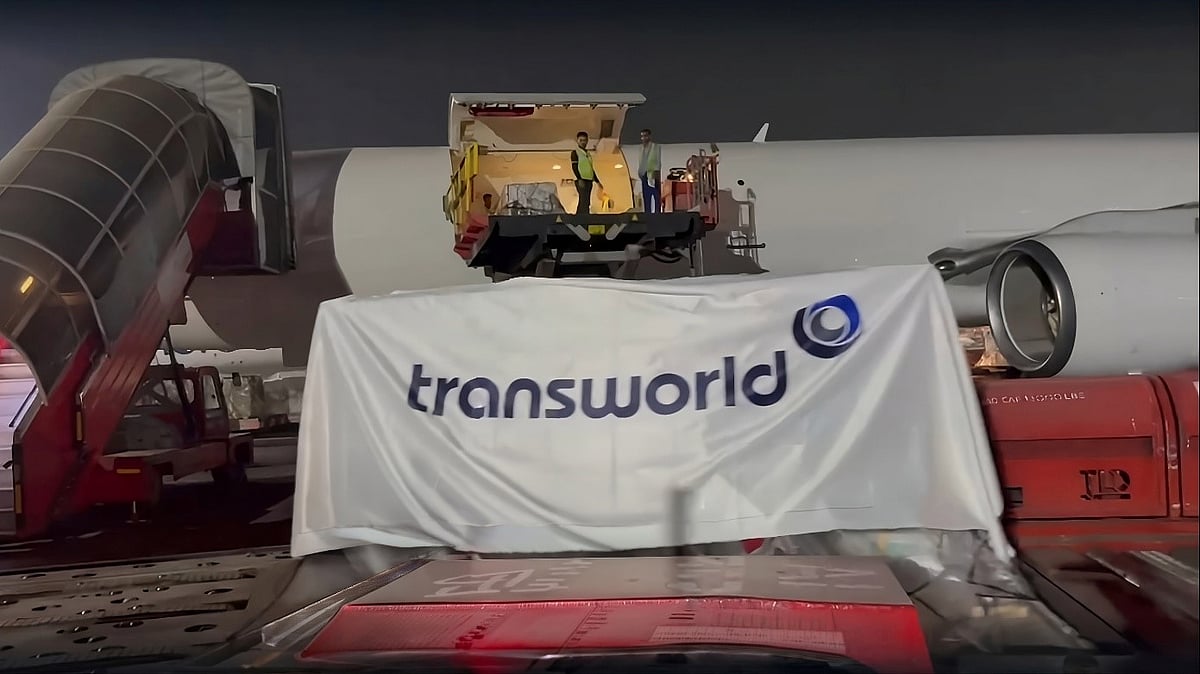
Dubai: A dedicated air charter between India and the UAE has been deployed to keep essential goods moving, highlighting how supply chains are adapting to rising pressure on traditional shipping routes.
Transworld operated a Sharjah–Mumbai–Sharjah flight on March 24, ensuring food and essential cargo reached the UAE without delay. The move comes at a time when geopolitical tensions are increasing risk across key trade corridors, forcing logistics players to shift strategies.
Stay updated: Get the latest faster by downloading the Gulf News app - it's completely free. Click here for Apple or here for Android. You can also find it us on the Huawei AppGallery.
Fast response to protect supply flows
The charter operation was mobilised to address disruptions and maintain continuity in food supply between India and the UAE, one of the most important trade corridors for essential imports.
“With conventional freight routes facing increased operational risk, agility and decisive action become critical,” said Ramesh S. Ramakrishnan, Chairman of Transworld.
“This Air charter operation demonstrates our commitment to maintaining the seamless movement of essential commodities between India and the UAE, while reinforcing and strengthening the deep-rooted partnership between the two nations.”
The flight operated without disruption, providing immediate capacity at a time when shipping schedules are becoming less predictable.
Logistics shifts from efficiency to reliability
The move reflects a broader shift in how supply chains are being managed under stress. Efficiency is taking a back seat to reliability, with companies prioritising guaranteed delivery over cost optimisation.
The operation also highlights the importance of the India-UAE trade link in maintaining food supply stability across the Emirates.
India remains a key source for a wide range of food products, and maintaining uninterrupted flows is essential for both availability and price stability in the UAE.
Transworld said the charter is part of a broader strategy to invest in flexible logistics solutions that can be activated when conventional routes face disruption.
Alongside the air operation, the company also deployed its vessel SSL Godavari to support maritime trade flows between the two countries, reinforcing a multi-channel approach to supply continuity.
Supply chains adapt to new realities
The use of dedicated air cargo reflects how logistics networks are evolving in response to geopolitical uncertainty.
Companies are building in redundancy, diversifying transport modes and investing in rapid-response capabilities to ensure essential goods continue to reach markets.
The immediate impact for consumers is limited, with supply chains holding steady. The longer-term question will centre on cost, as higher reliance on air freight and alternative routes begins to influence pricing across categories.

Sign up for the Daily Briefing
Get the latest news and updates straight to your inbox
Network Links
GN StoreDownload our app
© Al Nisr Publishing LLC 2026. All rights reserved.