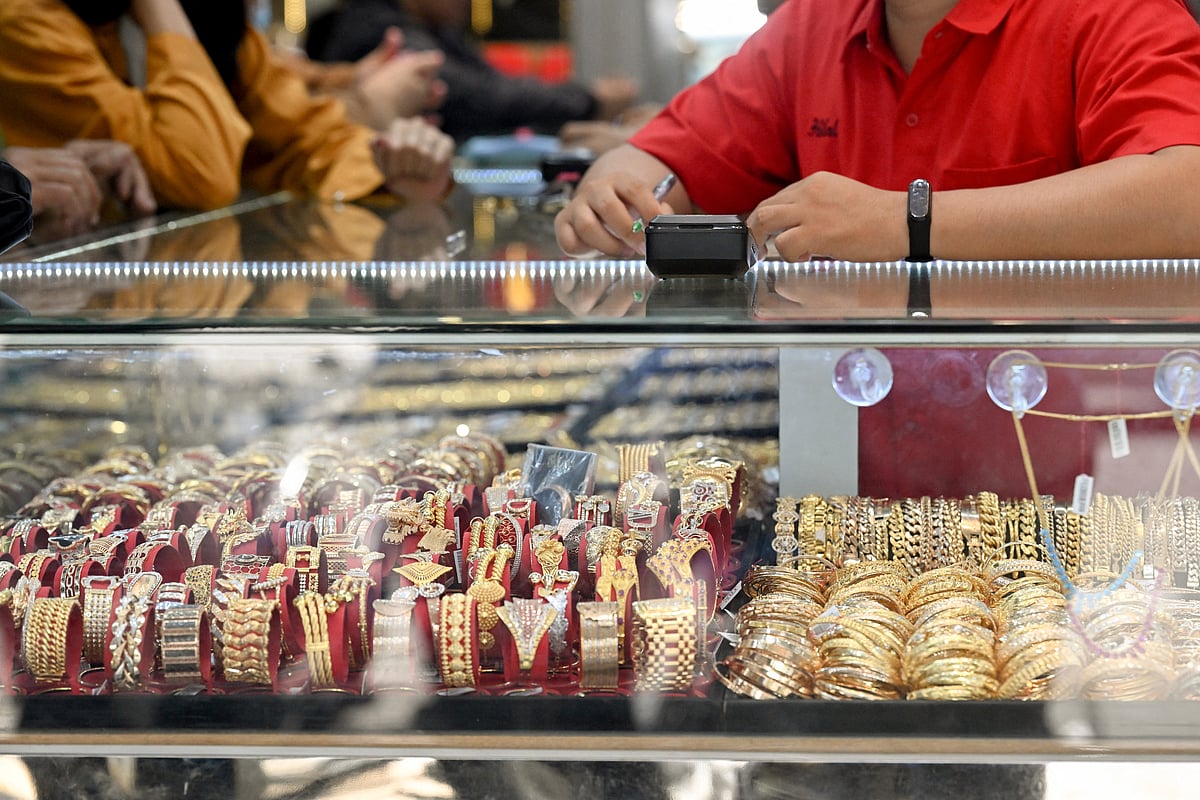
Dubai: Gold prices in Dubai edged lower on Thursday morning, tracking a mild pullback in global bullion as large institutional funds prepare to rebalance their commodity exposure. At 9.30 am, 24‑karat gold stood at Dh533.75 per gram compared with Dh536.25 on Wednesday, while 22‑karat eased to Dh494.25 from Dh496.50, leaving prices still elevated but shy of this week’s peaks.
Over the opening days of 2026, local rates have moved in a tight but high range. The year began with 24‑karat at Dh520.25 and 22‑karat at Dh481.75 on January 1, before dipping slightly to Dh519.25 and Dh480.75 a day later. Prices held at Dh522 and Dh483.25 on January 3 and 4, then jumped to Dh536.25 and Dh496.50 on January 5 as global gold rallied. The uptrend extended on January 6, when 24‑karat reached Dh538.50 and 22‑karat Dh498.50, before easing to Dh536.25 and Dh496.50 on January 7 and now Dh533.75 and Dh494.25 on January 8. The pattern shows a market still near record territory, with recent moves reflecting global flows more than local jewellery demand.
Global gold steadies after near 1% drop
On international markets, gold was trading close to $4,455 an ounce after slipping nearly 1% in the previous session. The pause comes ahead of annual rebalancing by major commodity indexes, a technical event that can trigger sizeable, short-lived selling as passive funds adjust holdings to match new weightings. Sales are expected to be larger than usual this year after powerful rallies in both gold and silver through 2025.
Citigroup estimates that around $6.8 billion of gold futures could be sold in the process, with a similar amount in silver contracts, as funds tracking benchmarks such as the Bloomberg Commodity Index and the S&P GSCI cut back exposure. Silver, which fell 3.8% on Wednesday, looks particularly vulnerable given its recent volatility, with the bank suggesting sales could equate to roughly 12% of open interest on Comex.
Best year since 1979 faces technical test
Gold and silver enter this rebalancing phase after their strongest annual performance since 1979. Both metals set multiple record highs in 2025, supported by central bank buying and robust inflows into bullion‑backed exchange‑traded funds. Geopolitical tension has added further support in recent days, from strained China‑Japan trade relations to the US capture of Venezuelan leader Nicolás Maduro. Despite the latest dip, gold remains roughly 3% higher on the week.
Silver’s rise has been even more dramatic. The metal gained around 150 per cent in 2025, including a historic short squeeze in October that forced traders to cover bearish bets. Concerns that the US administration could eventually impose import tariffs on some flows helped keep significant supplies tied up in New York, tightening the market. By Wednesday’s close this week, silver had already advanced about 7.4 per cent before the latest pullback.
Index flows and US data in focus
The near‑term risk for precious metals comes from the combination of index‑driven selling and a crowded long trade after last year’s surge. When large passive funds reduce weightings, they must sell futures regardless of fundamentals, which can temporarily drag prices lower.
Attention is also turning to the US macro picture. Traders await Friday’s December jobs report and other key data that will shape expectations for Federal Reserve policy in 2026. A softer labour print would add to bets on more interest‑rate cuts, a positive backdrop for non‑yielding assets such as gold and silver. Stronger data could delay easing, strengthen the dollar and cap near‑term upside.
- With inputs from Bloomberg.

Sign up for the Daily Briefing
Get the latest news and updates straight to your inbox
Network Links
GN StoreDownload our app
© Al Nisr Publishing LLC 2026. All rights reserved.