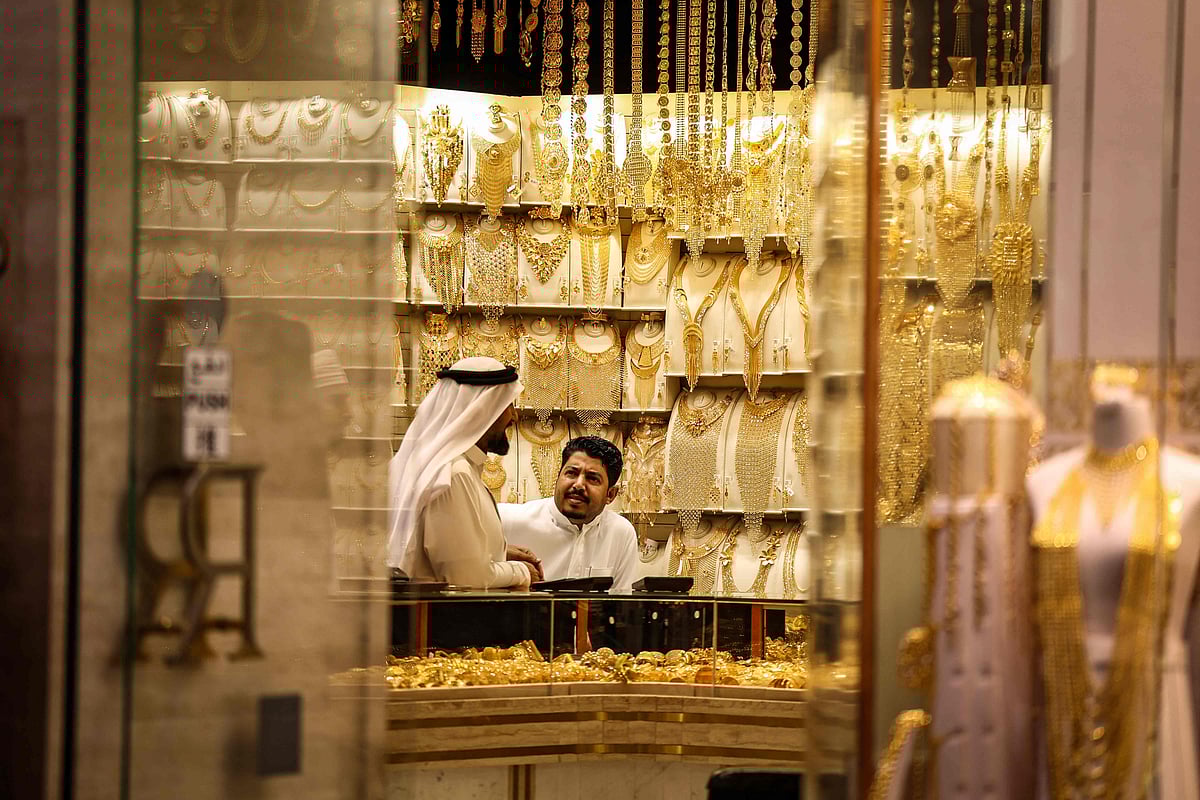
Dubai: Gold prices in Dubai edged lower on Monday morning, tracking a global pullback that reflects how interest rate expectations are shaping investor behaviour more than geopolitical tension at this stage. (Check latest UAE gold prices here, alongside prices in Saudi Arabia, Oman, Qatar, Bahrain, Kuwait, and India.)
At 8:25 am, 24K gold was priced at Dh577.50 per gram, down from Dh582.25 on Sunday. The 22K variant dropped to Dh534.75 from Dh539, offering a marginal window for buyers after last week’s elevated levels.
Get updated faster and for FREE: Download the Gulf News app now - simply click here.
The decline follows a broader move in international markets, where bullion slipped below the $4,800 mark to around $4,775 during early Asian trading, even as tensions escalated around the Strait of Hormuz.
Rates take centre stage
The reaction points to a market recalibration, where monetary policy expectations are exerting stronger influence than geopolitical developments.
Rania Gule, Senior Market Analyst at XS.com MENA, said the move reflects changing priorities among investors. In her words, “this decline does not reflect a fundamental weakness in gold’s status as a safe haven, but rather reveals a more complex shift in market dynamics.”
Expectations that US interest rates will remain elevated have raised the opportunity cost of holding gold, which does not generate yield. That dynamic is keeping prices under pressure even during periods of heightened geopolitical risk.
Gule explained that investors are now more responsive to rate signals than to conflict-driven uncertainty, adding that “the key factor now is not the level of risk itself, but the opportunity cost of holding gold.”
Geopolitics priced in
Tensions in the Strait of Hormuz intensified over the weekend, with vessels warned to stay away and fresh uncertainty surrounding ceasefire efforts between the US and Iran. Oil and gas prices jumped on supply concerns, while the dollar strengthened, creating additional pressure on bullion.
Yet gold’s muted response suggests markets are treating these risks as ongoing rather than sudden shocks. Gule noted that geopolitical developments are increasingly viewed as “chronic,” meaning they are already partly reflected in pricing and less likely to trigger sharp upward moves.
That shift has made gold’s price action less predictable, with investors taking a more selective approach to safe-haven allocations instead of moving automatically into bullion during crises.
Retail data in focus
Attention is now turning to US retail sales data for March, expected to show a 1.3% increase compared to 0.6% in February. The release is likely to shape short-term direction.
Strong data would reinforce expectations of prolonged monetary tightening, supporting the dollar and weighing further on gold. A weaker reading could ease pressure on bullion and revive upward momentum, particularly if geopolitical risks remain elevated.
Gule said the market is going through a broader repricing phase, where assets are being assessed against real return expectations. Gold, in this environment, is struggling to keep pace with rising yields, leading to near-term weakness.
Temporary correction or entry point
Despite the pullback, the medium-term outlook remains constructive. Gule believes the current decline could present an opportunity for investors willing to take a longer view, especially if tensions in the Middle East persist or signs of economic slowdown begin to emerge.
She added that gold is likely to remain volatile in the near term, with a limited downward bias while rates stay high. Over time, however, the balance between yields and risk could shift again, allowing bullion to regain momentum.
- With inputs from Bloomberg.

Sign up for the Daily Briefing
Get the latest news and updates straight to your inbox
Network Links
GN StoreDownload our app
© Al Nisr Publishing LLC 2026. All rights reserved.