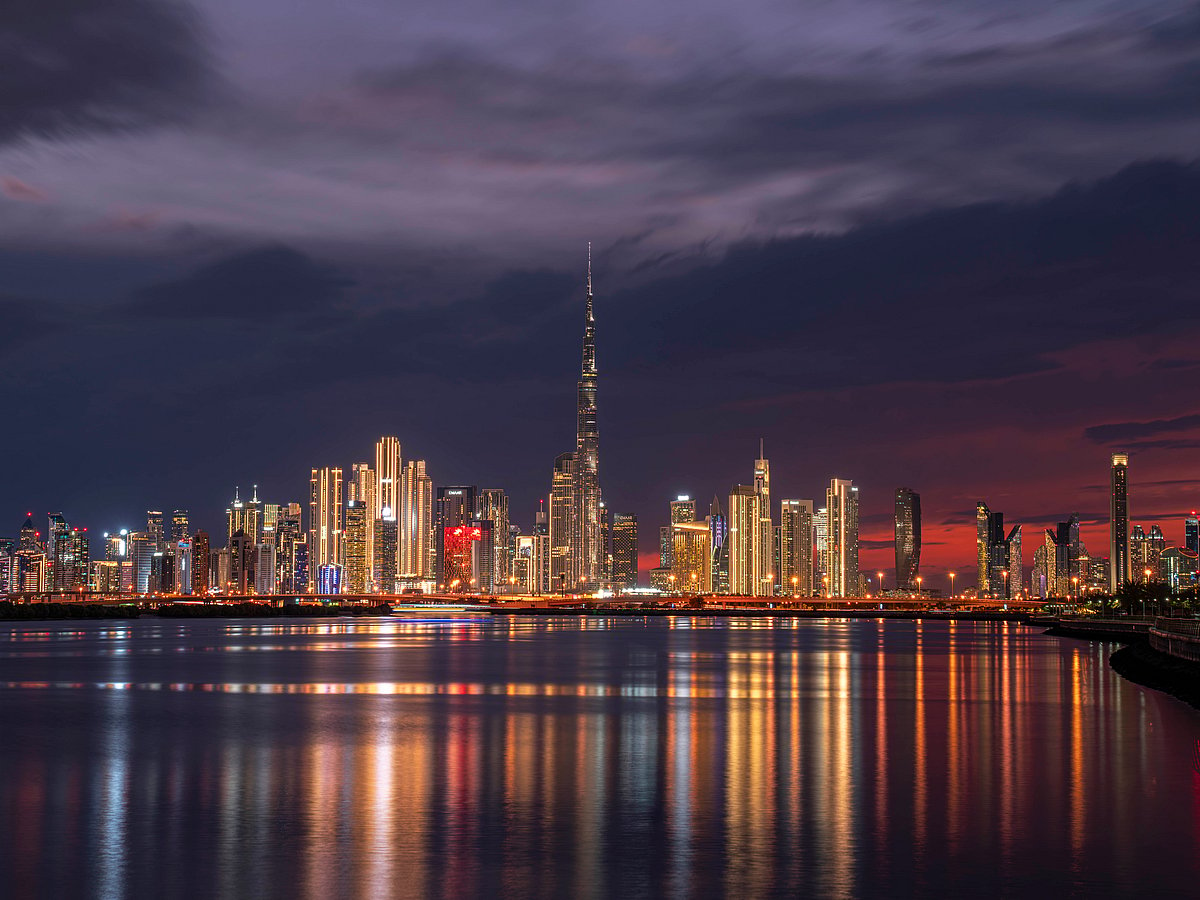
Dubai: Dubai’s role in global wealth mobility is changing shape. High-net-worth families who once treated the UAE as a secondary base are now relocating with the intention of settling and building long-term family and business continuity in the country.
That shift is visible in Dubai’s prime residential communities. One recent example is the purchase of a six-bedroom villa in Emerald Hills by a UK-based high-net-worth family that relocated from Switzerland.
“Our decision to relocate to the UAE was driven by a combination of professional opportunity, lifestyle considerations, and long-term planning,” said the buyer, a 60-year-old Swiss doctor, who wished to remain anonymous. “At this stage of my career, I wanted to be in a market that is growing rapidly, internationally connected, and open to entrepreneurship.”
The homeowner said that the decision was not framed as a rejection of Europe. Switzerland, he said, offered stability and structure. What it no longer offered was proximity to growth or the pace required for the next phase of his career.
“The UAE offers an environment where ambitious projects and people move quickly,” he said. “Decision-making is efficient, and there is direct access to global markets across the Middle East, Asia, Europe, and Africa.”
That access mattered as much as regulation. Tax efficiency and a pro-enterprise framework made Dubai a viable base. Quality of life made it sustainable.
“Safety, healthcare, and a multicultural environment were important,” he said. “Relocating now allows us to align our health and lifestyle focus with our business priorities.”
A central base for global families
The family’s move from Switzerland was also shaped by geography. With children based in different parts of the world, Dubai emerged as the most practical hub.
“We moved from Switzerland to have a more central base for our children,” he said. “Dubai was the most central, alongside the tax benefits.”
Families from the UK and Europe now account for a growing share, driven by tax changes, political uncertainty, and the search for a stable but globally connected base.
Vazgen Gevorkyan, a member of the supervisory board at Evocabank and an advisor to wealth management offices and foundations, said the UAE’s appeal has strengthened as wealthy families move into a different phase of decision-making.
“Many high-net-worth individuals are shifting from wealth creation to wealth preservation and structuring,” he said. “The UAE addresses both phases effectively.”
Capital mobility, he noted, has become structural. The central question has changed.
“The question is no longer where should I live,” he said. “It is where should I position my affairs so they remain viable regardless of location.”
That shift places greater weight on consistency and execution. Regulatory clarity matters more than incentives. Predictability matters more than generosity.
“Ambiguity and retroactive change are what wealthy families cannot work around,” Gevorkyan said. “The UAE has provided clarity and maintained it.”
Beyond the tax narrative
The UAE is often discussed through a tax lens. That framing, Gevorkyan said, misses the operational reality faced by families who relocate with businesses, assets, and multiple jurisdictions to manage.
“The perception is often tax-driven. The reality is more holistic,” he said. “What surprises people is how institutionalised and regulated the ecosystem has become, particularly in banking, compliance, and dispute resolution.”
Also Read
Why Indian property developers are expanding into the UAEWhy views and privacy now trump size in Dubai’s luxury home marketWhat UK buyers get wrong when they enter the UAE property marketDubai villa prices jump 206% since the pandemic, smashing past the last boomIntegration also happens faster than in traditional financial centres. That speed reduces friction for families who remain economically active rather than passive residents.
Push and pull factors are also diverging. In several established markets, regulation has tightened alongside a broader shift in tone.
“There is a sense in some places that success requires justification rather than competent management,” Gevorkyan said.
The UAE operates differently. Infrastructure is built in response to demand. Schools, medical facilities, and residential communities expand alongside population growth. That responsiveness supports families making generational decisions rather than temporary moves.
A maturing wealth ecosystem
The financial infrastructure has reached a depth that allows families to centralise operations with confidence. International banks, private wealth managers, trustees, and family offices now operate at scale across Dubai and Abu Dhabi.
“The question is no longer whether infrastructure exists,” Gevorkyan said. “It is whether it has sufficient depth that families feel comfortable concentrating affairs rather than spreading them across multiple centres.”
For a growing number of families, that threshold has been crossed. Real estate plays a central role in that calculation, forming part of residency planning, capital preservation, and family continuity.
A neutral platform
Geography also matters. Families based in the UAE find it easier to manage investments across Asia and Africa than from European centres. Neutrality allows families with members in different countries to structure affairs without forcing everyone into one jurisdiction’s rules.
“The UAE works best for families who already think globally,” Gevorkyan said.
The buyer in Emerald Hills expressed that shift more simply. Advice to others considering the move, he said, should focus less on optics and more on execution.
“Plan your structure properly, understand global tax implications, and be patient with banking,” he said. “Choose the right location and the right adviser. Your home matters because this is where your family will actually live.”
That perspective captures why the UAE’s pull on global wealth is strengthening.
Sign up for the Daily Briefing
Get the latest news and updates straight to your inbox
Network Links
GN StoreDownload our app
© Al Nisr Publishing LLC 2026. All rights reserved.