Why views and privacy now trump size in Dubai’s luxury home market
Views and privacy explain why similar Dubai homes now carry vastly different prices
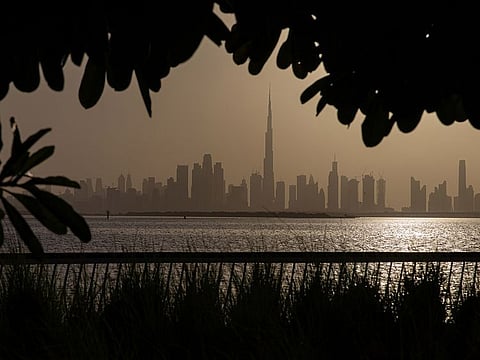
Dubai: Dubai’s luxury property market has entered a phase where square footage alone no longer explains price. Two homes with similar layouts, finishes and even locations can now sit millions of dirhams apart. The difference increasingly comes down to one factor that cannot be replicated or expanded, that is, protected views and genuine privacy.
For buyers entering the market today, particularly international capital relocating to the UAE, size has become secondary to certainty. Certainty that a sea view will not disappear behind a new tower, that neighbouring plots will not turn into construction sites, and that the lifestyle on offer today will remain intact five or ten years down the line.
That shift is reshaping how luxury homes are priced, marketed and ultimately chosen.
Scarcity, not scale, is setting prices
Dubai is not short of high-end inventory. What it lacks, however, is turnkey homes that combine uninterrupted views, privacy and minimal execution risk. Jason Barrowclough, Sales Director at Dubai Sotheby's International Realty, said this imbalance becomes stark at the very top of the market.
“When a client entered the market with a budget of approximately Dh100 million, we were able to narrow the entire Dubai landscape down to roughly 15 viable options,” he said. “That in itself speaks volumes about the scarcity of high-quality, move-in-ready residences at that level.”
Many properties technically meet luxury price thresholds but fail on livability. Standard developer finishes, investor-led refurbishments and homes requiring extensive project management are increasingly filtered out by buyers who want immediate use, not a renovation roadmap.
This is where views and privacy become decisive. A large home can be extended, reconfigured or redesigned. A compromised view or overlooked plot cannot.
Buyers pay the biggest premiums when the view is genuinely scarce and protected. This could include waterfront scenes, exclusive locations and low risk of future obstruction. In top global luxury markets, benchmarking shows waterfront homes trading at a more than 90% premium in certain cases.

Buyers are paying to remove friction
Fabricio Saltini, Managing Partner at Eden Realty, said buyer priorities have shifted sharply over the past two years. While larger homes remain in demand, what truly accelerates transactions is the removal of friction.
“Buyer priorities have shifted toward privacy, wellness and time efficiency,” he said. “Turnkey homes with integrated technology and wellness features are now preferred, and buyers increasingly refuse renovations.”
That refusal has pricing consequences. Homes offering protected waterfront views, controlled access, or low-density surroundings are commanding significant premiums, not because they are larger, but because they remove uncertainty. In Dubai, waterfront properties can trade at a 30% to 60% premium over inland homes. In rare cases where views are genuinely protected, agents say there is effectively no ceiling.
Global capital is raising the bar
The shift is being reinforced by the scale and composition of capital flowing into the UAE. According to the Henley & Partners Private Wealth Migration Report 2025, the UAE is set to attract a net inflow of more than 9,800 millionaires this year.
This capital is not uniform. Ultra-high-net-worth individuals are chasing trophy assets. High-net-worth buyers are seeking liquid, defensible investments. The fastest-growing cohort, however, is the EMILLI segment, everyday millionaires with assets between $1 million and $5 million, who value property as a long-term store of wealth.
For these buyers, views and privacy are not indulgences. They are risk management tools. A branded residence with unobstructed views offers resale liquidity, lock-and-leave convenience and governance standards that are easier to trust in a new jurisdiction.
Why size has lost its pricing power
In earlier cycles, size was a reliable proxy for value. Bigger villas, larger penthouses and expansive layouts justified higher prices. Today, that logic is breaking down.
Saltini said lifestyle utility has overtaken size as the main transaction trigger. Buyers want homes that facilitate specific ways of living, from wellness-focused routines to multigenerational setups, without sacrificing discretion.
“Lifestyle utility has emerged as the primary accelerator,” he said. “Wealth preservation remains the baseline, but buyers are focusing on how the home functions day to day.”
That explains why a smaller waterfront apartment with protected views can outperform a significantly larger inland home. It also explains why gated communities with strict access controls are gaining ground among families and ultra-wealthy buyers who prioritise privacy.
The mistakes first-time luxury buyers still make
Despite the shift, many first-time luxury buyers continue to misread the market. Barrowclough said the most common mistake is committing too quickly to a location or property type without understanding how it will age.
“In a market as nuanced as Dubai, the most considered purchases are often preceded by time,” he said. Renting first, observing neighbourhood rhythms and understanding future development plans are now strategic advantages.
Seasoned buyers are acutely sensitive to value. Overpriced assets, where pricing is not supported by fundamentals or comparable sales, are quickly discounted, whether the purchaser is an investor or an end-user. Location is equally critical: prolonged construction, future disruption, or noise pollution are immediate deterrents, particularly for buyers prioritising privacy, longevity, and quality of life.

Noise pollution, prolonged construction and secondary locations with limited appreciation potential are immediate red flags for seasoned buyers. Overpriced assets without comparable sales support are quickly discounted, regardless of how impressive they appear on paper.
This is why privacy has become such a powerful differentiator. Homes shielded from future disruption are easier to hold, enjoy and eventually pass on.
Abu Dhabi and the quiet luxury effect
The same logic is beginning to reshape demand beyond Dubai. Abu Dhabi, where supply remains constrained, and demand is estimated to be roughly 2.5 times higher than new properties coming to market, is emerging as a destination for buyers seeking discretion over density.
Here too, views, privacy and long-term relevance are driving premiums. The appeal lies not in scale, but in scarcity.
What this means for buyers now
For consumers navigating Dubai’s luxury market, price dispersion reflects how defensible a home is against change.
Two properties may look similar in size, finish and even postcode. The one with protected views, controlled surroundings and true privacy will increasingly command the higher valuation, and hold it.