Pakistan eyes Gulf food markets with value-added export push
Minister Ahsan Iqbal outlines export strategy, food security role and value-added push
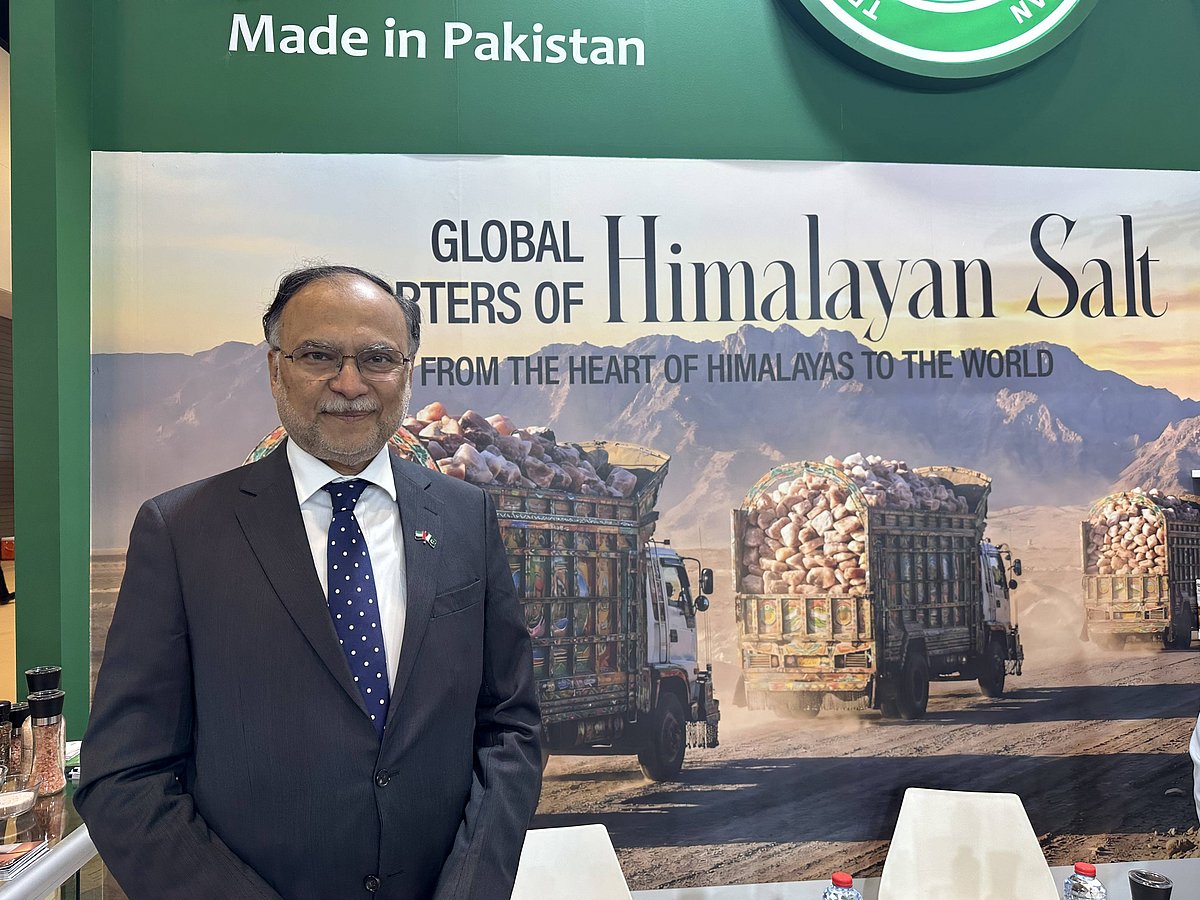
Dubai: Pakistan is positioning its agriculture and food sector as a long-term supplier to Gulf markets, with a focus on value-added exports, supply reliability and food security at a time when trade tensions and fragmented supply chains are reshaping global food flows.
In an exclusive interview with Gulf News on the sidelines of Gulfood 2026, Ahsan Iqbal Chaudhary, Pakistan’s Federal Minister for Planning, Development and Special Initiatives, said the country views the UAE and the wider Gulf as strategic partners in its next phase of export-led growth, driven by agriculture that is modernised, branded and aligned with international standards.
Pakistan’s export ambitions are being recalibrated around markets with structural demand, and the Gulf sits at the centre of that approach.
“Pakistan has agriculture as the backbone of its economy, and we have a range of agricultural products that are world class, and particularly Pakistani rice and basmati is known for its aroma world over,” Iqbal said, pointing to expanding demand for products such as pink salt, pulses and sesame seeds. He added that the Gulf market plays a central role in Islamabad’s broader economic roadmap, which aims to reach exports of $60 billion by 2030 and $100 billion by 2035.
Export growth, he said, is no longer only about volumes. “Pakistani enterprises are now really shaping up to the new global market demands. They have improved their packaging, they have improved their quality, they are improving their branding,” he noted, adding that these shifts are designed to secure lasting shelf space in Gulf food markets rather than short-term trading gains.
Pakistan’s agricultural presence in the UAE is already substantial, with rice, meat, fruits, vegetables and dairy products forming the backbone of bilateral food trade. Product-focused promotional campaigns, including mango and date festivals, have helped deepen consumer familiarity, while broader exports range from fisheries to processed foods.
Food security amid global trade stress
With food security shaping policy agendas across the Middle East, Pakistan sees its natural endowments as a competitive advantage in an increasingly uncertain global environment.
“I think Pakistan is very well positioned because of the endowments that it has. We have vast land which is fit for agriculture. We have water, we have right climate,” Iqbal said, while acknowledging the growing impact of climate change on production cycles.
Also Read
Pakistan showcases agro-food strength at Gulf Food 2026 in DubaiBasmati boom lifts Pakistan to world’s third-largest rice exporter; UAE top destinationPakistan aims to double trade with the UAE to $20 billionPakistan is an important partner for the UAE, says Dr Al ZeyoudiFood security, he stressed, is inseparable from export strategy. “Food security is not only important for us with a large population, but we feel that we have all the necessary endowments through which agricultural products can generate large amount of exports for Pakistan,” he said, framing agriculture as both a domestic stabiliser and a regional supply pillar.
That positioning aligns with Pakistan’s broader reform agenda, which includes climate-smart farming and technology-driven productivity gains to meet global compliance standards while ensuring the continuity of supply.
Technology, skills and productivity push
Trade tensions and policy unpredictability have increased the premium on agility and innovation, according to the minister, particularly for export-dependent economies.
“The world has all of a sudden become very unpredictable,” Iqbal said, adding that Pakistan is responding through trade diplomacy and enterprise-level upgrades. He highlighted a new productivity, quality and innovation initiative designed to align exporters with evolving consumer preferences and stricter global benchmarks.
A key plank of that effort involves human capital. Pakistan has trained 1,000 agricultural experts in China in modern farming practices to increase yields, improve quality, and accelerate technology adoption across the sector.
Moving up the value chain
While global interest in technology and artificial intelligence is reshaping labour markets, Pakistan’s strategy is to reposition agriculture as an engine of industrialisation instead of a low-value occupation.
“Our goal is to move up on the value chain,” Iqbal said. “We want to move from commodity supplier in agriculture to value added supplier in agriculture and food industry.”
Government policy, he added, is now geared towards agro-based industries that integrate processing, packaging, branding and distribution into global supply chains. Agriculture, in that model, supports industrial growth while remaining central to employment and export earnings.

Sign up for the Daily Briefing
Get the latest news and updates straight to your inbox
Network Links
GN StoreDownload our app
© Al Nisr Publishing LLC 2026. All rights reserved.