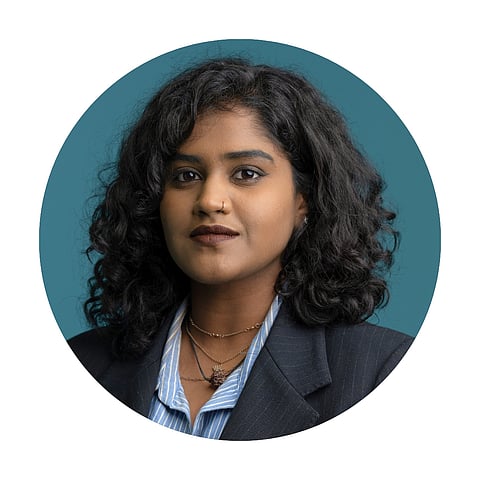
Pakistan aims to double trade with the UAE to $20 billion
Adviser Khurram Shehzad highlighted UAE’s $10 billion pledge and Pakistan’s economic reset
Dubai: Pakistan is seeking to double its trade with the UAE from $10 billion to $20 billion within the next three to four years, according to Khurram Shehzad, Adviser to the Finance Minister of Pakistan. Speaking at the ICAP Middle East CFO Conference in Dubai, he said the move reflects growing investor confidence in Pakistan’s economic outlook and the strong bilateral relationship between the two nations.
“We already have $10 billion in total trade with UAE, and we aspire, we wish, to take it to double it to $20 billion in the next two to three years,” he said. “It’s quite possible because there are a number of areas we offer to the entire world, which includes agriculture, food security, data and analytics, AI, mining and minerals, defense, and much more. Our market is huge, our location is very strategic, and we are now stabilizing and moving towards growth.”
Shehzad said the UAE remains one of Pakistan’s most significant economic partners, not only in trade but also in remittances and investment flows. “Remittances we receive from UAE alone is around $8 billion on an annual basis, and there’s a growth of 42% last year. It’s a huge one,” he said.
Privatisation and UAE investment interest
The adviser pointed to recent developments in Pakistan’s privatisation drive, which has begun to attract major investors from the UAE. He highlighted the International Holding Company (IHC), one of the Middle East’s largest listed conglomerates with a market valuation of around $240 billion and assets under management exceeding $100 billion, which recently acquired Pakistan's state-owned First Women Bank Limited.
“Although this transaction size is small, it has entered Pakistan at a point where we’ve been facing a lot of challenges,” he said. “Since the economy has stabilised, ratings have been upgraded, and we’re back to the global markets.”
Shehzad noted that Pakistan recently raised $1 billion from commercial banks in the Middle East, led by Dubai Islamic Bank and Standard Chartered, in another signal of strengthening investor confidence.
“From your perspective, His Excellency, the significance of the investor is very important,” he said, addressing the UAE Minister of Foreign Trade, Dr Thani bin Ahmed Al Zeyoudi. “This shows trust in Pakistan’s market at a time when things are turning around.”
Macroeconomic reset and reform agenda
The adviser said Pakistan has made meaningful progress in stabilising its economy over the past year, noting that several key indicators are now moving in the right direction. “Inflation has been a good story. Fiscal and external sides have been a good story. Interest rates have been a good story. Privatisation has a bigger story,” he said.
He described Pakistan’s current position as a “macro reset”, adding that the country has moved past the worst of its 2022–2023 financial challenges. “We have been out of the woods now. We actually faced a huge tough time back in 2022 and 2023 when we were at the verge of default and we are now out of the woods,” he said. “Inflation is down, rates are normalised, the current account has strengthened, and currency stability is there now.”
The government’s ongoing reform agenda has also improved investor sentiment. “The Government of Pakistan has been moving on reforms that improve returns and exit options,” Shehzad said. “If you add deep people-to-people ties and shared logistics, Pakistan becomes a compelling investment story.”
UAE’s $10 billion commitment
Shehzad praised the UAE for its continued support, citing the country’s recent commitment to invest $10 billion further in Pakistan. “His Excellency and his government have recently committed to invest $10 billion further in Pakistan, and now it’s up to us how we make the best use of it,” he said.
He said Pakistan’s large population, strategic location and expanding middle class offer strong opportunities for UAE investors in energy, food security, logistics and technology. “Number one is the scale and location, Pakistan offers a huge market. Number two is the macro reset, and number three is the reform agenda,” he said.
He added that the renewed confidence from Gulf investors, supported by recent financial stability and upgraded credit ratings, signals Pakistan’s return to global markets. “It’s been a good story after a long time,” Shehzad said. “We are back.”