Etihad Rail may narrow Dubai rent gap, but prices will not equalise
Experts say renters will move first, but last-mile links will decide demand
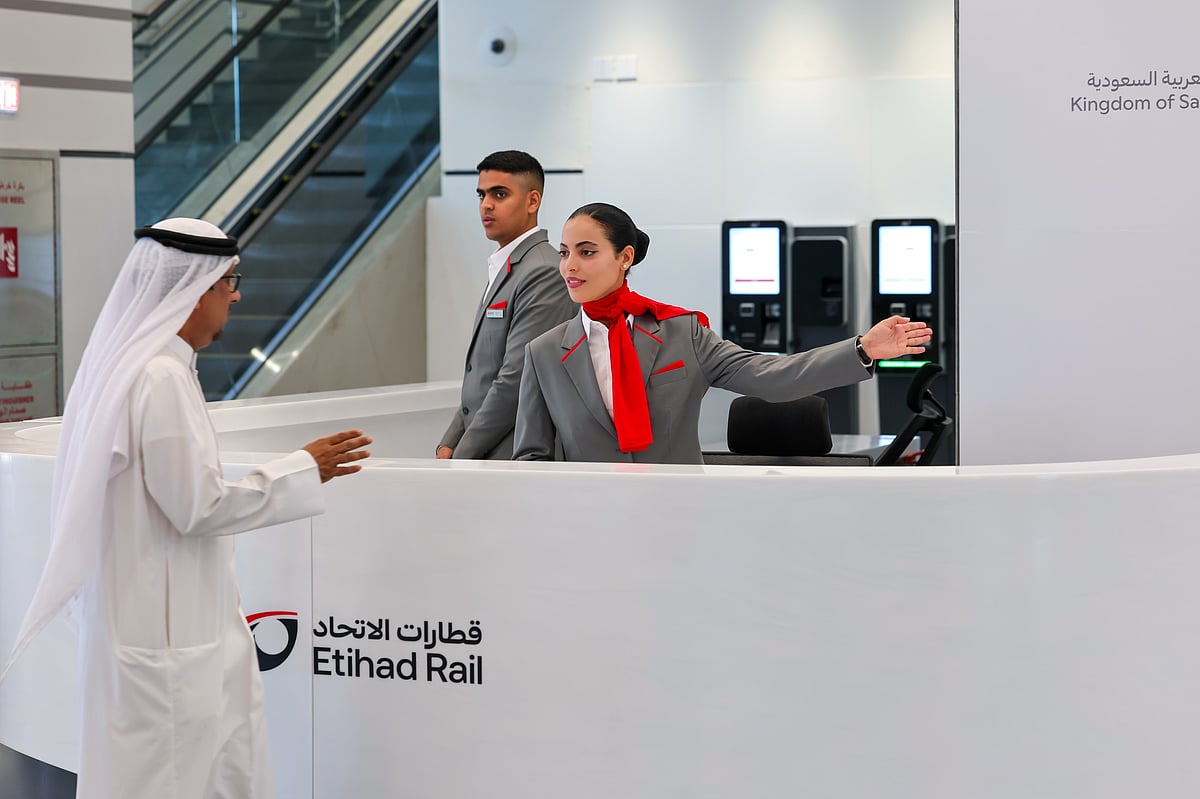
Dubai: Etihad Rail could make lower-rent communities outside Dubai more attractive to commuters, but property experts say affordability will remain the main reason residents choose neighbouring emirates.
The national rail network is expected to change how residents judge value and convenience, particularly if it gives commuters a faster and more predictable way to travel between emirates. That could support demand in communities around the network, especially for renters who can move more quickly than buyers.
Get updated faster and for FREE: Download the Gulf News app now - simply click here.
Real estate experts, however, do not expect Dubai’s rental premium to disappear. Dubai’s job market, infrastructure, lifestyle offering, international appeal and established business ecosystem are likely to keep rents structurally higher than those in surrounding emirates.
“As inter-emirate connectivity improves, communities outside Dubai may become more practical for residents who want better affordability without feeling disconnected from major business and lifestyle hubs,” said Fibha Ahmed, VP of Sales at Bayut.
She added that the rent gap is unlikely to close completely because Dubai will continue to command a premium, but rail connectivity could narrow what she called the perception gap.
“If rail connectivity makes daily movement faster, more predictable and more comfortable, it could strengthen demand in well-connected areas and support more balanced rental growth over time,” Ahmed said.
Rohit Bachani, Co-Founder of Merlin Group, explained that the rail network would first change the commute equation before it changes rental pricing.
“Etihad Rail narrows the time gap long before it narrows the price gap,” he said. “Rail makes that trade-off more comfortable, so expect the gap to compress at the margins rather than collapse. This is a maturing national market adding a new layer of connectivity, not a price-leveller.”
Last-mile links will decide winners
Significant gains are expected in established communities within a 10 to 15-minute last-mile radius of stations, not necessarily only buildings beside the platforms.
“The real winners are likely to be established communities within a 10-15 minute last-mile catchment, where residents can easily connect to the rail network," noted Zhann Jochinke, Chief Operating Officer at Property Monitor. "As we've seen with Dubai Metro, it's the overall accessibility, not simply proximity to a station, that ultimately drives residential demand,” he said.
That makes buses, taxis, shuttles, park-and-ride facilities and road access central to the property impact of Etihad Rail. A faster inter-emirate journey will matter less if residents still face a difficult trip from home to station, or from station to office.
“Last-mile connectivity will be one of the biggest factors determining Etihad Rail's success from a residential perspective,” Jochinke said. “While the rail network may significantly improve inter-emirate travel, the full journey still needs to become easier than driving.”
Rajneel Kumar, Co-Founder and COO of Rentify, echoed the sentiment, saying that renters will judge the entire commute, not just the rail journey.
“Road access, buses, shuttles, taxis and ride-hailing will therefore be critical, particularly in emirates where public transport networks are still developing,” he said.
Rental yields before capital values
Analysts expect the first real estate impact to show up in rentals, with tenants testing the commute before buyers commit to property purchases.
Jochinke said the initial impact is likely to be strongest in the rental market because renters can respond faster to changing commute patterns. That could support higher occupancy and stronger rental demand in well-connected locations, with yields improving before capital values.
Kumar made a similar point, saying people will first want to test whether the rail commute works in daily life.
“That could support occupancy and rental yields before having a meaningful impact on capital values,” he explained. “As the network proves reliable and commuter behaviour becomes established, owner-occupier demand should follow.”
Bachani said buyers should avoid pricing in a full rail premium too early, particularly before ticket prices, service frequency and timetables are clear.
“The real risk is paying tomorrow's premium today,” he said. “Anyone underwriting a deal purely on rail-led appreciation is speculating on assumptions, not infrastructure.”
He added that the disciplined approach is to buy on current fundamentals such as rent, location and build quality, while treating any rail-led gain as an added benefit.
Developers may rethink community design
Etihad Rail could also influence how developers plan communities in the northern emirates, particularly around station catchments and commuter corridors.
Jochinke explained that the developers may consider more commuter-oriented communities with a greater mix of apartments, compact homes and mixed-use amenities, although he does not expect a full move towards Dubai-style density.
“The northern emirates will continue to appeal to buyers seeking larger family homes and a different lifestyle, so the more likely outcome is a broader mix of housing products that caters to both commuters and traditional end-users,” he said.
Naresh Perwani, Founder and Chairman of NeoTerra Developments, said better connectivity expands how developers think about accessibility and future demand.
“For developers, this opens the opportunity to create more thoughtfully planned communities where efficient layouts, integrated amenities, walkable environments, and flexible living solutions become increasingly important,” he said.
Perwani added that future residential development will need to balance accessibility, lifestyle and long-term value, especially in communities trying to attract residents who work in major hubs but want more space or better value elsewhere.
Dubai Metro lesson
Experts said the Dubai Metro offers a useful comparison because it showed how reliable public transport can change residential preferences in well-connected areas. Business Bay, Downtown Dubai, Dubai Marina, JLT and Al Furjan have all benefited from strong connectivity, while new highways have made emerging communities more practical for end-users.
Ahmed said the key lesson is that infrastructure does not create demand on its own, but can accelerate demand where strong fundamentals already exist.
“Areas that combine strong community infrastructure, schools, retail, healthcare, job access and a clear commute advantage are likely to benefit the most,” she said.
Etihad Rail is different because it links emirates, while Dubai Metro serves a dense urban market within one city. That means its property impact may be wider, slower and more dependent on last-mile transport.
Five-year impact
Over the next five to seven years, experts expect Etihad Rail to support more sustainable residential demand in selected locations, provided the service becomes part of residents’ daily routine.
Also Read
Dubai Gold Line puts JVC, MBR City and Meydan on property investors’ radarHow Etihad Rail could change work and hiring across the UAE: From 'too far' to 'easy enough,' say HR expertsEtihad Rail's Dubai station could link directly with Dubai MetroHow Dubai’s new ‘Flexi Rent’ scheme saves tenants money upfrontAhmed noted that the strongest long-term impact will be in communities that already offer value, schools, retail, healthcare and a clear lifestyle proposition.
“If the rail becomes a mainstay for residents, its impact on the market is likely to be substantial,” she said.
Perwani stressed that Etihad Rail should be viewed as a long-term enabler of growth, not a short-term market trigger.
“Ultimately, the winners will not simply be developments located near transport links, but those that understand the evolving needs of residents and create meaningful living experiences around them. Infrastructure creates the opportunity but thoughtful development creates lasting value,” he said.

Sign up for the Daily Briefing
Get the latest news and updates straight to your inbox
Network Links
GN StoreDownload our app
© Al Nisr Publishing LLC 2026. All rights reserved.