AI tsunami could disrupt 40% of jobs worldwide, IMF chief warns
IMF says 40% of jobs face AI-driven disruption as labour markets transform
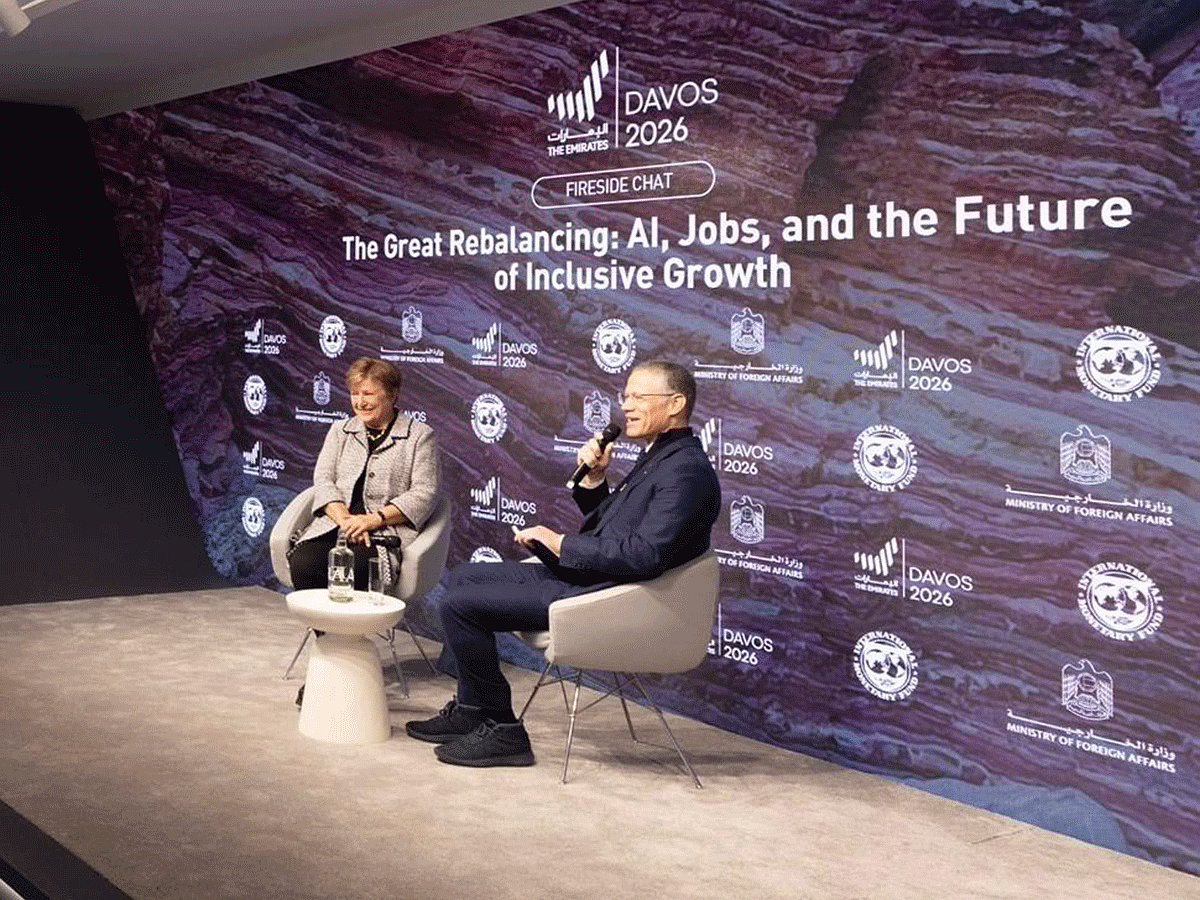
Dubai: Artificial intelligence is set to disrupt a significant share of the global workforce, the head of the International Monetary Fund warned in Davos.
Speaking at a high-level dialogue hosted by the UAE at the World Economic Forum, IMF Managing Director Kristalina Georgieva said the pace of technological change now confronting labour markets is without precedent. The session, held at the UAE Pavilion and titled The Great Rebalancing: Artificial Intelligence, Jobs, and the Future of Inclusive Growth, brought together policymakers and business leaders to examine how economies can adapt while preserving social cohesion.
An AI shock to labour markets
IMF research suggests that about 40% of global jobs will be affected by artificial intelligence, whether through enhancement, transformation or displacement. The risk, Georgieva said, lies not only in job losses but in uneven access to new opportunities.
“A tsunami is hitting the labour market,” Georgieva said. “AI is quickly reshaping economies. Some roles grow; others disappear. We must invest in skills and prepare communities.”
She warned that countries and regions moving faster on education, infrastructure and AI readiness will benefit disproportionately, widening gaps with those that lag behind.
“The world as a whole is already experiencing the arrival of AI, but I do worry about the accordion of opportunities that are much more present in some places than in others,” she said.
Despite these challenges, Georgieva noted that the global economy has shown resilience, with growth holding steady and IMF forecasts recently upgraded. That stability, she said, should not obscure the scale of structural change driven by technology, geopolitics and demographic shifts.
Also Read
IMF raises 2026 global growth forecast to 3.3% on AI surgeADSW 2026: There is no AI without energy, and the UAE is planning for that futureUAE leads global AI adoption with 97% usage and major investmentsHow AI is changing jobs in the UAE, pressuring businesses, workersHow AI will really change the way we work by 2026UAE’s connectivity-led strategy
Badr Jafar, the UAE’s Special Envoy for Business and Philanthropy, said the country’s economic strategy has focused on resilience through openness and global integration, even as parts of the world turn inward.
“At a time when global systems are fragmenting, the UAE is doubling down on connection,” Jafar said. “We are known for open skies, open ports, and open minds.”
He pointed to strong investment flows as evidence of that approach. The UAE attracted more than $45 billion in foreign direct investment last year, up nearly 50% year on year, while global FDI declined. The country accounted for more than half of all investment flows into the Middle East and ranked second globally for new greenfield projects.
“In an age of fragmentation, our connectivity is a clear strategic advantage,” Jafar said, adding that the UAE welcomed nearly 10,000 new millionaires in the past year, more than any other country.
What drives resilience in the Gulf
Georgieva described the UAE and the wider Gulf as consistent bright spots in the IMF’s global outlook. She highlighted three factors supporting that performance, including regulatory reform to reduce bureaucracy, sustained economic diversification, and long-term investment in people.
Non-oil sectors now contribute more than 75% of UAE GDP, reflecting years of policy focus on broadening the economic base. That diversification, combined with skills development and inclusion, positions the country to absorb AI-driven change more effectively than many peers.
She outlined four conditions critical to inclusive growth in the AI era. These include adaptable private sectors, responsible deployment of AI technologies, open trade flows, and sound fiscal policy. Public investment in education and digital infrastructure, she said, remains essential to ensure broad participation in future growth.
The Davos discussion highlighted a shift in how policymakers are framing growth.
The dialogue formed part of the UAE Pavilion’s broader programme at the World Economic Forum, reinforcing the country’s ambition to shape global conversations on artificial intelligence, the future of work and sustainable growth.
Sign up for the Daily Briefing
Get the latest news and updates straight to your inbox
Network Links
GN StoreDownload our app
© Al Nisr Publishing LLC 2026. All rights reserved.