UAE residents are gearing up for the National Day break, with popular international destinations and local staycations attracting holidaymakers seeking a short escape.
UAE National Day travel 2026: Higher airfares force residents to rethink holiday budgets
Fares climb 15–25% as regional conflict pushes travellers towards cheaper holidays
Last updated:
8 MIN READ
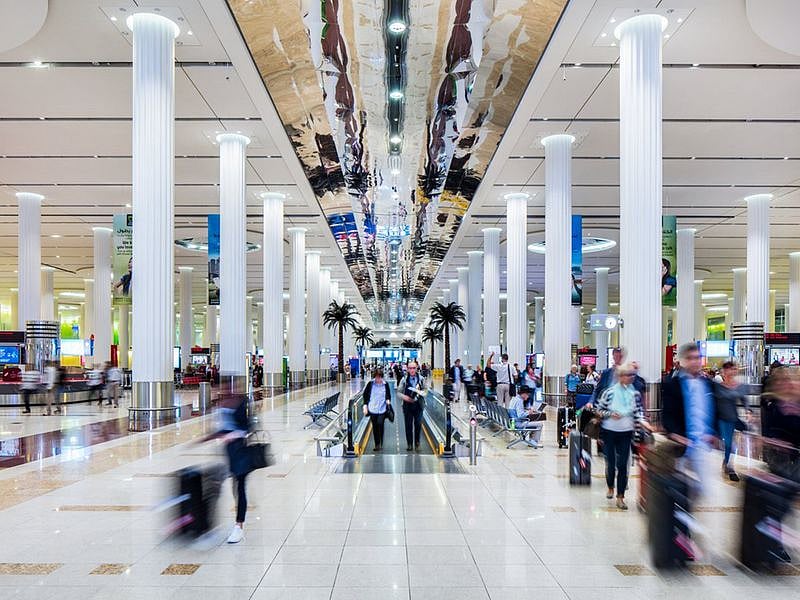
UAE residents are rethinking their National Day holiday plans as higher airfares, rising living costs and regional uncertainty drive demand for shorter trips, budget-friendly destinations and local staycations. Pictured above are passengers at Dubai International Airport.
Dubai Media Office
Dubai: UAE residents planning an overseas getaway for the upcoming National Day break are taking a harder look at their holiday budgets, with higher airfares, rising living costs and uncertainty surrounding the regional conflict forcing many to scale back their plans, choose cheaper destinations or reconsider travelling altogether.
Travel agents say holidaymakers are increasingly counting every dirham before committing to a trip, with some operators reporting a 15 to 20 per cent decline in enquiries compared with last year's National Day period.
However, the slowdown is far from uniform. While some agencies report weaker enquiries and growing price sensitivity, others say demand remains resilient, particularly for shorter breaks, accessible destinations and holidays offering better overall value.
The UAE's 55th National Day, officially known as Eid Al Etihad, falls on December 2. Private-sector employees have been granted December 2 and 3 as paid holidays, while federal government employees will be off from December 2 to 4, creating opportunities for an extended break when combined with the weekend or annual leave.
Travel costs
"The outbound travel has definitely suffered a setback with the rise in airfares and regional volatility," said Ipshita Sharma, Dubai-based entrepreneur and travel consultant with Erstwhile Ttravel.
"We have noticed a 15-20 per cent decline in requests for the same period as compared to last year. With the increasing living costs, residents are evading discretionary expenses."
Sharma said airfares have increased by approximately 15 to 25 per cent compared with last year, with the higher cost of travel forcing customers to reconsider the kind of holidays they can afford.
"The rising living cost has gone up with the rising inflation and people are cutting down on leisure activities and travel to adjust to the financial pressure," she said.
"Some people are opting for cheaper destinations and also calibrating the class of travel to keep the costs under check."
The impact is particularly visible among travellers looking for affordable short breaks. Rather than abandoning their holiday plans entirely, customers are reducing their hotel budgets, considering lower-cost airlines or selecting destinations where accommodation and daily expenses are more manageable.
Fazil Firoos, founder of Gonow Tourism, said concerns about job security and regional uncertainty are also influencing travel decisions.
"Travellers are more cautious with their spending this year. Amid regional uncertainties and concerns about job security, many are avoiding expensive holidays and opting for destinations that offer better value for money," he said.
Aviation slowdown
The caution among travellers comes against a difficult year for the region's aviation industry, which continues to recover from widespread flight disruptions, higher operating costs and weakened international connectivity following the US-Iran conflict.
According to the International Air Transport Association (IATA), Middle Eastern airlines recorded a 10.9 per cent year-on-year decline in passenger demand during the third quarter of 2026, an improvement from the 29.7 per cent contraction recorded in the preceding quarter.
Capacity remained 6.5 per cent below last year's levels during the July-September period, demonstrating that the recovery in flight availability is still incomplete.
The Europe-Middle East corridor was particularly affected, with passenger demand falling 18.7 per cent and capacity declining 14.3 per cent year on year.
The latest figures also suggest that the recovery remains fragile. Middle Eastern carriers recorded a 7.5 per cent decline in international passenger demand in September, even as international traffic elsewhere showed signs of stabilisation.
Dubai International Airport's latest numbers tell a similar story. The world's biggest hub handled 50.4 million passengers during the first nine months of 2026, down 28.1 per cent compared with the corresponding period last year.
Passenger traffic reached 18.8 million in the third quarter, supported by the summer travel season, but remained 22.1 per cent below the same quarter in 2025.
Holiday prices
For travellers determined to leave the UAE during the National Day break, finding an affordable package is becoming an increasingly important consideration.
Kamlesh Parekh, co-founder of Trip Legend Tours, said customers are asking for greater clarity on the total cost of their holidays before making a commitment. "The airfare is usually the point in the conversation where someone pauses," he said.
"Most customers who do go ahead tend to book their flight and hotel together, they want to know what those few days away will cost them before they commit."
According to Parekh, early National Day packages for three nights in Yerevan started at around Dh2,100 per person, while packages to Tbilisi and Baku were advertised from approximately Dh2,300. Parekh said customers are typically looking for three-to-five-night breaks, preferably to destinations with straightforward visa requirements.
"One of the first things couples and families ask is where they can go without arranging a visa in advance," he said.
The price of flights is often proving more decisive than fears about the regional conflict.
"From our conversations so far, that's more likely to change someone's plans than concern about the regional situation," Parekh said, referring to the fare customers encounter when they are finally ready to book.
Cheaper destinations
Georgia, Azerbaijan, Armenia, Türkiye, Thailand and the Maldives are among the destinations attracting interest from UAE travellers this National Day.
Travel agents say destinations offering relatively convenient flight connections, competitive accommodation and simpler entry procedures are benefiting from the shift towards more carefully planned holidays.
Sharma said Malaysia is also attracting attention, with Borneo emerging as a surprising choice among customers seeking something different.
She added that travel patterns have changed considerably as a result of the conflict.
"In the current scenario, travelling to Far East, Central Asia and Eurasia is generally deemed to be safer and cheaper at the same time," she said. "We have noticed a gradual increase in departures to these areas as lesser people are travelling within GCC and to European destinations."
Firoos said Georgia, Azerbaijan and Türkiye continue to attract strong interest, while Egypt and Armenia are also being considered. However, higher airfares are not the only obstacle facing travellers. Difficulties securing Schengen visa appointments and longer processing timelines are also encouraging residents to consider destinations with easier entry arrangements.
UAE residents are rethinking their National Day holiday plans as higher airfares, rising living costs and regional uncertainty drive demand for shorter trips, budget-friendly destinations and local staycations.
Local holidays
For residents unwilling to spend heavily on flights and overseas accommodation, holidays within the UAE are also gaining appeal.
The preference for staycations has already provided some support to the country's hospitality industry this year, as residents seek shorter, more convenient alternatives to international travel.
According to dnata Travel, UAE staycation bookings for the October school half-term increased by 31 per cent year on year, with Dubai accounting for 78 per cent of domestic bookings, followed by Abu Dhabi and Ras Al Khaimah.
The figures relate to the October school holiday rather than National Day itself, but demonstrate the underlying appetite for domestic breaks.
Beach resorts, family-oriented hotels and properties offering entertainment and dining facilities are among the popular choices, particularly for travellers looking to control the overall cost of a short holiday.
While a staycation eliminates international airfare expenses, hotel rates during popular public holidays can still rise, meaning residents may need to compare offers carefully before booking.
Last-minute bookings
Another significant change is how late UAE residents are committing to their holidays.
Travel consultants say customers increasingly want their itineraries planned well in advance but are reluctant to make payments until closer to departure, partly because of uncertainty surrounding flight operations and cancellation policies.
Sharma said refund conditions have become an immediate concern for customers. "The cancellation conditions and refund policies are the first concern of every individual, since the situation is pretty unpredictable," she said.
"Travellers are reluctant to book their holidays in advance and are mostly getting their holidays designed in advance but want to make the payment at the last minute, which again results in increased travel costs and availability issues."
The approach can be expensive, particularly when travellers are unwilling to adjust departure dates.
Parekh said many customers are now making decisions just seven to ten days before travelling, while enquiries have not necessarily translated into confirmed bookings.
"We are getting more enquiries about travelling over National Day this year. We will have a better sense of how that translates into bookings closer to the break, because people are still deciding," he said.
Levent Tekün, Partner, The Aspiration Group, with his business partner Naime.
Demand resilience
Not every travel company is reporting a downturn. Levent Tekün, partner at The Aspiration Group, a UK-headquartered luxury travel and events consultancy, said the company's UAE outbound business has been growing, supporting its decision to establish a Dubai operation this month.
"I don't believe we're witnessing a fundamental retreat from travel spending. We're seeing customers become more discerning about where their money goes," he said.
"There is still a willingness to invest in a good holiday, particularly when the experience justifies the cost."
Tekün said higher airfares could not be attributed to fuel prices alone. Limited capacity, route availability and concentrated holiday demand are also contributing factors.
"During a concentrated holiday period, prices will naturally rise when demand exceeds the number of available seats," he said.
He expects the gradual return of international airlines and additional flight frequencies to improve competition, although peak holiday fares are unlikely to disappear.
Mohanad Nada, Head of GCC at Tumodo, shared a similarly cautious outlook. "The key shift is not necessarily from travelling to staying home but from spontaneous spending to more calculated travel decisions," he said.
Winter recovery
Despite the caution surrounding National Day, travel industry executives remain optimistic that demand will strengthen during the longer Christmas, New Year and winter school holidays.
The festive season offers families a larger travel window, allowing them to plan longer overseas trips, explore alternative departure dates and spread the cost of travel over a more substantial holiday.
The gradual restoration of international airline capacity could also support demand, particularly on European routes that have experienced significant disruption this year.
Dubai Airports has reported the return of several international carriers, including British Airways, while other airlines are preparing to resume operations in the coming weeks.
Although increased capacity should eventually improve consumer choice, travellers may not see immediate relief from elevated fares while regional uncertainty and airline operating costs remain high.
For National Day, travel agents expect a late rush of bookings, but at a more carefully considered price point.
Sharma remains cautious about the immediate outlook, saying the data from recent months points towards lower demand this year.
However, she added that travel professionals are working to offer customers holidays that provide better value within their available budgets.
Network Links
GN StoreAbout Gulf NewsTerms & ConditionsReach by GNSitemapContact usPrivacy PolicyGN FocusHave your sayWork with usAdvertise with usGulf News epaperPrinting Services
Download our app
© Al Nisr Publishing LLC 2026. All rights reserved.