This is the first of 15 two-class A380 aircraft in its fleet that Emirates will renovate as part of its commitment to offer customers a consistently superior experience in the sky.
Flying on Emirates’ A380? More passengers can now get Premium Economy
Emirates’ first revamped two-class A380 is now flying – here’s what changed
Last updated:
3 MIN READ
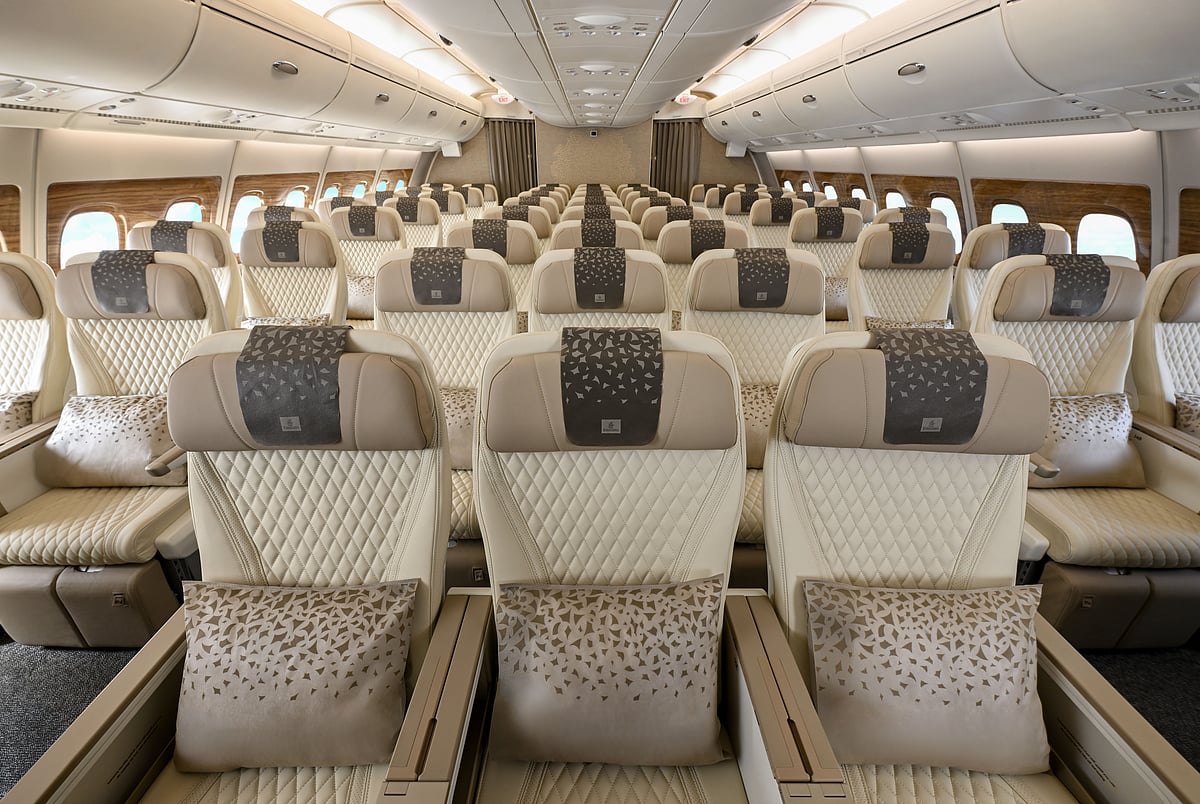
The newly refurbished aircraft (A6-EUX) has taken to the skies operating as EK 39/40 between Dubai and Birmingham.
Emirates
Dubai: Emirates has completed the retrofit of its first two-class Airbus A380, marking a new phase in the Dubai airline’s multi-billion-dollar fleet upgrade programme and bringing Premium Economy seating to a part of its fleet that previously did not offer the cabin class.
A two-class aircraft is a jet configured with exactly two distinct levels of passenger service – mostly Economy and Business class. The refurbished aircraft, registered A6-EUX, has entered service on Emirates’ Dubai-Birmingham route as EK39/40, with a new three-class configuration that includes 76 Business Class seats, 56 Premium Economy seats and 437 Economy Class seats.
Emirates says this is the first time it has reconfigured one of its two-class A380 aircraft to add Premium Economy seating on the upper deck, giving passengers on these aircraft access to a cabin product that has been gradually rolled out across parts of the airline’s fleet in recent years.
This is the first of 15 two-class A380 aircraft that Emirates plans to retrofit by the end of 2026 as part of its wider cabin refurbishment programme.
Sir Tim Clark, President of Emirates Airline, said the reconfiguration of the two-class A380 into a three-class layout “brings our popular Premium Economy seating onto the upper deck” and demonstrates the scale of the retrofit work.
Emirates’ $5 billion-dollar upgrade programme, launched in 2021-22, aims to extend the service life of its flagship Airbus A380s and Boeing 777s amid aircraft delivery delays. As of May 2026, the world’s largest international airline maintains a firm order book backlog of 367 next generation widebody aircraft, with deliveries scheduled to extend through 2038.
What has changed on board?
As part of the upgrade, Emirates removed 120 Economy Class seats from the upper deck to make room for 56 Premium Economy seats and 18 additional Business Class seats.
The Premium Economy cabin is arranged in a 2-3-2 layout and includes wider leather seats with leg and footrests, adjustable headrests, charging ports, side tables and a 13.3-inch entertainment screen.
The aircraft also received refreshed interiors across all cabins, including updated seating, carpets, ceiling panels and new cabin finishings.
Complex engineering work in Dubai
Emirates said the retrofit required extensive structural modifications, including changes to galley modules, storage areas, overhead bins, partitions, as well as electrical and plumbing systems. Sir Clark said the reconfiguration of Emirates’ two-class A380 into three-class layout “illustrates the extensive capabilities of our team.”
He added. “Our engineering team has been working continuously and at pace in close collaboration with an ecosystem of partners and suppliers to meticulously refresh and integrate the best-in-class products to each aircraft in the programme.”
He said, “Our retrofit programme has raised the bar at every step, in terms of complexity, scale and detailed craftsmanship.
The first aircraft retrofit took around two months, involving 50 engineers and technicians, who spent about 35,000 man-hours and used more than 2,500 types of parts.
Future retrofits are expected to take around 30 days, as Emirates applies lessons from the first project.
Wider Emirates fleet overhaul
The airline’s retrofit programme, first announced in 2021, has grown significantly in scale.
So far, Emirates has completed work on 95 aircraft, including 42 Airbus A380s and 53 Boeing 777s, representing more than one-third of its fleet.
Originally covering 120 aircraft, the programme was later expanded to 219 aircraft, making it one of the largest cabin refurbishment projects undertaken by the airline.
Emirates said an average of two aircraft a month are emerging from its engineering hangars in Dubai as the programme continues.
Network Links
GN StoreAbout Gulf NewsTerms & ConditionsReach by GNSitemapContact usPrivacy PolicyGN FocusHave your sayWork with usAdvertise with usGulf News epaperPrinting Services
Download our app
© Al Nisr Publishing LLC 2026. All rights reserved.