"Our ambition to be the best in the world, and to be of service to the world, is unchanged," says Sheikh Ahmed.
Emirates expects stability as fuel secured until 2028-29: Sheikh Ahmed
Fuel hedging and strong cash reserves to support operations and growth plans
Last updated:
3 MIN READ
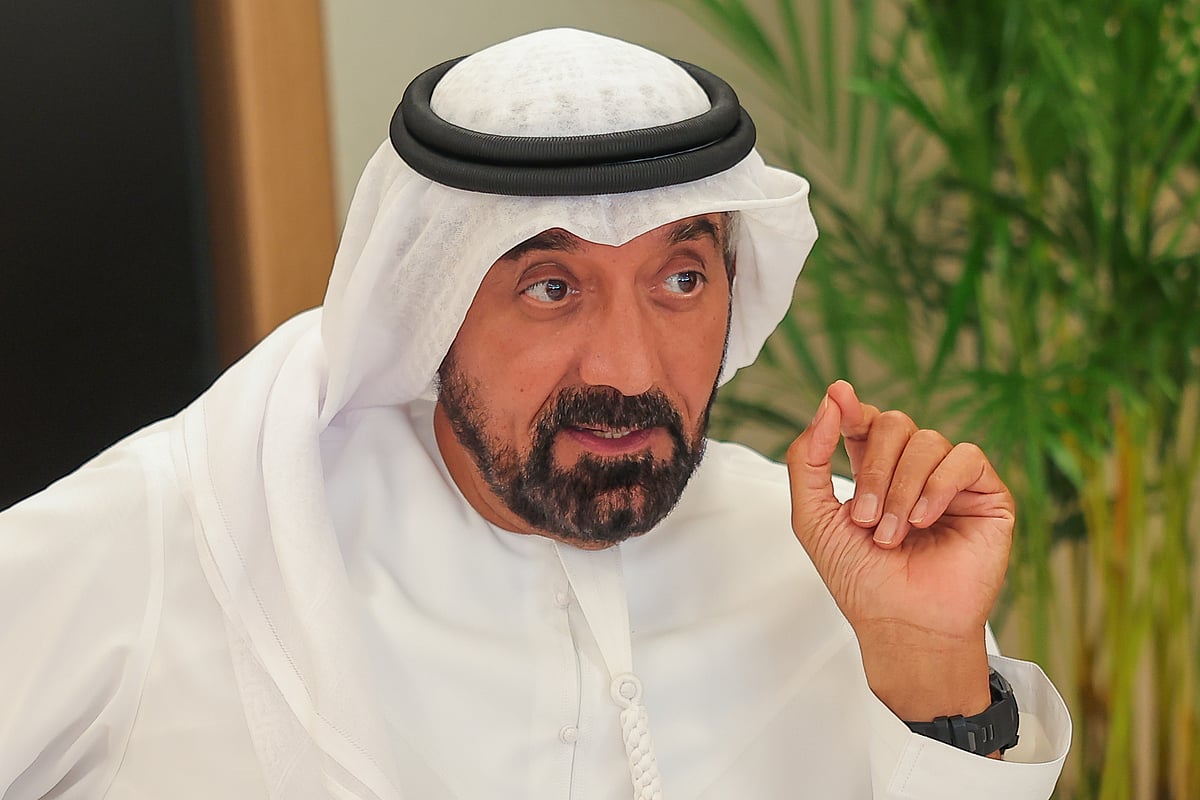
Sheikh Ahmed bin Saeed Al Maktoum, Chairman and Chief Executive of Emirates Airline and Group.
Virendra Saklani/Gulf News
Dubai: Emirates expects a stable operating outlook as it enters the 2026–27 financial year, supported by fuel hedging, secured supply and strong cash reserves, even as geopolitical uncertainty persists.
Sheikh Ahmed bin Saeed Al Maktoum, Chairman and Chief Executive of Emirates Airline and Group, said military activity in key regions remains a concern, although conditions have temporarily stabilised.
“Right now, military activities between the US, Israel and Iran are paused under a ceasefire agreement. We hope for a clear resolution to the hostilities soon, and a return to market stability. But in the meantime, we are not sitting on our hands," he said.
Fuel strategy
The airline said it has taken steps to manage fuel-related risks, a key cost component for global carriers.
“From a fuel perspective, Emirates is well-hedged until 2028-29; and we have worked with our suppliers to secure the volumes required to support our current operations and our scaling up to pre-disruption levels,” he said in a statement.
Fuel hedging allows airlines to protect against price volatility, providing more predictable operating costs over time.
Sheikh Ahmed's comments come as the airline announces its 2025-26 financial results. Emirates follows an April-to-March financial year, with the latest results covering the 12 months to March 31, 2026.
The Emirates Group, comprising of Emirates airline and dnata, its aviation services arm, alongside subsidiaries spanning cargo, catering, travel, and retail operations, reported a record profit before tax of Dh 24.4 billion (up 7 per cent y-o-y, with revenue reaching Dh150.5 billion (up 3 per cent) and cash assets at Dh59.6 billion (up 12 per cent).
Global aviation, which was enjoying a robust growth period post-COVID, has plunged into chaos after the US-Israel-Iran conflict broke out late February. It is gradually stabilising after recent disruptions, with airlines restoring schedules and capacity.
Emirates is now operating to 137 destinations in 72 countries across the Americas, Europe, Africa, West Asia, the Middle East/GCC, the Far East and Australasia.
Operational resilience
Sheikh Ahmed said the Group’s structure and diversification across business segments help it manage short-term disruptions.
“At dnata and across the Group, our business streams, scale, portfolio mix, and years of investments give us the resilience and agility to address any near-term challenges.”
Cash reserves, investment plans
The Emirates Group said it will continue investing in its business while maintaining financial stability.
“The Emirates Group enters 2026-27 with very strong cash reserves, which enable us to progress with our plans to strengthen our business without knee-jerk cost control measures.”
Planned investments include aircraft deliveries, retrofit programmes, and infrastructure expansion.
Focus areas
The Group said Emirates and dnata will continue focusing on product development, customer experience and talent acquisition.
“Our aircraft deliveries and retrofit programme will continue apace… Emirates and dnata will stay focused on offering industry-leading products and customer experiences…”
Outlook
Despite ongoing uncertainty, the Group said its overall strategy remains unchanged.
“Our fundamentals are strong. The Emirates Group’s proven business model is unchanged. Dubai’s place at the nexus of global commerce, trade and travel flows is unchanged,” he said.
The airline said it will continue scaling operations while monitoring geopolitical and market conditions.
Network Links
GN StoreAbout Gulf NewsTerms & ConditionsReach by GNSitemapContact usPrivacy PolicyGN FocusHave your sayWork with usAdvertise with usGulf News epaperPrinting Services
Download our app
© Al Nisr Publishing LLC 2026. All rights reserved.