Dubai retains title as world’s busiest international airport in 2025
DXB keeps top international ranking and stays second busiest airport overall worldwide
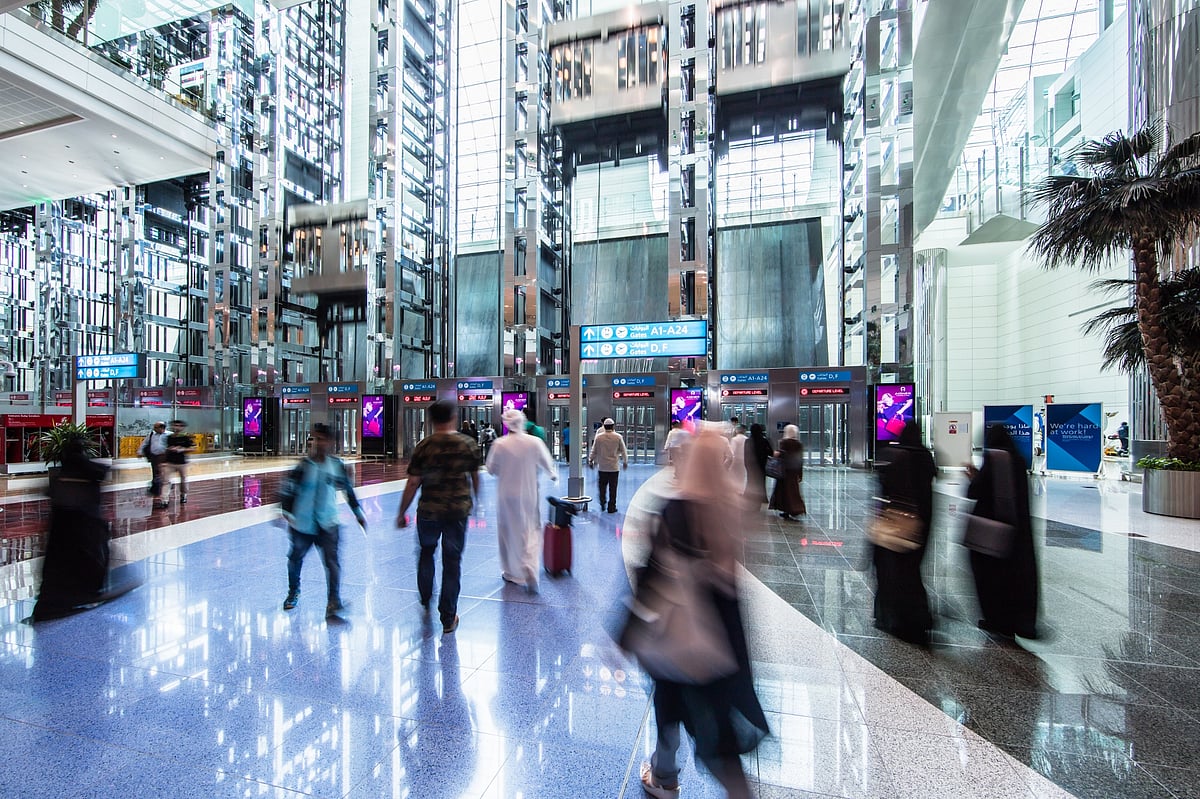
Dubai: Dubai International Airport has retained its title as the world’s busiest airport for international passenger traffic, holding on to its global number one position in 2025 as it handled record traveller volumes last year.
According to the latest Airports Council International (ACI) World rankings, international passenger traffic reached 4 billion globally in 2025, up 5.9 per cent from 2024 and 8.3 per cent above 2019 pre-pandemic levels.
ACI is a global trade association representing the world’s airports, serving over 2,100 airports across 170+ countries.
The hub also retained its No. 2 global ranking for total passenger traffic, with 95.2 million passengers in 2025, behind only Atlanta and ahead of Tokyo Haneda.
Get updated faster and for FREE: Download the Gulf News app now - simply click here.
Dubai’s lead in international traffic has become a pattern rather than a one-off result. In 2024, DXB also ranked first globally for international passengers while recording 92.3 million total passengers. In 2023, the airport similarly topped international rankings as long-haul travel demand rebounded strongly through the Gulf.
Justin Erbacci, Director General of ACI World, said the rankings reflect the growing pressure on major hubs managing rising passenger demand.
“These hubs keep people and goods moving, supporting global trade, tourism, and economic growth in their communities and regions,” he said, calling for sustained investment in airport infrastructure worldwide.
Global rankings
In 2025, global total passengers are estimated to have reached 9.8 billion, representing an increase of 3.6 per cent from 2024 or a gain of 7.3 per cent from 2019 results, ACI explained.
Hartsfield-Jackson Atlanta remains in the top spot with 106.3 million passengers, and Dubai remains second with 95.2 million passengers.
Tokyo Haneda rises to third with 91.7 million passengers. Asia-Pacific airports are rebounding strongly, driving changes in global airport rankings.
Total aircraft movements worldwide reached an estimated 101.5 million in 2025, up 2.3 per cent from 2024. Chicago O’Hare led the world in aircraft movements, ahead of Atlanta and Dallas/Fort Worth, reflecting strong operational intensity even as passenger growth becomes harder to sustain at saturated airports.
Aviation in a snapshot
Global air travel grew despite a mixed economic climate, with world GDP expanding by around 3-3.2 per cent — stronger than expected but still below long-term historical averages.
Demand for flying was helped by a sharp fall in jet fuel prices, down roughly 13 per cent year on year, alongside easing inflation that gave travellers more spending power.
International travel remained the main engine of growth, pushing global airport passenger traffic up 3.6 per cent in 2025. Much of that momentum came from the Asia-Pacific region, where China's reopening accelerated passenger recovery and strengthened major hub connections worldwide, explained ACI.
Stress points
Yet the industry is also facing mounting pressure. Many airports are running close to capacity, with infrastructure bottlenecks, aircraft delivery delays and limited air navigation slots slowing expansion.
At the same time, geopolitical tensions and airspace closures have forced airlines to reroute flights, increasing journey times and operating costs.
Air cargo remained resilient as well, supported by booming e-commerce demand and shifting global supply chains.
Network Links
GN StoreDownload our app
© Al Nisr Publishing LLC 2026. All rights reserved.