A flashback to Carter-era malaise
In the state that gave birth to John Wayne, the demand for leadership is rising
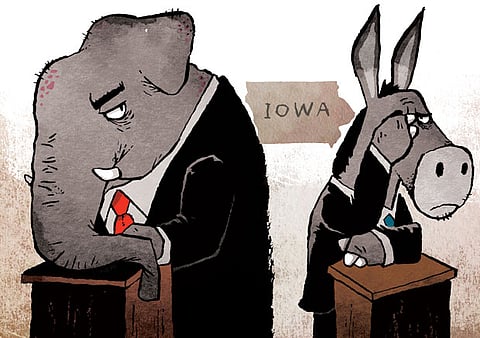
It was the corn state of Iowa that in 1976 gave an obscure governor from Georgia his springboard to the White House. Long before Jimmy Carter finished his solitary term, Iowa felt buyer’s remorse on the becardiganed mishap who had once stolen its heart. “Malaise” entered the US vocabulary. Today, it is making a comeback. Republicans blame it on Barack Obama.
Democrats pin it on everything but the president. Whatever the culprit, next month’s midterm vote is shaping into the malaise election. Iowa is once again spearheading the mood, which is a mix of fearful, bored and cynical. No resume better suits the fearful than that of Joni Ernst, Republican nominee for the seat vacated by Tom Harkin, the veteran Democratic senator. Not only is Ernst a military veteran. She commanded a company of 150 soldiers in Iraq and returned home without a fatality. Given Iowa’s outsized influence on the US presidential race — it holds the first caucuses — its voters are better informed than most about the multiple threats facing the US. Ernst’s backers have played heavily to those fears.
Other than politicians and journalists, there are few more disliked professions than lawyers — and not many receive a higher rating than farmers, especially in Iowa. Ernst has made hay out of Braley’s gaffe. Braley himself comes from the small farming town of Brooklyn. But as one newspaper editor puts it: “He behaves as though he’s from Brooklyn, New York, not Brooklyn, Iowa.” Iowans do not like that. To add to his woes, Braley’s allies cannot seem to recall his name. Last week Michelle Obama referred to him as Bruce Bailey several times when standing next to him on the podium. Bill Clinton made the same mistake last month. “Sorry, it’s Braley,” Clinton corrected himself. “Not Bailey.”
The fact that the Secret Service took days to discover five bullet marks in the West Wing of the White House and let an armed man ride an elevator with the US president, reinforced that cynicism. Leaders do not lead.
— Financial Times


