The long-awaited completion of SLEX TR4 promises to ease chronic bottlenecks along one of the Philippines’ most vital agro-industrial arteries, creating a faster link between Metro Manila and Lucena City, the gateway to Quezon Province. Stretching across a province roughly the size of Cyprus or Puerto Rico, the new expressway could accelerate the movement of people, agricultural produce and goods throughout Southern Luzon while opening fresh opportunities for investment and regional growth.
Goodbye traffic? Manila-Lucena superhighway set to transform Southern Luzon travel
66.7-km TR4 extension to Lucena seen as gateway to longer TR5 route to Bicol
Last updated:
3 MIN READ
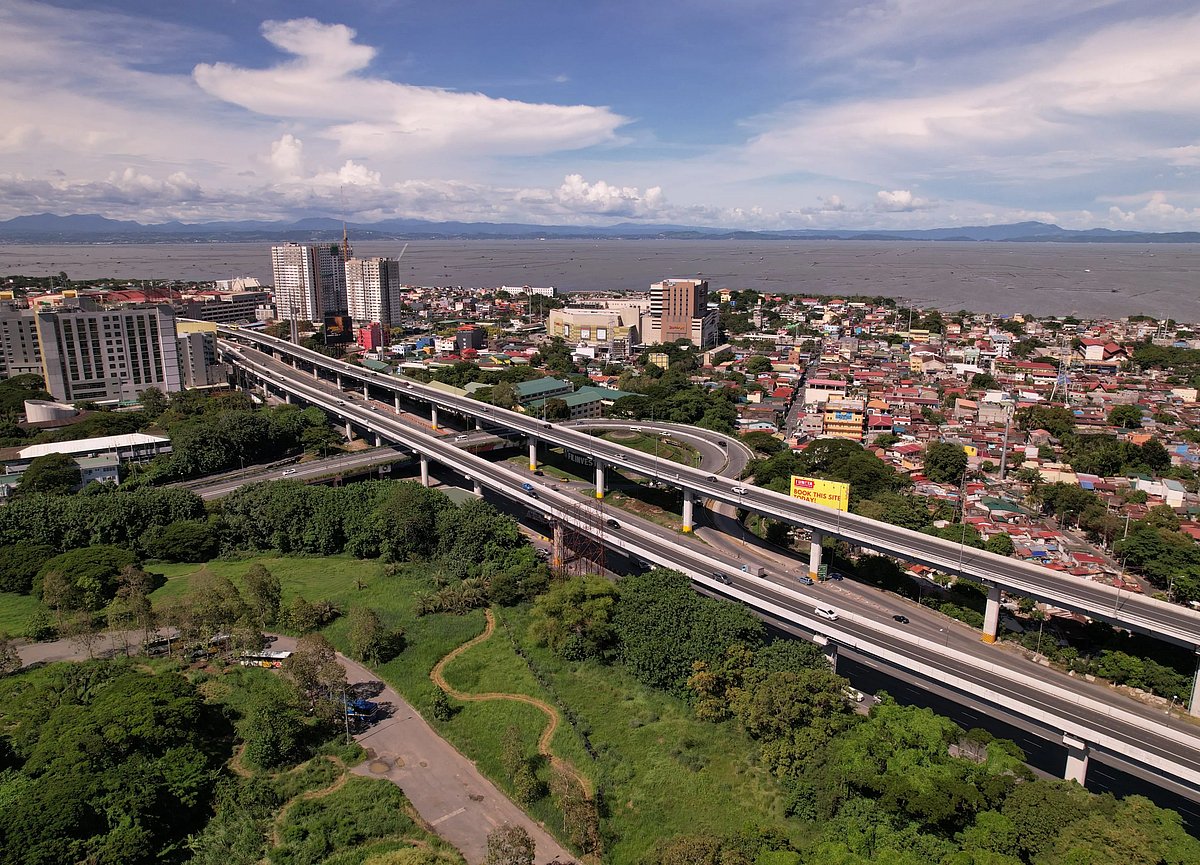
Construction continues on the 66.74-kilometer South Luzon Expressway Toll Road 4 (SLEX TR4), a major infrastructure project that will extend the SLEX network from Sto. Tomas, Batangas, to Lucena City, Quezon Province.
SMC Infrastructure
Manila: Motorists traveling to Quezon province from the Philippine capital Manila could soon see significantly shorter travel times as the long-awaited South Luzon Expressway Toll Road 4 (SLEX TR4) moves closer to completion.
This marks a major step in one of the country's most important infrastructure projects.
The South Luzon Expressway (SLEX) Toll Road 4 (TR4) will span 66.74-km, extending SLEX from Sto. Tomas, Batangas all the way to Lucena, Quezon.
Government officials and San Miguel Infrastructure, the project developer/concessionaire, say portions of the 66.74-km expressway linking Sto. Tomas, Batangas, to Lucena City, Quezon, are on track for completion this year (2026).
The South Luzon Expressway (SLEX) at night. It is a 36.13-km highway with toll road segments 1, 2, and 3 that runs from Alabang to Sto. Tomas, Batangas, with 13 access points lead to commercial and residential areas in Greater Manila and in the provinces of Laguna, Cavite, and Batangas. Its elevated extension, which reduces travel time between Muntinlupa and Balintawak to just 30 minutes, was opened to the public in February 2022.
The project is expected to ease chronic congestion along the Maharlika Highway, the primary route connecting Metro Manila to Southern Luzon.
Once operational, travel time between Manila and Lucena City, capital of Quezon Province (with a land area of 8,706 sqkm, about the size of Cyprus) could be reduced from three to four hours to as little as one hour.
Project alignment of TR-4
The SLEX Toll Road 4 (TR4) project is a 66.74-km-long, four-lane extension that connects Santo Tomas, Batangas to Lucena City, Quezon.
Public Works Secretary Vince Dizon recently said developer San Miguel Corp. had committed to opening the first phase of the P58.4-billion project before the end of 2026.
Once completed, the SLEX TR4 is expected to significantly cut travel times, ease congestion along the Maharlika Highway, and improve connectivity across Southern Luzon.
According to the Department of Public Works and Highways (DPWH), several construction packages have already reached advanced stages, with the San Pablo-Tiaong segment nearing completion and other sections steadily progressing.
The SLEX Toll Road 5 (TR5) will span 420-km and will eventually cut to a fraction travel time from Lucena, Quezon to Matnog, Sorsogon.
The expressway has long been viewed as a critical solution to traffic bottlenecks that regularly slow the movement of commuters, tourists and cargo vehicles traveling through Laguna, Batangas and Quezon.
Construction has faced delays in recent years due to right-of-way (ROW) acquisition issues and pandemic-related disruptions.
However, government and private-sector officials say efforts are underway to resolve remaining challenges and maintain momentum toward completion.
Local officials in Quezon province have also expressed support for the project, saying it will improve regional connectivity and encourage new investments in municipalities along the corridor, including Tiaong, Candelaria, Sariaya, Tayabas and Lucena.
The project is also expected to serve as the gateway to the proposed Toll Road 5 extension, which would eventually connect Quezon to the Bicol Region, creating a continuous high-speed corridor through Southern Luzon.
Officials say the combined projects could transform travel, trade and tourism across some of the country's fastest-growing provinces.
Network Links
GN StoreAbout Gulf NewsTerms & ConditionsReach by GNSitemapContact usPrivacy PolicyGN FocusHave your sayWork with usAdvertise with usGulf News epaperPrinting Services
Download our app
© Al Nisr Publishing LLC 2026. All rights reserved.